
Cracked Stack Flashings
Heat cycling cracks the sealant where a stack passes through the panel. The flashing is rebuilt so the coating ties into a solid collar.
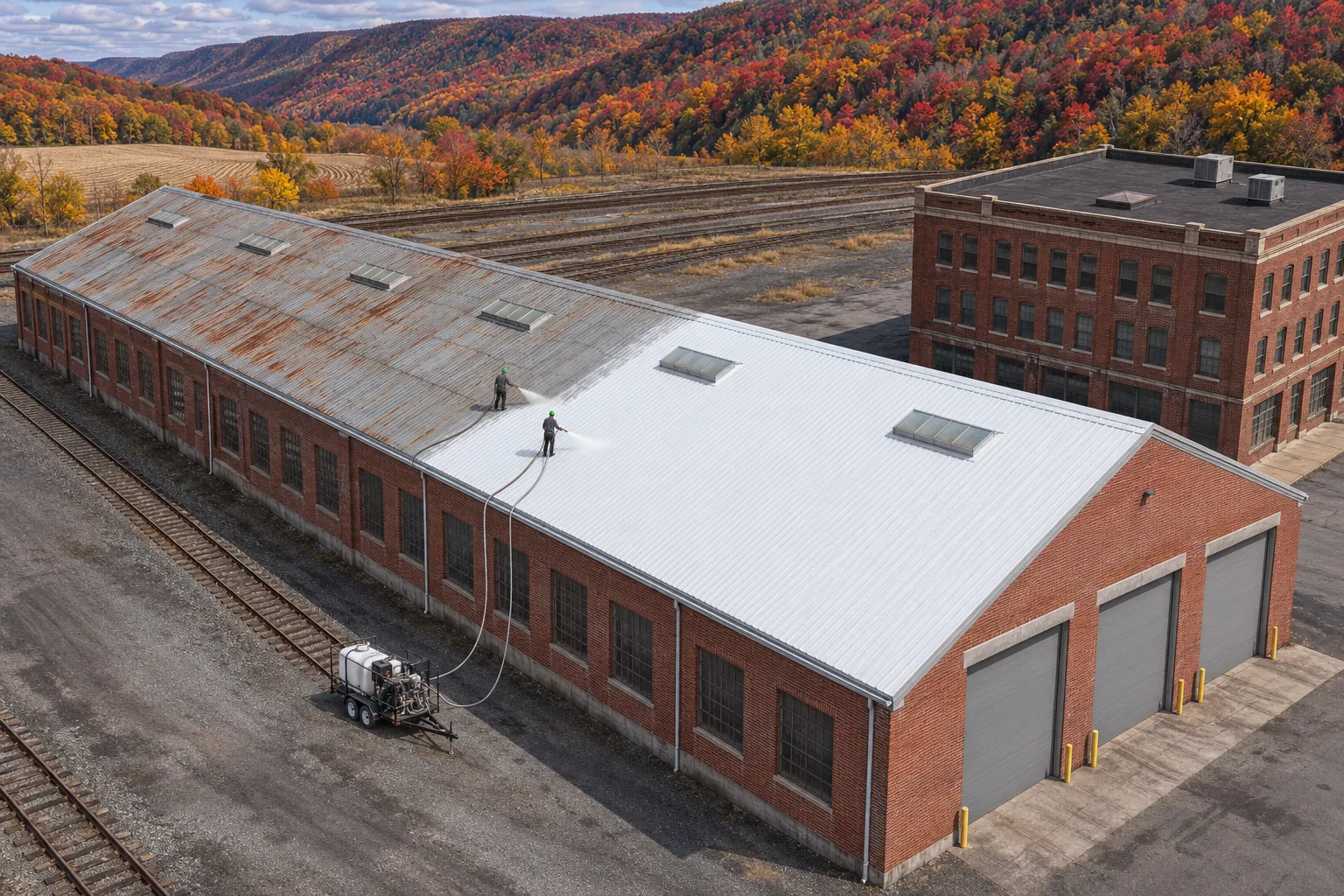
Johnstown metal roof coating for rail, fabrication, and machine shops starts at the stacks: flashings rebuilt, deposits cleaned, then the panels coated.
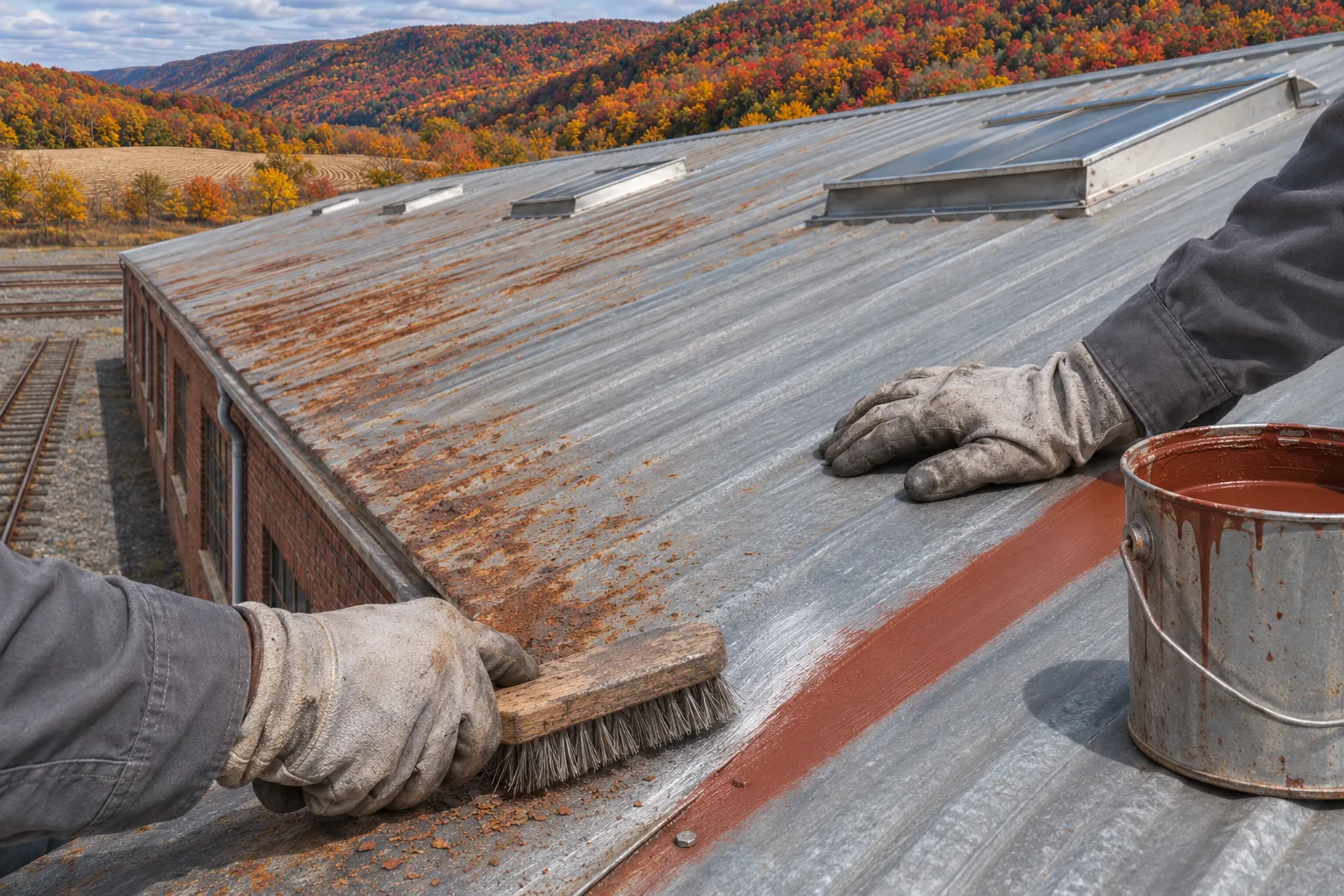
Rail and fabrication shops push heat, smoke, and oily mist up through the roof, and Johnstown metal roof coating has to start there. Residue around each stack keeps primer from bonding, and the flashing at the panel cut is often the first thing to leak.
We clean, repair, and detail every stack before the field is coated. Many shops here run their stacks through the day, so we plan the cleaning and coating around shift changes and cool-down times, working one section of the roof at a time.
Shop roofs here tend to show the same four conditions around their equipment.
Heat cycling cracks the sealant where a stack passes through the panel. The flashing is rebuilt so the coating ties into a solid collar.
Exhaust leaves a greasy film downwind of each stack. Degreasing and a second wash come before any primer.
Moisture and fumes from stacks speed up rust on nearby ribs, so those panels get closer rust checks.
Some roofs carry vents and fans almost touching. Tight spots get rearranged flashing so every joint can be reached and coated.
Big exhaust fans vibrate their curbs and loosen the screws around them. Those fasteners get upsized and the curb resealed.
Maintenance crews cross the same panels to reach each fan, wearing the paint and denting the ribs along the way.
A coated shop roof keeps water out at the places these buildings leak most.
Most leaks on Johnstown shop roofs start at a stack or vent, not out in the open field. Rebuilt flashings and a heavier coating build around each one close those openings, and the panels between them are sealed at every screw and lap.
Every screw head between the stacks is checked and sealed before coating covers it.
Shops keep running below while the roof is cleaned and coated in sections.
A light topcoat reflects summer sun off panels already warmed by the shop below.
Shop roofs here usually take one of these builds, matched to the panels and the equipment on them.
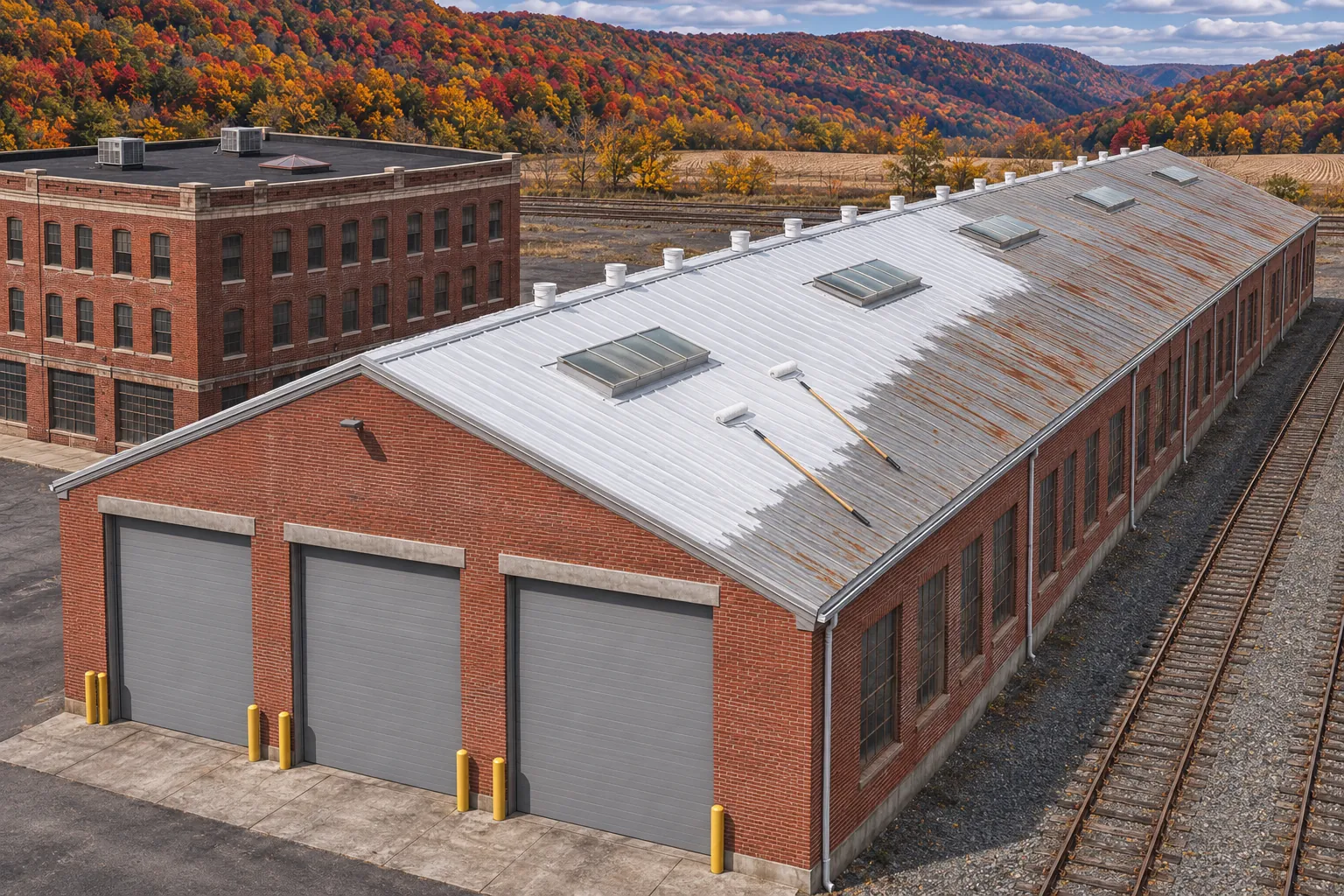
Fast-draining shop roofs get acrylic over primed rust and reinforced laps, applied in dry, mild weather. Stack collars get a heavier pass before the field coats.
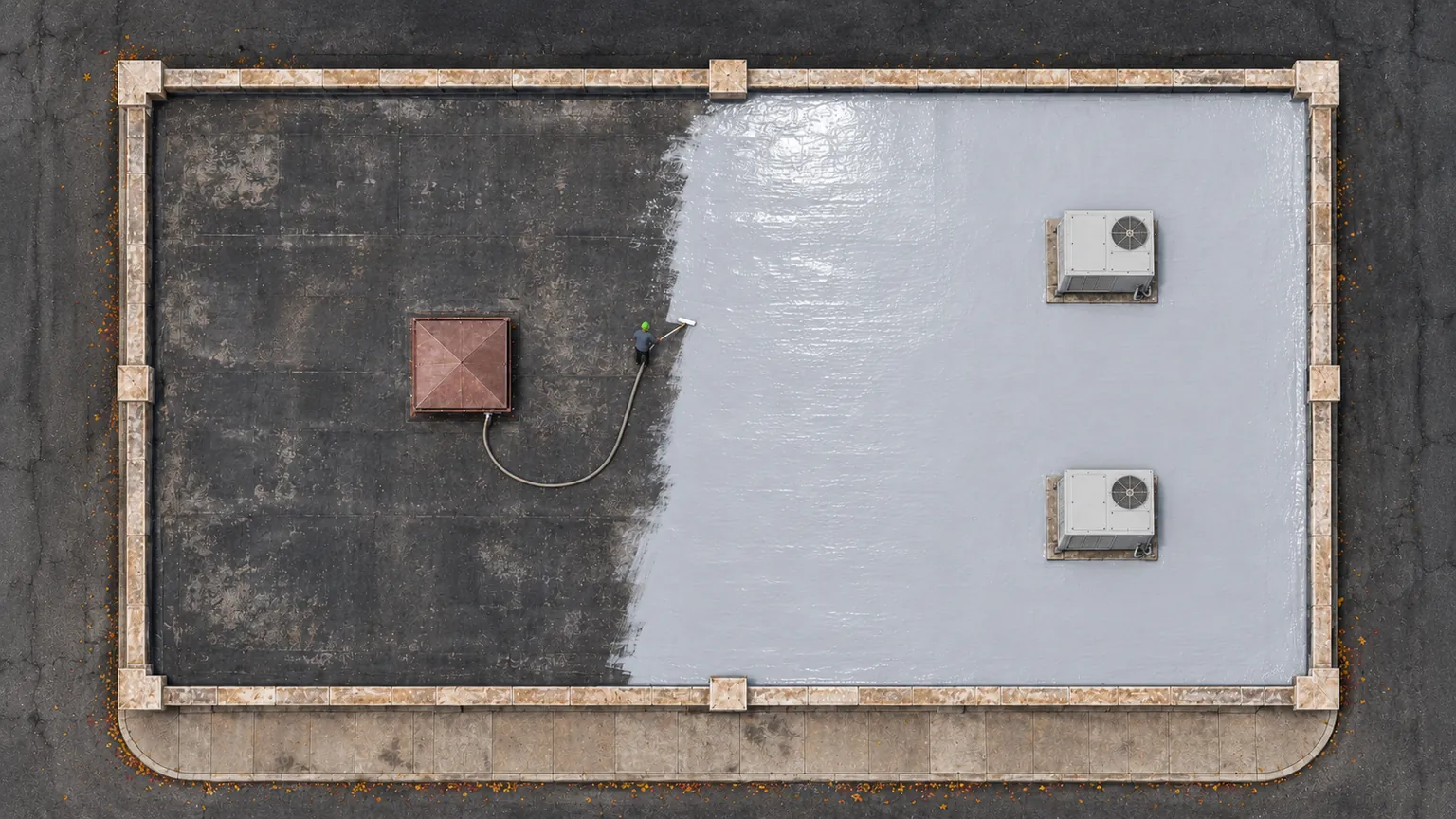
Low bays beside the main roof take silicone where water lingers around equipment curbs. Curbs in those bays get extra build at the base.
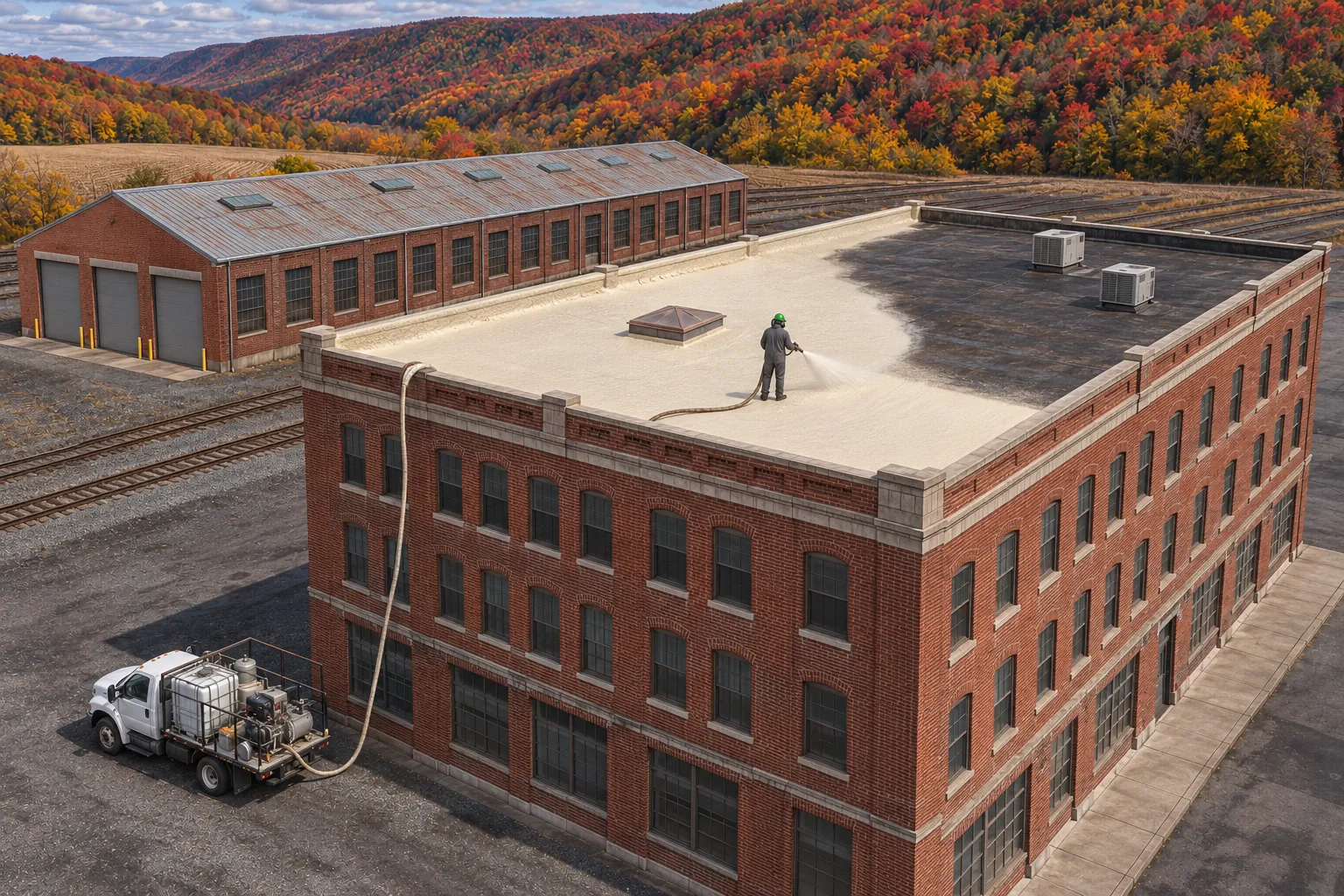
Shops that lose heat in winter can take foam over the panels, sealed against sunlight. Stack collars are flashed before any foam goes near them.
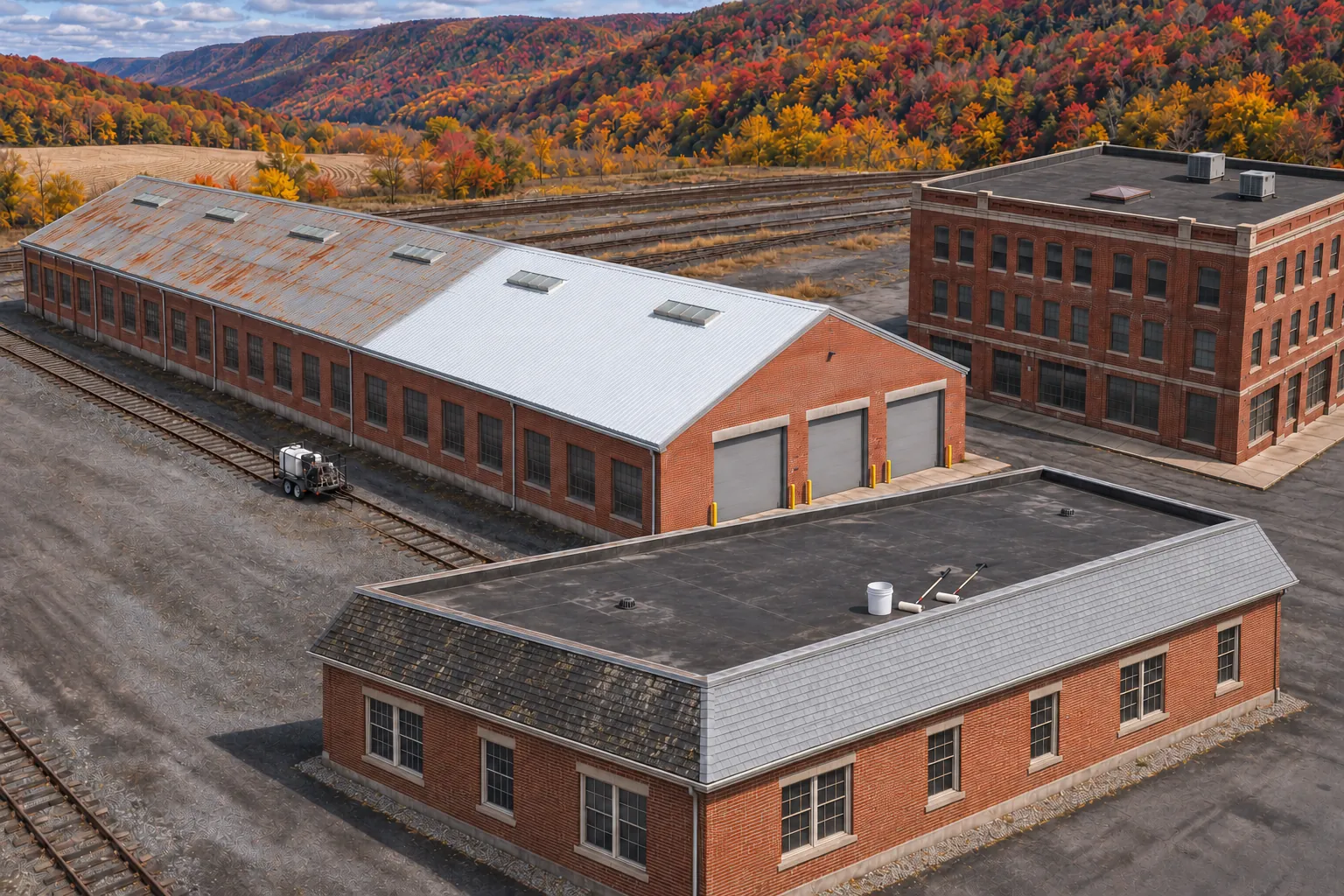
Shop offices with a shingle mansard get the face checked against the maker's rules before any coating is proposed. Flat roof sections behind the mansard are handled separately.
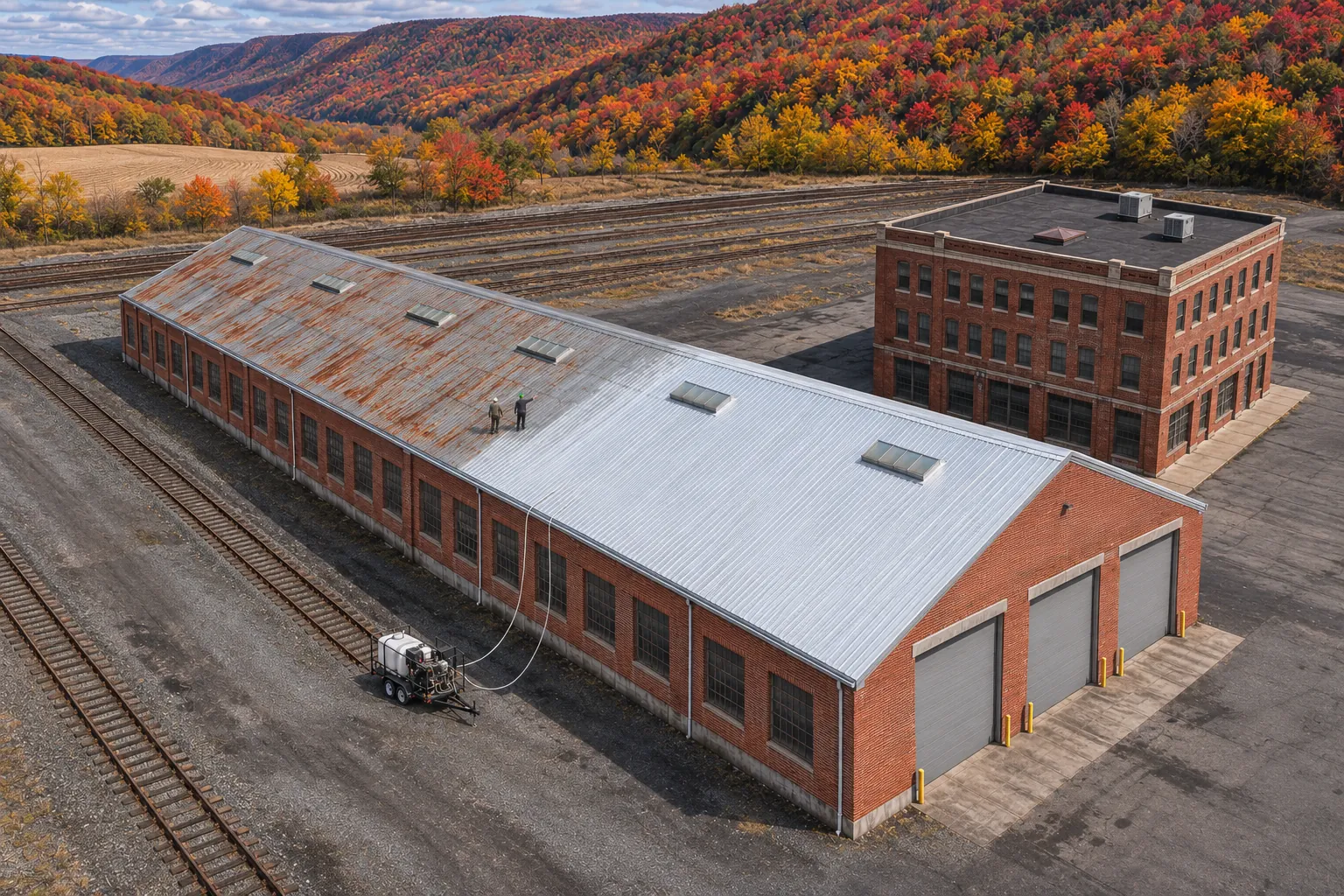
Get a planning range for the whole roof, then we inspect every stack and vent flashing in person.
Four steps, with the stacks and vents finished first.
We walk every stack, vent, and fan, note residue and rust around each, and check the screw rows and laps across the field.
Cracked stack collars are rebuilt, crowded vents are flashed so each joint is reachable, and the oily film is degreased off.
Rust under the exhaust plumes is cleaned and primed, screws are tightened or replaced, and laps get fabric.
Coats go on at full thickness, with extra build at every stack and vent, then the build is checked.
Once the shop runs its stacks again, we look at the collars for any lift or softening from heat and touch up the coating.
Outside Johnstown? We also coat metal roofs in the towns below. Elsewhere, call us or send us a message.
Warehouses here get interior leaks traced to the roof before any coating plan.
Indiana metal roof coatingOlder halls and metal buildings are checked for thin steel before coating comes up.
Latrobe metal roof coatingRoofs with swapped panels get each finish tested before one system covers both.
DuBois metal roof coatingEquipment-heavy warehouse roofs get walk routes planned before the topcoat.
Huntingdon metal roof coatingStacks
Yes, once each stack is ready. We check the flashing, how the stack is anchored, and the residue on the panels around it, because deposits block primer. Crowded or damaged stack joints are fixed first so the crew can reach and coat the whole detail.
Stacks near the work area are shut down or redirected while that section is cleaned and coated, so heat and fumes stay off fresh material. We plan the sections around the shop schedule.
Cost
Roof size sets the base, and the coating range runs about $2.50 to $4.00 per square foot. Shop roofs move within it by the number of stacks and vents, how much residue has to come off, rust depth, and the screws that need replacing.
Yes. Small fabrication and machine shops in Johnstown get the same stack and screw work as large plants, scaled to the roof.
Vents set too close for a proper flashing are reflashed as a group or relocated a short distance, so every joint can be reached and covered with full coating thickness.
Timing
Stack and flashing repairs can run most of the year. The coating itself waits for mild, dry stretches from late spring into fall, so many owners book repairs first and coat when the weather settles.
Coating near a hot stack is kept to products rated for that heat, and the collar flashing carries most of the load. We check each collar after the first few weeks of normal operation.
Get a planning range for your shop roof, or call and we will look at the stacks and vents with you.