Fastener Sealing Before Coating
Each screw is checked for grip and washer condition. Loose ones are swapped for larger-diameter screws with new washers, then every head gets sealant so the coating covers a tight connection.
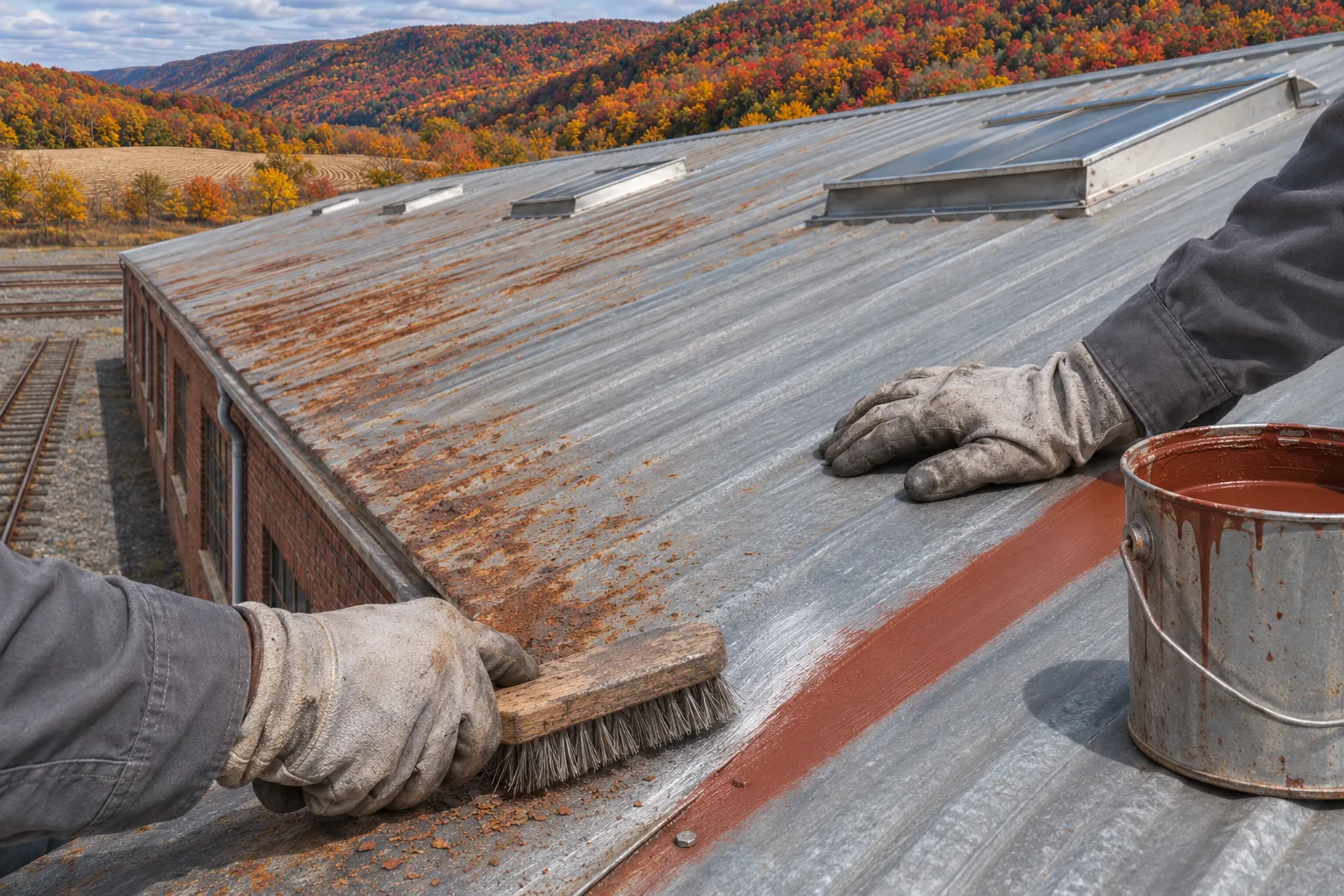
Altoona commercial metal roof coating is our main service: we fix fasteners, treat rust, seal laps, and coat metal roofs on shops, warehouses, and plants.
Altoona commercial metal roof coating suits steel that still holds its screws. Find your roof in the rows below.
| What You See | Coat After Prep | Repair, Then Coat | Replace Panels |
|---|---|---|---|
| Light rust and chalky paint across the field | Usually Fits | Sometimes | Rarely |
| Rows of screws with cracked or missing washers | Sometimes | Usually Fits | Rarely |
| Panels patched over several decades with mixed products | Sometimes | Usually Fits | Sometimes |
| Steel rusted through along the eave ends | Rarely | Sometimes | Usually Fits |
| Framing that sags and holds water in the panels | Rarely | Rarely | Usually Fits |
Six conditions drive most of the preparation on commercial metal roofs. Each one is handled before the base coat.
Each screw is checked for grip and washer condition. Loose ones are swapped for larger-diameter screws with new washers, then every head gets sealant so the coating covers a tight connection.
Flaking rust is ground or wire-brushed back to firm steel. A rust-inhibiting primer goes on before the end of that shift, so the steel has no time to flash again.
Panels grow and shrink with each freeze and thaw, and old sealant cracks along the laps. We cut out the failed bead, reseal, and embed fabric across the joint.
Tar, mastic, and tape from earlier fixes sit on many shop roofs. Patches that bond well stay; loose or incompatible ones come off so we can see the metal below.
Exhaust stacks and equipment curbs break the panel line. Their flashings get resealed or rebuilt so water meets a solid detail under the coating.
Replacement panels often carry a different factory finish from the originals. Both surfaces get an adhesion test before the primer is chosen.
Metal roofs take several coating builds. Slope, rust level, and the building below decide which one we propose.
Fast-draining ribbed roofs get primer, fabric at the laps, and two acrylic coats, applied on warm, dry days so each layer cures fully.
Panels at a low pitch that hold water in the valleys take silicone over a matched primer, which tolerates lingering water after storms.
Worn roofs combine a few replaced panels, screw upgrades, lap reinforcement, and a full coating system to turn a leaking roof into one surface again.
Shops that run cold in winter can take spray foam over the panels for insulation, sealed with a protective topcoat.
Coating keeps commercial metal panels in service by closing the openings that let water and rust in.
Metal shop and warehouse roofs leak most often at screws and laps, while the panels themselves stay tight much longer.
Once every head is sealed and every lap reinforced, the coating covers those openings as one continuous membrane, and the steel below stays dry enough to slow rust.
Primer and coating keep moisture off cleaned steel, so panels with strength left in them stay in use longer.
Crews work on top of the roof in sections, while docks, machines, and offices keep going below.
A light topcoat reflects summer sun that faded paint absorbs, which helps the space under bare panels.
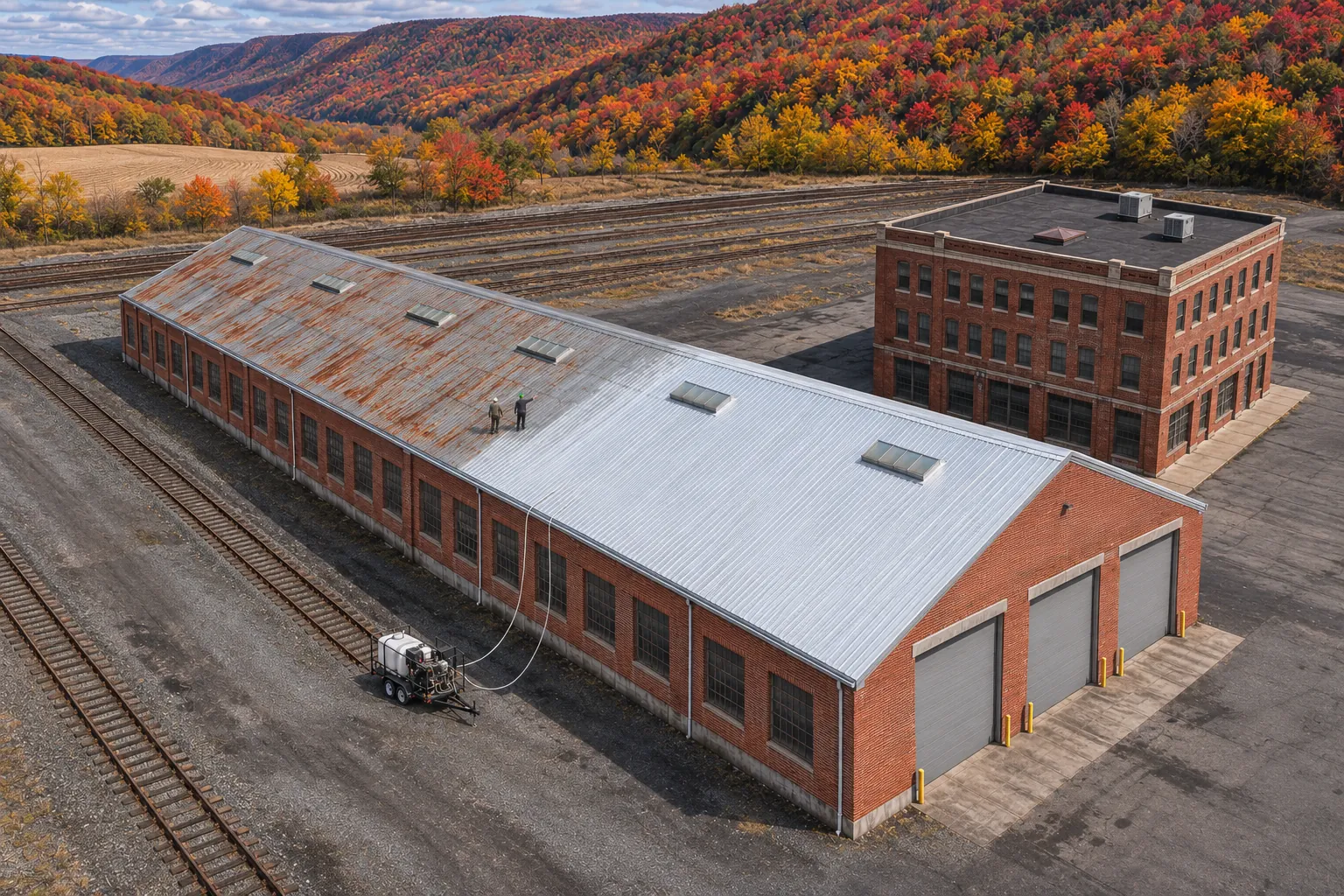
Backed-out screws let snowmelt into the building. Get a planning range, then we check the fastener rows before the next freeze.
Five steps, with the fastener and lap work finished before any coating is opened.
Each screw row, lap, and panel end is checked, rust depth is tested with a scraper, and the insulation under drip lines is probed for water.
Stripped and loose screws are replaced with oversized ones, failed sealant is cut out of open laps, and fresh sealant and fabric go in.
Pressure washing removes chalk and dirt. Scaled rust is ground back, and primer covers bare and rusted steel before it can flash.
Base and top coats go on at the product thickness, with extra build at curbs, vents, laps, and the panel ends at the eaves.
Coating thickness is gauged at the details, and gutters and downspouts are flushed so the finished roof drains clear.
Some buildings need a different system, or a second one on another roof section.
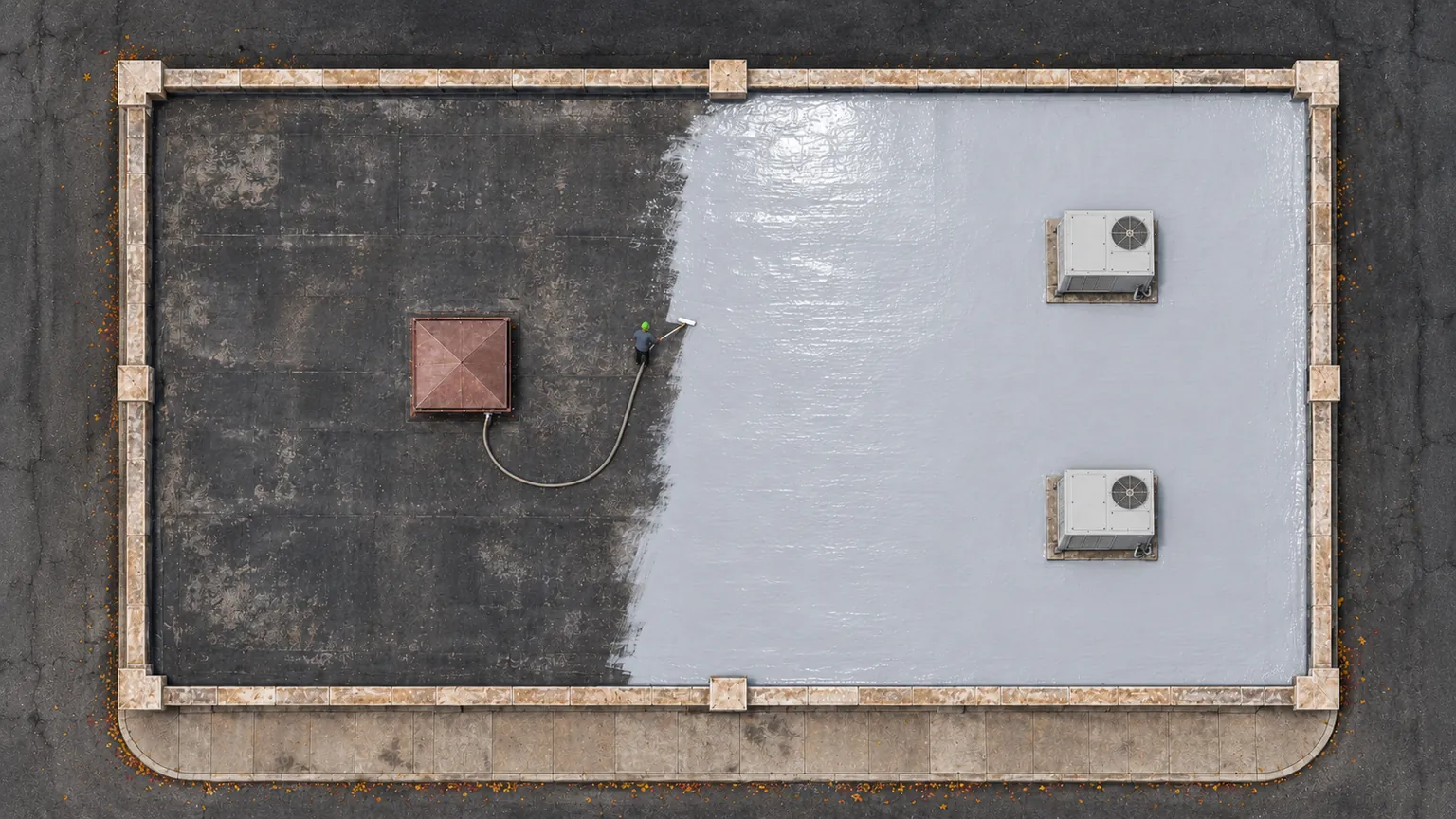
Low valleys and flat sections that hold water after rain take silicone, applied thick over a tested primer.
Altoona silicone roof coating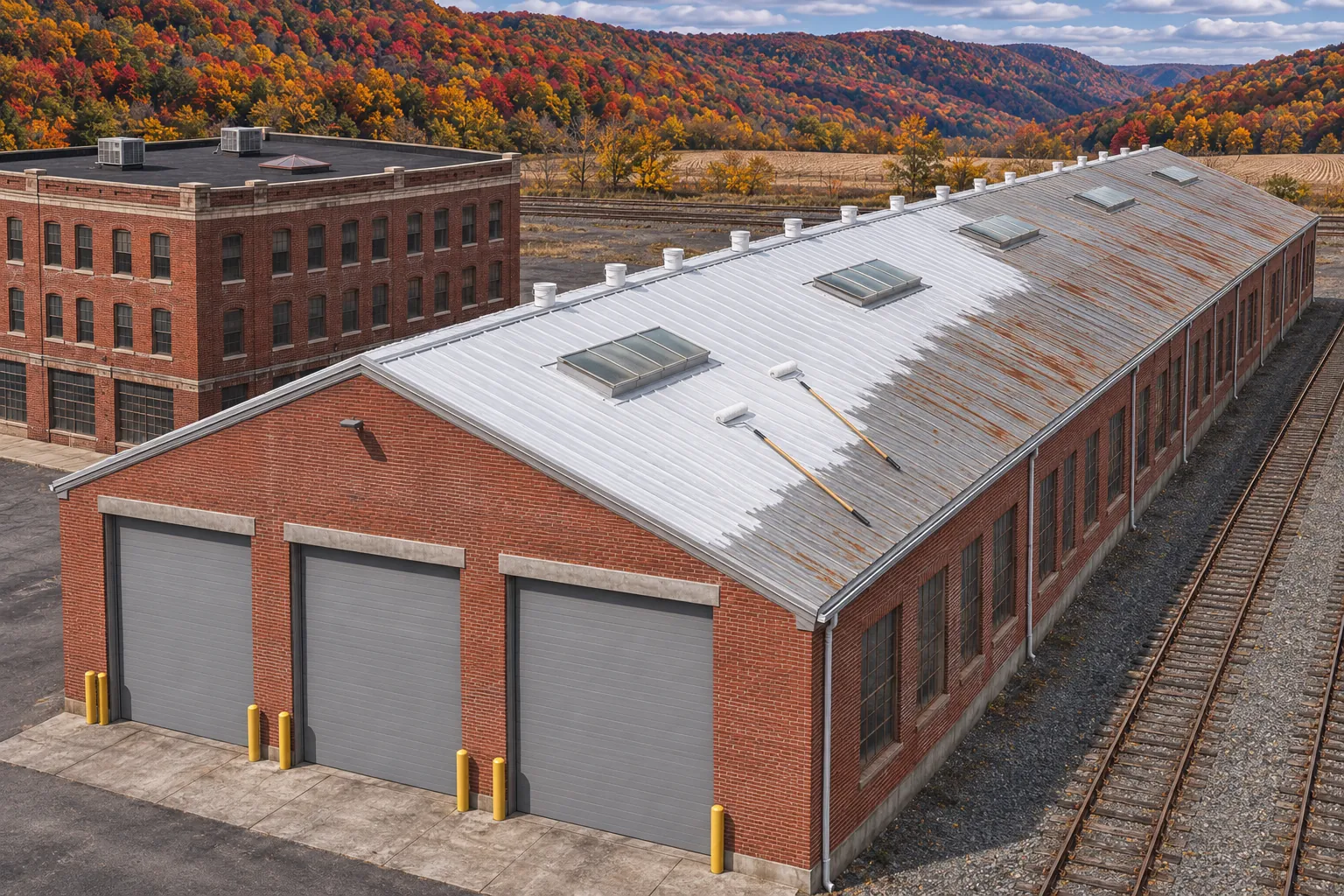
Pitched roofs that shed water quickly can take acrylic with fabric at the laps, timed for dry weather.
Altoona acrylic roof coating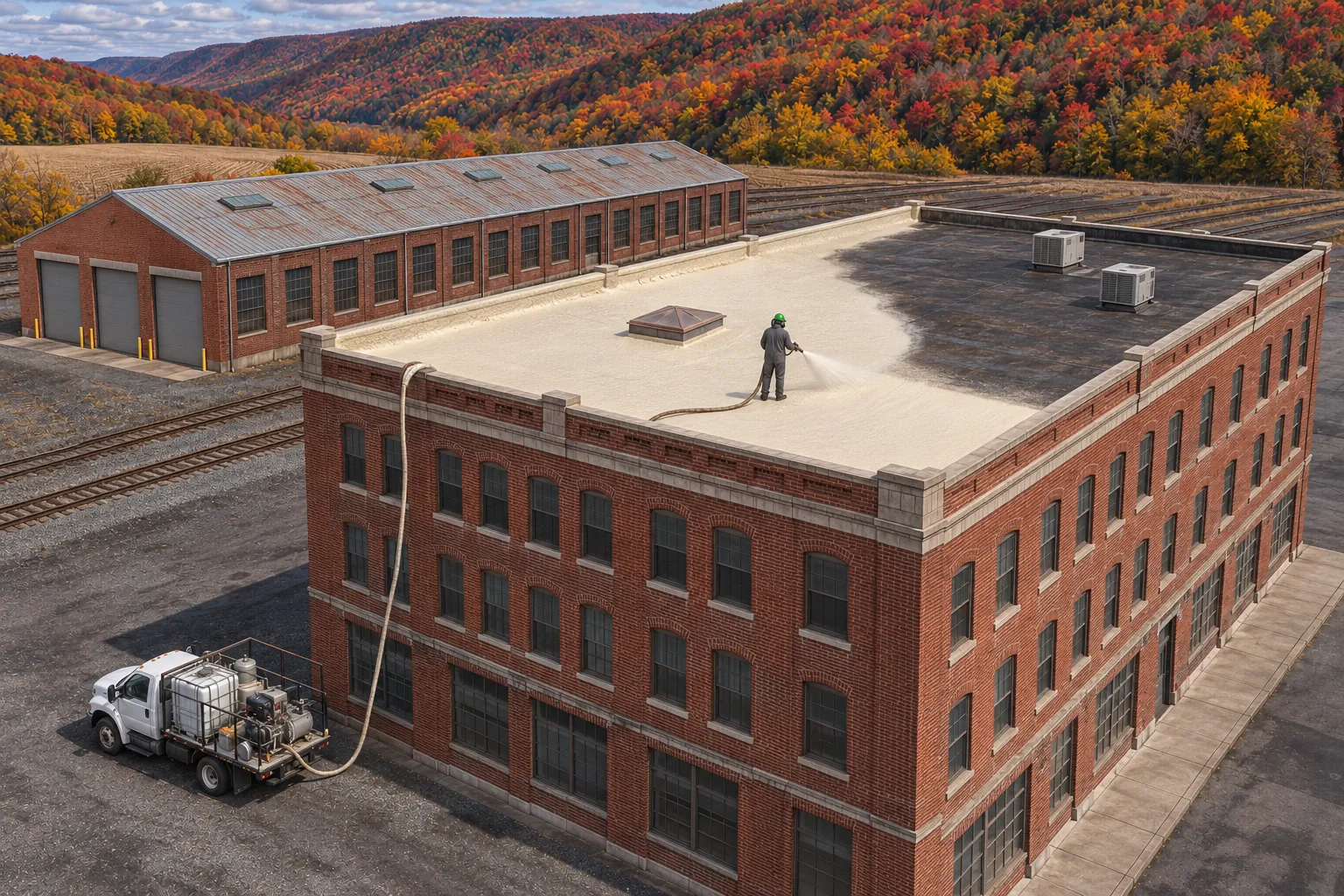
Flat roofs that need insulation get foam sprayed to thickness, then sealed with a protective topcoat.
Altoona spray foam roofing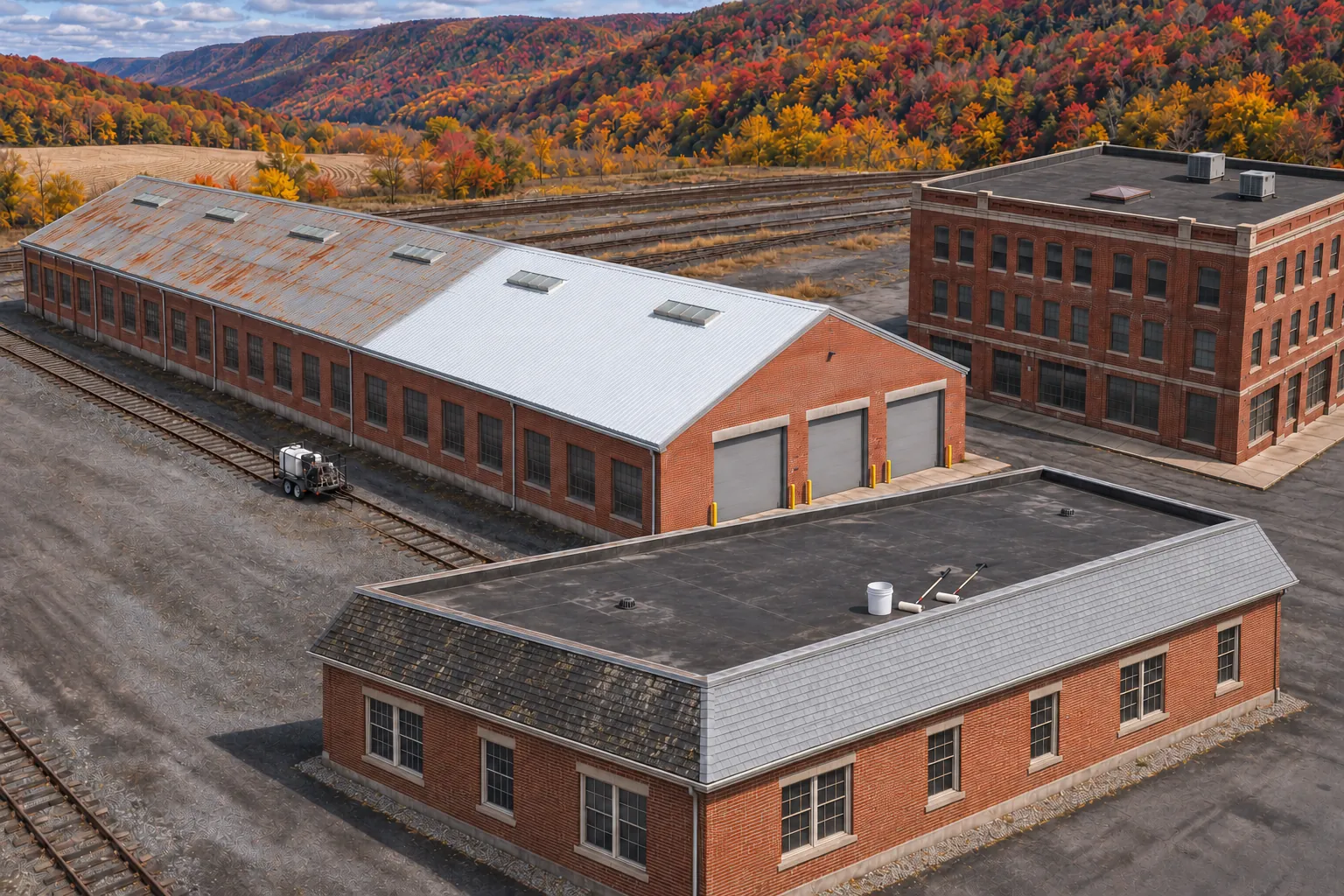
Shingle mansards and sloped faces get coated where the maker allows it and the tabs still lie flat.
Altoona shingle roof coatingPreparation
A loose screw keeps moving after it is coated, and the movement tears the coating and lets water follow the shank. We check the hole, the washer, and the purlin grip, then replace or upsize the screw and seal it, so the coating goes over a connection that stays put.
Each old repair is tested on its own. Patches that still bond and work with the new system can stay; brittle mastic, loose tape, and incompatible materials come off. Removing them often uncovers rust or a failed screw, and that work gets added before the roof is coated.
Coating Choice
The right coating follows the roof slope and how water drains. Pitched panels that shed water fast take acrylic well, shallow panels with slow valleys take silicone, and buildings that need insulation take foam with a topcoat. An adhesion test on the existing paint settles the primer.
The coating that lasts longest is the one matched to the roof and built to full thickness over good preparation. A thick system over loose screws fails sooner than a modest one over tight, primed steel, so prep and drainage matter more than the product label.
Mixed Roofs
Yes, when the new panels carry a different finish from the old ones. We test both surfaces and pick a primer and coating that bond to each. A product claim about long life says nothing about how it sticks to two finishes on the same hall roof.
Yes. Panels with holes through the steel are swapped out first, the new ones are fastened and lapped into the old, and both get the same primer and coating so the roof finishes as one surface.
Get a planning range from your roof area, or call and we will walk the screw rows and laps with you.