Screws Backing Out Of The Purlins
Freeze-thaw swings work exposed screws loose until the washers stop sealing. We tighten what still grips, replace stripped screws with larger ones, and seal every head before coating.
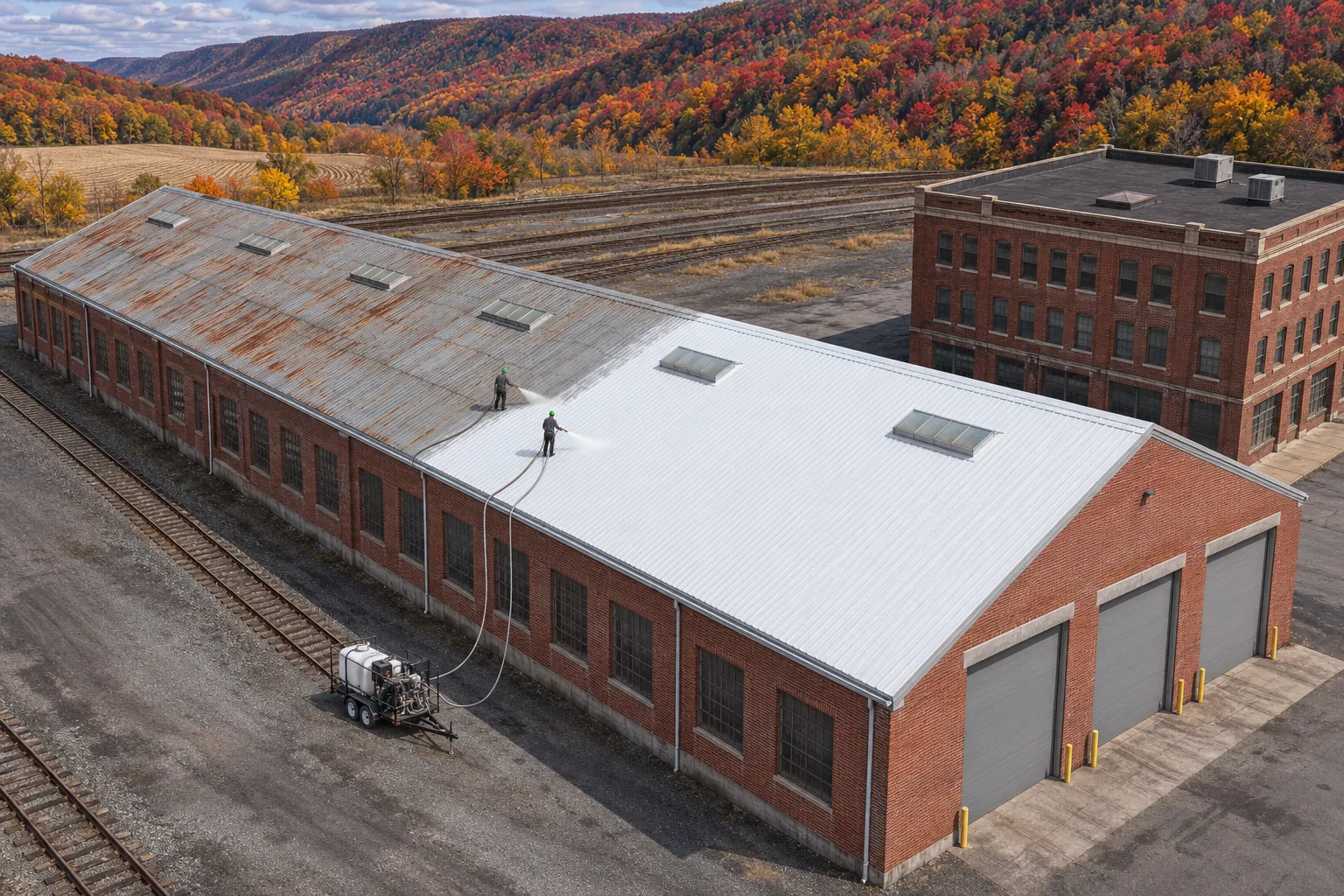
As an Altoona metal roof coating contractor, we clean, repair, and coat metal roofs on shops, warehouses, plants, and church halls in Altoona and five nearby towns.
Altoona metal roof coating starts with the problems already on the roof. These six turn up most often on commercial metal buildings here.
Freeze-thaw swings work exposed screws loose until the washers stop sealing. We tighten what still grips, replace stripped screws with larger ones, and seal every head before coating.
Water sits longest at the eave ends and the bottom of each lap, so steel rusts there first. Scaled rust gets ground to firm metal and primed before the crew leaves.
Old sealant shrinks and lets wind-driven rain under the lap. The failed bead comes out, fresh sealant goes in, and reinforcing fabric bridges the joint.
Shop roofs carry stacks, fans, and vents, and each one is a cut in the panel. Flashings get resealed or rebuilt so the coating ties into a tight detail.
Snow melting off a warm roof refreezes at a cold gutter and backs water under the lowest panel. We check the gutter joint and nearby laps before any coating work.
Aged paint turns to powder and blocks adhesion. Washing plus a test patch on the existing finish settles which primer the coating needs.
Five steps, in the order they happen on the roof. Repairs are finished before a drop of coating goes down.
We walk every screw row, lap, curb, and gutter, scrape rust to see how deep it goes, and check the insulation under any stained ceiling for trapped water.
Loose and stripped screws are replaced, open laps are resealed, and flashings at stacks and curbs are rebuilt so the coating covers solid connections.
Pressure washing strips chalk and grime. Scaled rust is ground back and primed before it can flash, and bare steel gets primer during the shift it is cleaned.
Coating goes on in two passes at the thickness the product calls for, with extra build at laps, curbs, and panel ends where water collects.
A final walk checks thickness at the details and confirms drains and gutters run clear, and you get notes on what to watch after each winter.
Five systems, each with its own order of work. The roof decides which one we propose.
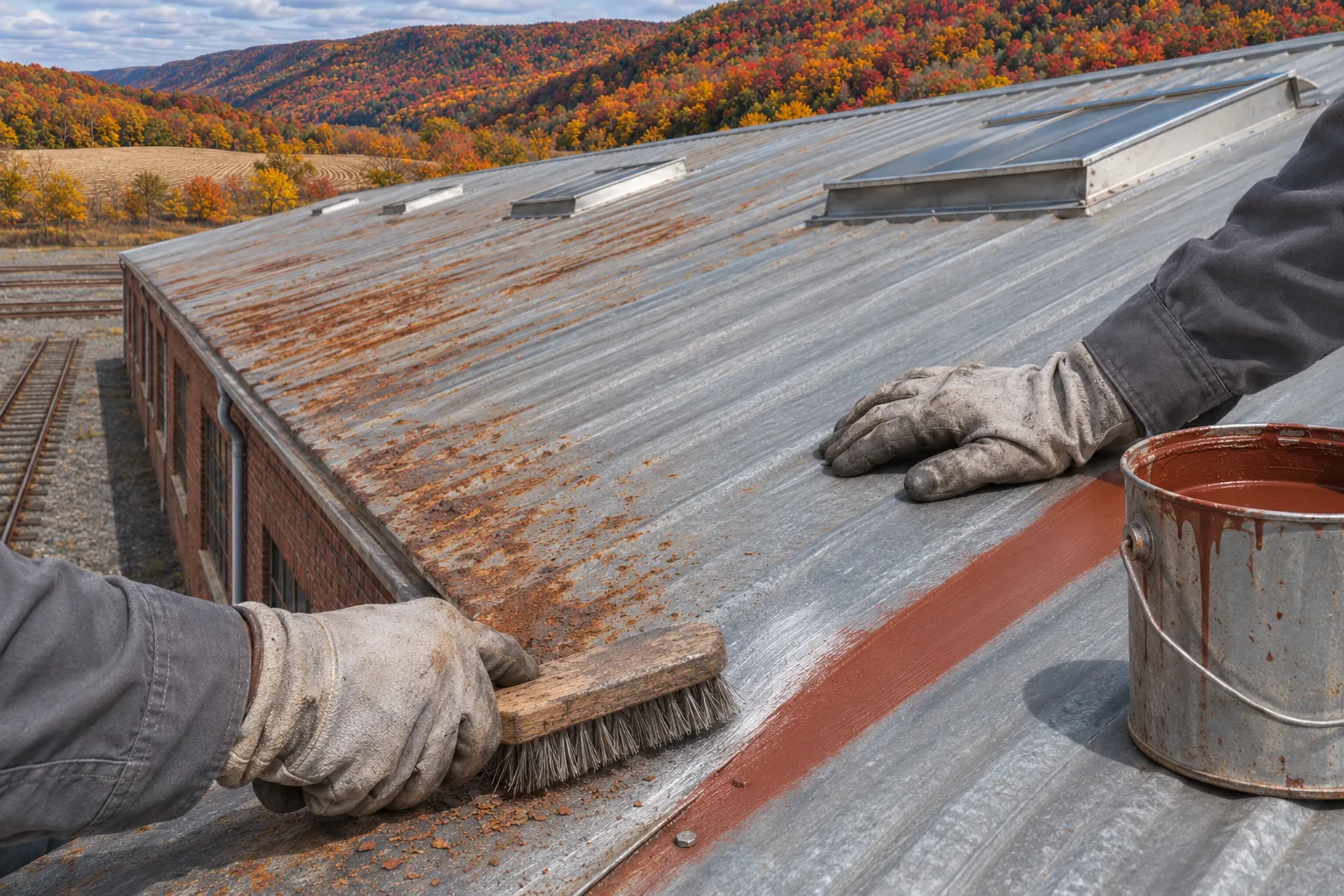
Ribbed and standing seam panels with rust, loose screws, or open laps take this on shops, warehouses, and plants where the steel still holds.
Order Of Work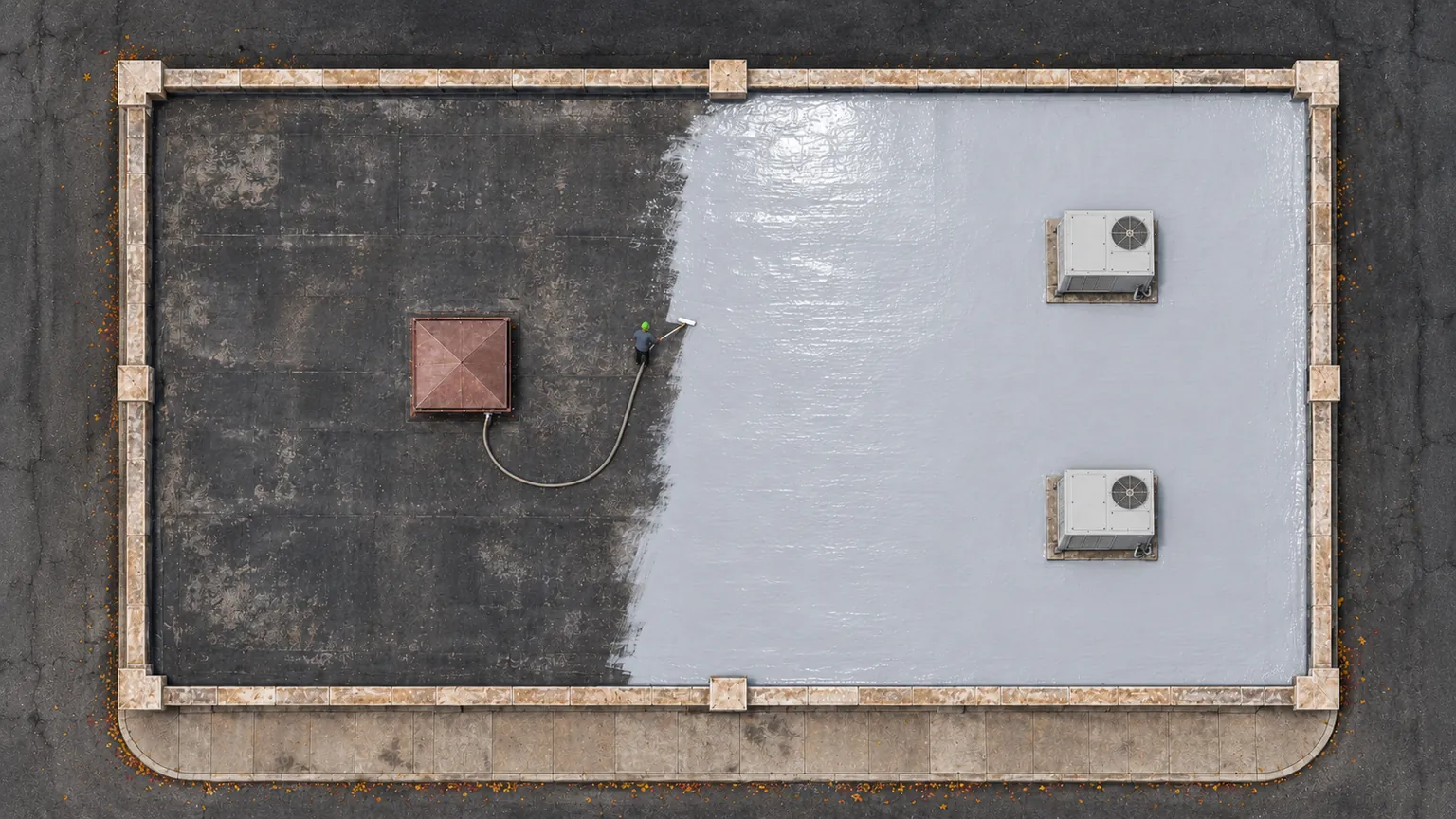
Low-slope roofs where water lingers after a storm get silicone, applied thick over a primer matched to the surface underneath.
Order Of Work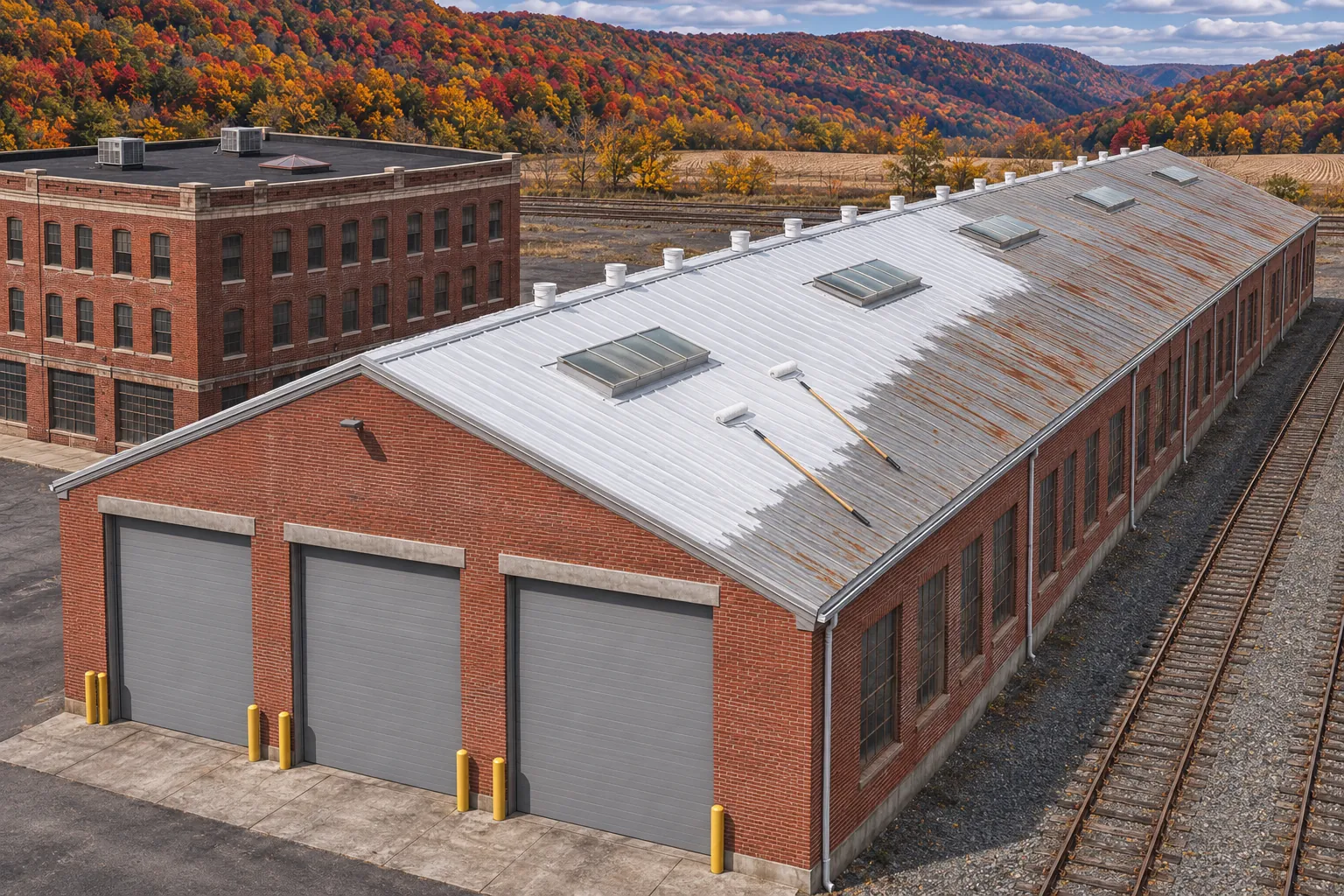
Pitched metal that sheds water fast takes acrylic, applied in warm, dry stretches so each coat cures before night dew.
Order Of Work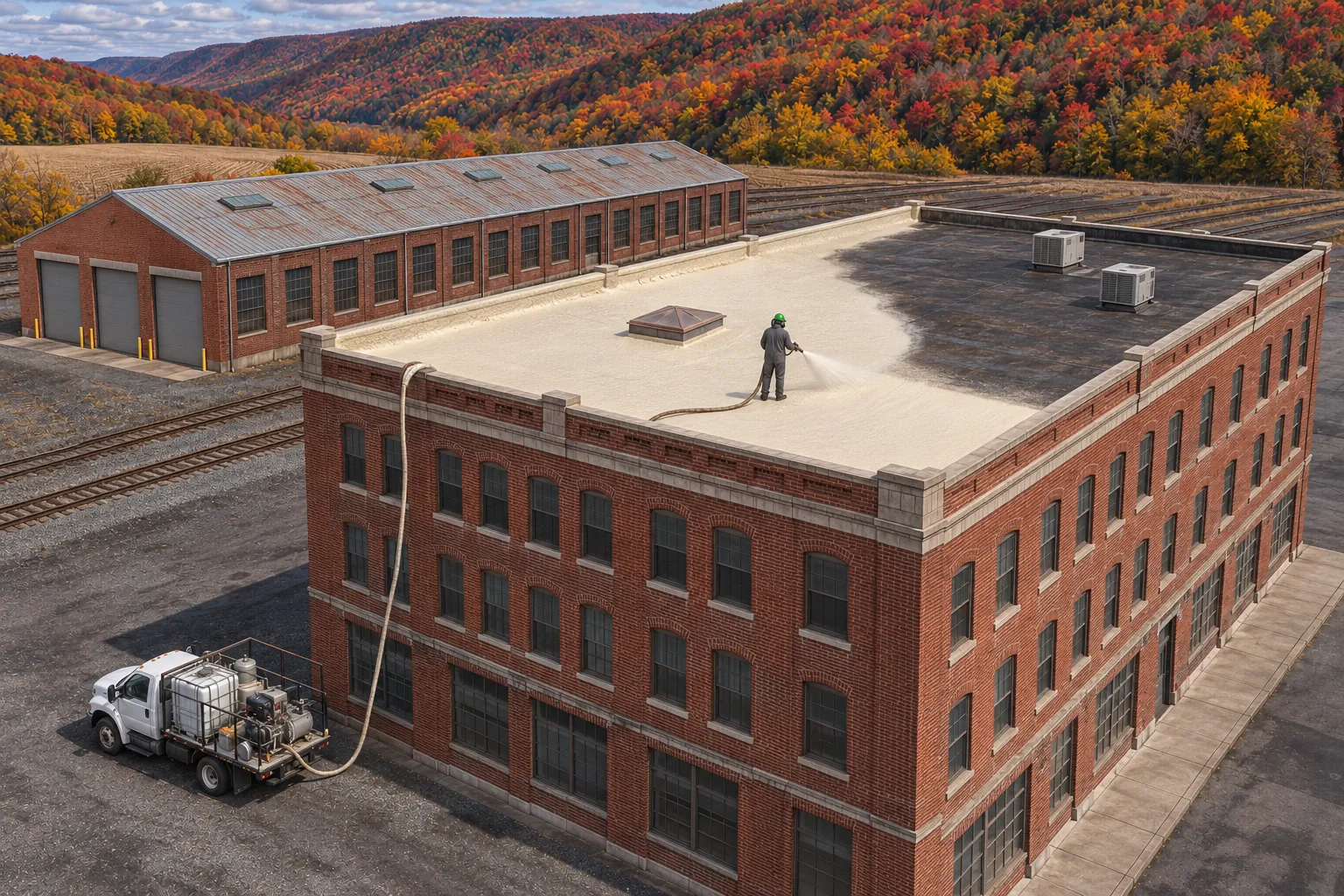
Insulation and a new surface go on flat roofs together: foam sprayed over a dry, prepared deck and sealed with a topcoat.
Order Of Work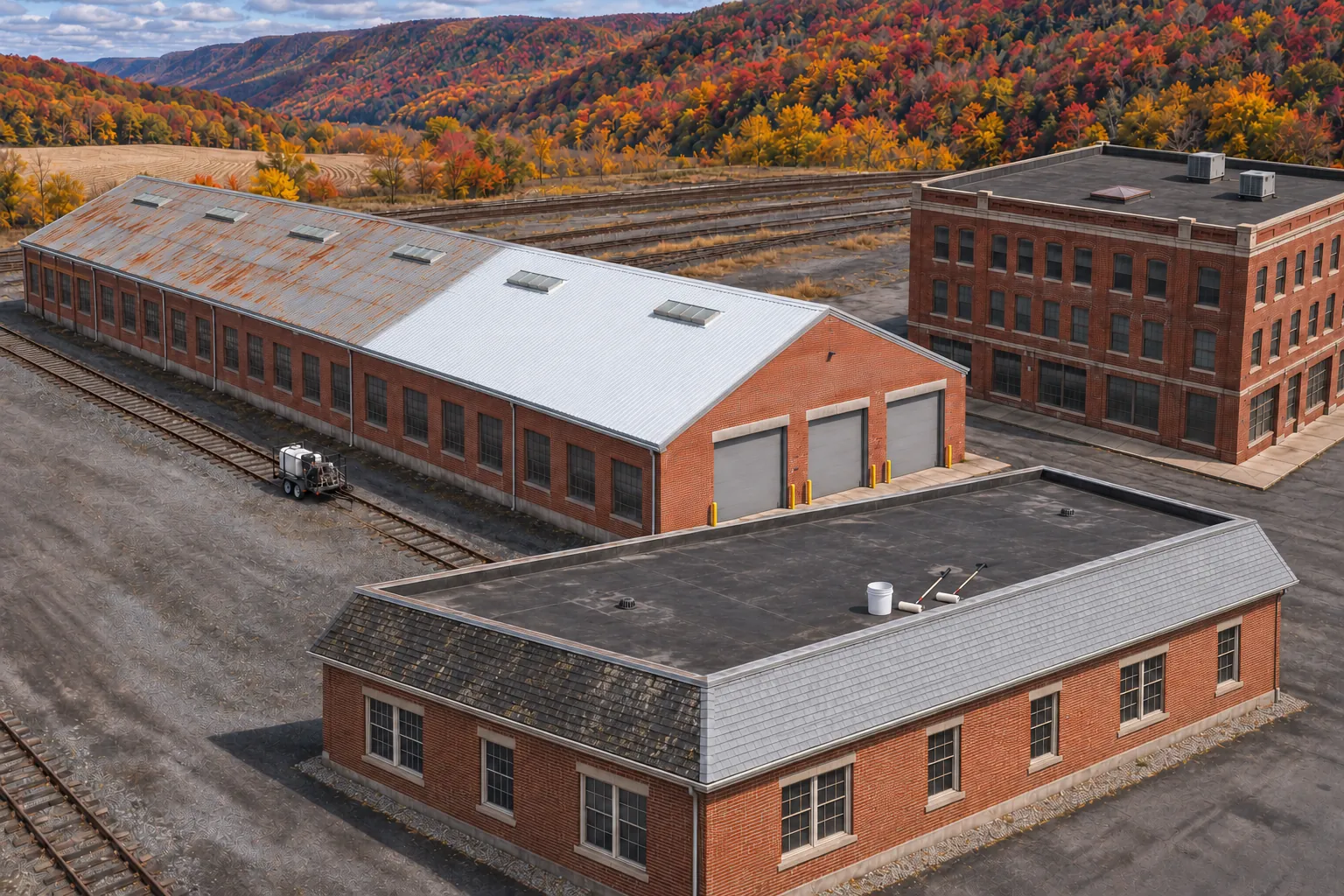
Commercial shingle sections, such as mansard faces, qualify where the shingle maker allows coating and the tabs still lie flat.
Order Of Work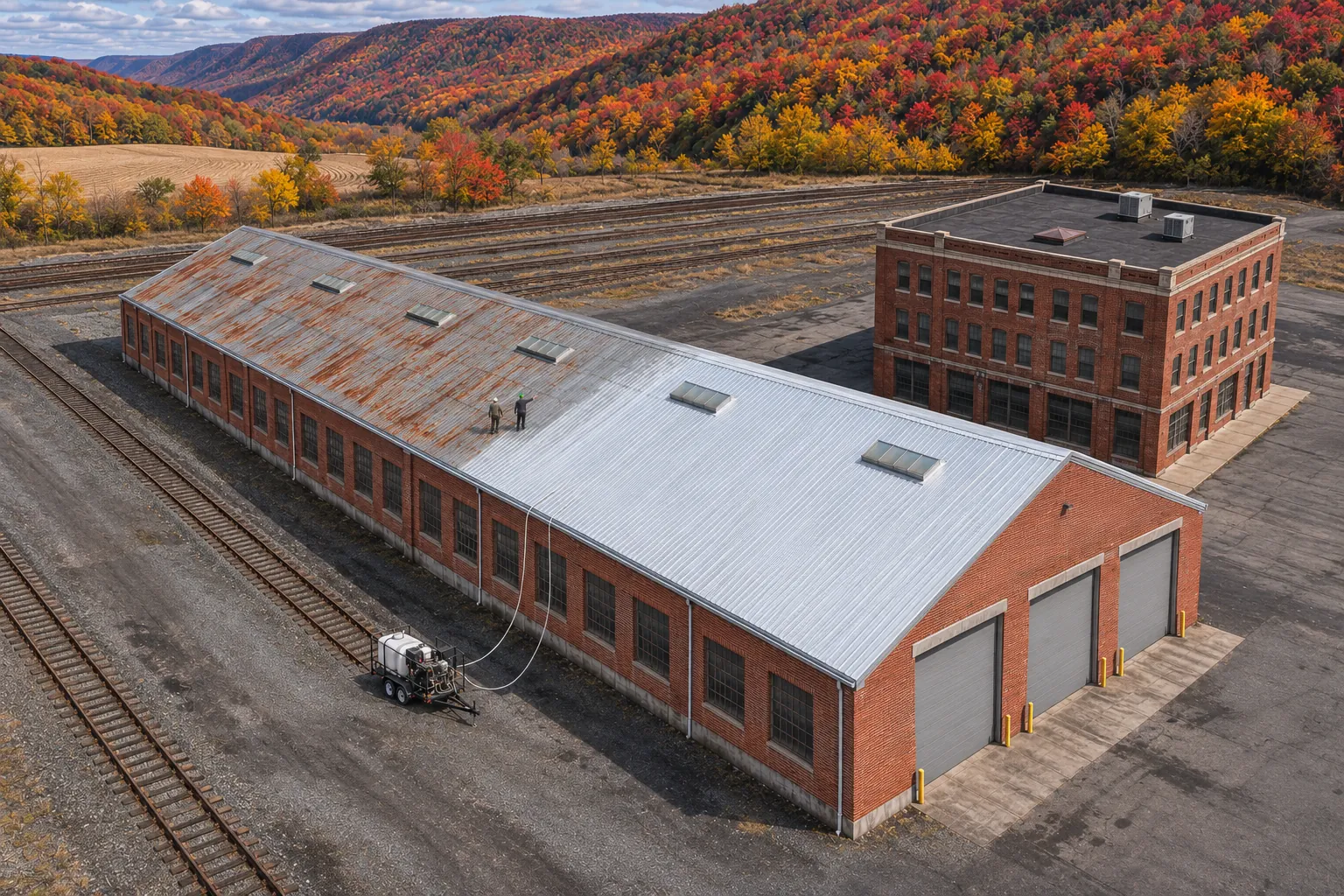
Enter your roof size and condition for a planning range on coating versus replacement, then we inspect the laps in person.
Match what you see on your roof to a row. Full dots mean that job usually fits the condition.
| What You See | Coat After Prep | Repair, Then Coat | Replace Panels |
|---|---|---|---|
| Surface rust on panels that stay stiff underfoot | Usually Fits | Sometimes | Rarely |
| Screws loose or washers cracked along the rows | Sometimes | Usually Fits | Rarely |
| Rust holes through the steel at panel ends | Rarely | Sometimes | Usually Fits |
| Wet insulation under one bay, dry elsewhere | Rarely | Usually Fits | Sometimes |
| Panels lifting because the fasteners lost the purlin | Rarely | Sometimes | Usually Fits |
Dot positions show how these conditions usually play out; the inspection decides your roof.
Coating keeps a serviceable metal roof working by closing the places water gets in.
A large shop roof carries thousands of screw penetrations, and each washer is a small seal that ages. Once every head is checked, sealed, and covered, the leak points that cause most metal roof calls sit under one continuous coating.
The panels, purlins, and building below keep working through the job.
Open-span pole buildings take coating on the outside without touching the interior, once attachment and condensation are checked.
Fabric set into the laps lets the joint move with temperature swings instead of cracking the sealant open each winter.
Light-colored topcoats reflect more sun than faded paint, which keeps the panels and the air under them from heating as fast.
Not sure your building falls in our area? Call us or send us a message. We coat commercial metal roofs in Altoona, Johnstown, Indiana, Latrobe, DuBois, and Huntingdon.
Rail and fabrication shops with exhaust stacks, where deposits around each stack get cleaned before primer.
Johnstown metal roof coatingGrocery and distribution warehouses, where interior leak spots are traced to the roof before coating.
Indiana metal roof coatingChurch halls and older metal buildings, checked for weak steel before coating is proposed.
Latrobe metal roof coatingRoofs with a few new panels among old ones, where each finish gets its own adhesion check.
DuBois metal roof coatingWarehouses with rooftop equipment, where walk routes are planned before the topcoat goes on.
Huntingdon metal roof coatingCost
Plan on about $2.50 to $4.00 per square foot of roof for coating, against roughly $5 to $8 per square foot to replace it.
Where a job lands in that range depends on roof size, access, how much rust and lap work the panels need, screw replacement, the product and its thickness, and how many curbs and flashings need rebuilding.
It is worth it when the panels still hold their screws and the steel is solid under the rust. Coating then closes the screw heads and laps for a fraction of replacement cost, and the roof stays in service during the work. Rotted panel ends or failed purlins tip the decision toward replacing those sections first.
Process
Yes, the coating goes on the outside of the panels, so the open span below stays as it is. Before we propose it, we check that the panels are still fastened tight and look for condensation marks on the underside, because warm, damp air meeting cold steel inside is a separate problem from a leak.
Life depends on the coating thickness, how well the laps and screws were prepared, foot traffic, and how water drains off the roof. Edges, curbs, and gutters wear before the open field, so they deserve a look each spring after ice and snow. A recoat at the right time renews the surface without stripping the roof.
Coating Choice
Coating fits when rust sits on the surface, the screws can be secured, and the insulation is dry. Replacement fits when the steel has holes through it across large areas, the panels have lost their grip on the framing, or the roof sags.
Many buildings land in between, with a few panels replaced before the rest is coated.
Only if the attachment can be restored first. Coating holds panels together at the surface but never pins them back to the purlins. We check whether new, larger screws will grip the framing and whether the metal around each hole is still solid; where they will, the roof can be fastened and then coated.
Get a planning range from your roof size, or call and talk through the rust, screws, and laps on your building.