
Silicone Coating Over Ponding Water
Silicone tolerates water that sits after storms better than acrylic, but a pond over a clogged drain or sunken deck still gets fixed before coating.
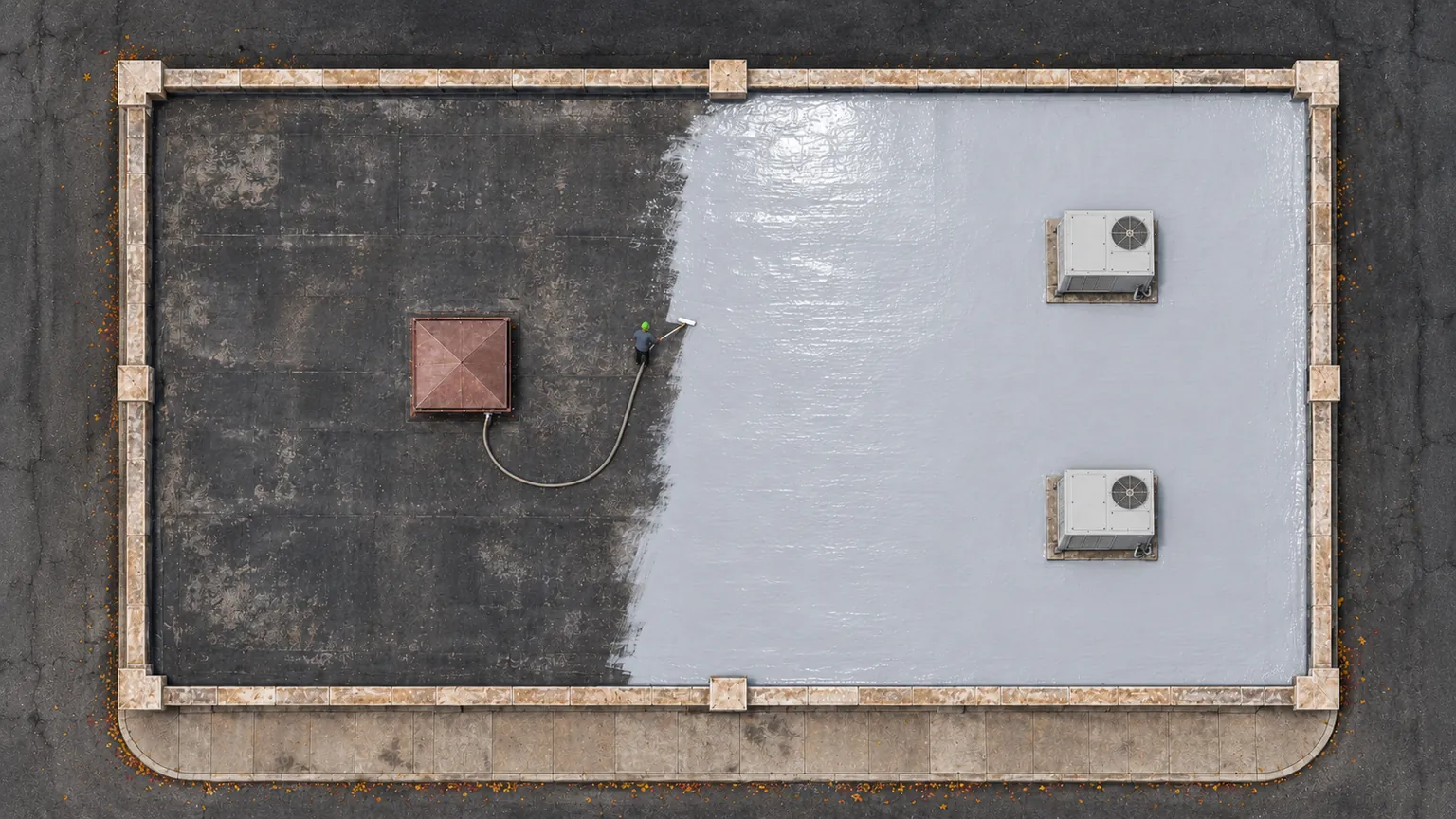
Altoona silicone roof coating goes on low-slope commercial roofs where water lingers, after we fix the drains, seams, and wet areas underneath.
Altoona silicone roof coating fits low-slope roofs with a firm, dry base. Compare your roof with these rows.
| What You See | Coat After Prep | Repair, Then Coat | Choose Another Path |
|---|---|---|---|
| Water sits in a few shallow spots for a day after rain | Usually Fits | Sometimes | Rarely |
| Aged membrane or metal that is firm and dry | Usually Fits | Sometimes | Rarely |
| Blocked outlet or sagging deck under a pond | Rarely | Usually Fits | Sometimes |
| Insulation soaked across whole sections | Rarely | Sometimes | Usually Fits |
| Old acrylic coating that is peeling | Rarely | Usually Fits | Sometimes |
Silicone earns its place on roofs that drain slowly. These six conditions shape the work.
Silicone tolerates water that sits after storms better than acrylic, but a pond over a clogged drain or sunken deck still gets fixed before coating.
Soft spots and stains point to water below the surface. Wet board is cut out and replaced, since coating over it traps the moisture.
Seams that peel at the edges are cleaned, primed, and reinforced with a detail coat before the full silicone pass covers them.
Shallow metal roofs rust where water sits. Those spots are cleaned to firm steel and primed with a product that suits silicone.
Equipment curbs often sit where water collects. Their base flashings get extra attention and a heavier coating build.
Ice at the roof edge in winter wears coatings faster than the open field, so edges get a thicker pass.
Silicone goes on in different builds depending on the surface it covers and how water moves across it.
Firm, dry single-ply or built-up roofs get cleaned, primed where the test calls for it, and coated in one or two thick passes.
Shallow metal panels get their screws and laps fixed, rust primed, and silicone applied over the whole field.
Spray foam roofs take silicone as the protective topcoat, often with granules where foot traffic is expected.
Some roofs need silicone only in the low bays, with a compatible system on the rest of the roof.
Silicone protects low-slope roofs because the cured film holds up where water lingers.
Low-slope roofs hold shallow water after every storm, and that water breaks down many coatings over time. Silicone resists it, so a firm roof with slow-draining spots can be protected without rebuilding the slope.
High-solids silicone often reaches full thickness in a single heavy pass, which shortens the time crews spend on the roof.
Silicone stays flexible in sunlight and heat, so laps and seams under it keep moving without cracking the film.
When the surface wears, a clean roof takes another silicone coat over the first one.
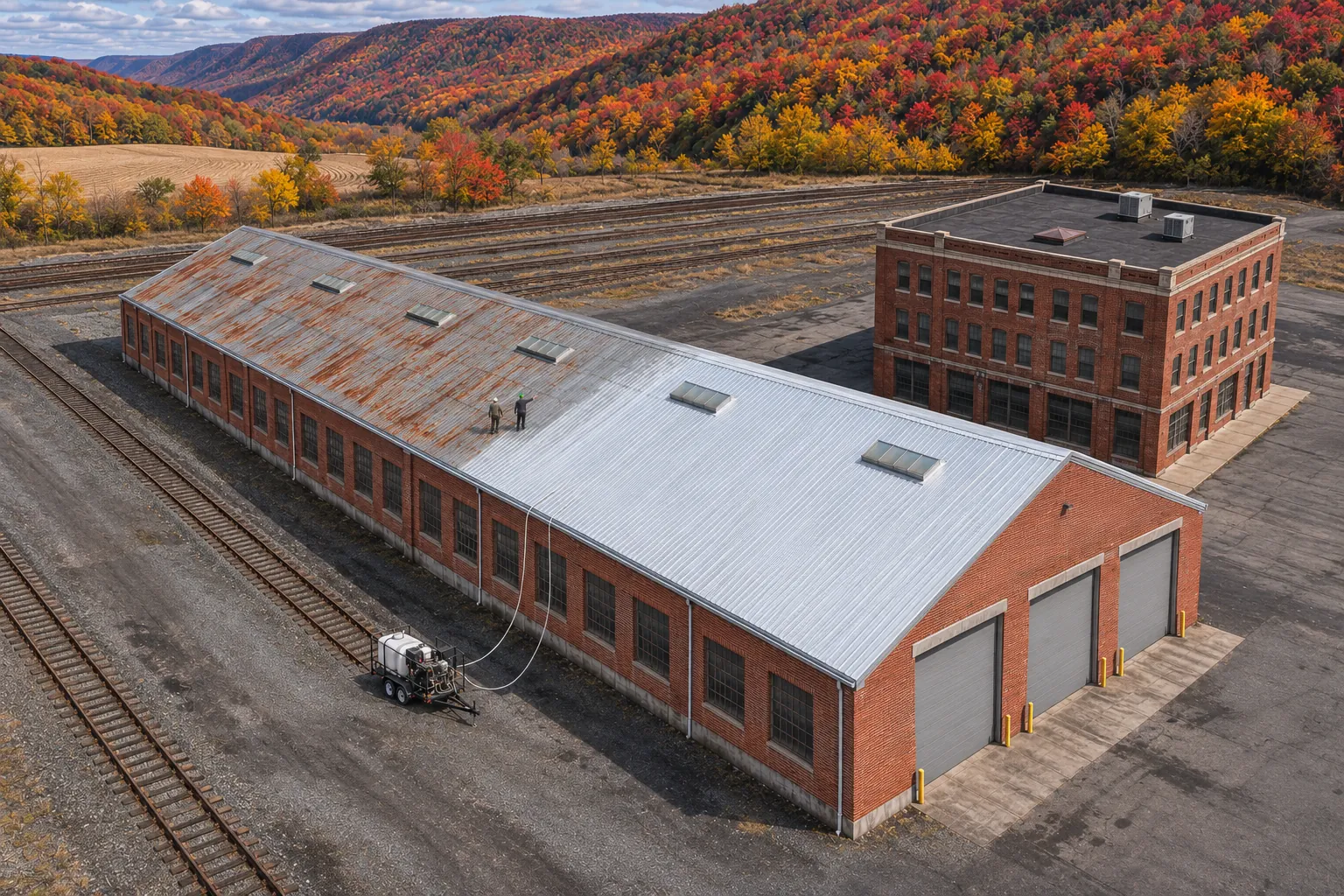
Long-standing water can mean a blocked outlet or a sagging deck. Call us and we will find out which before any coating plan.
Four steps, with low spots and wet areas sorted out before silicone goes down.
We map the low spots, open each drain, probe soft areas for wet insulation, and run an adhesion test on the existing surface.
Blocked outlets are cleared, wet insulation is replaced, and open seams and flashings are reinforced so the base is dry and firm.
The roof is washed and dried, then primer goes on wherever the adhesion test or the product sheet calls for it.
Silicone is sprayed or rolled to the rated thickness, with extra build at seams, curbs, and the low spots, then checked with a gauge.
Other parts of the same building may suit a different system.
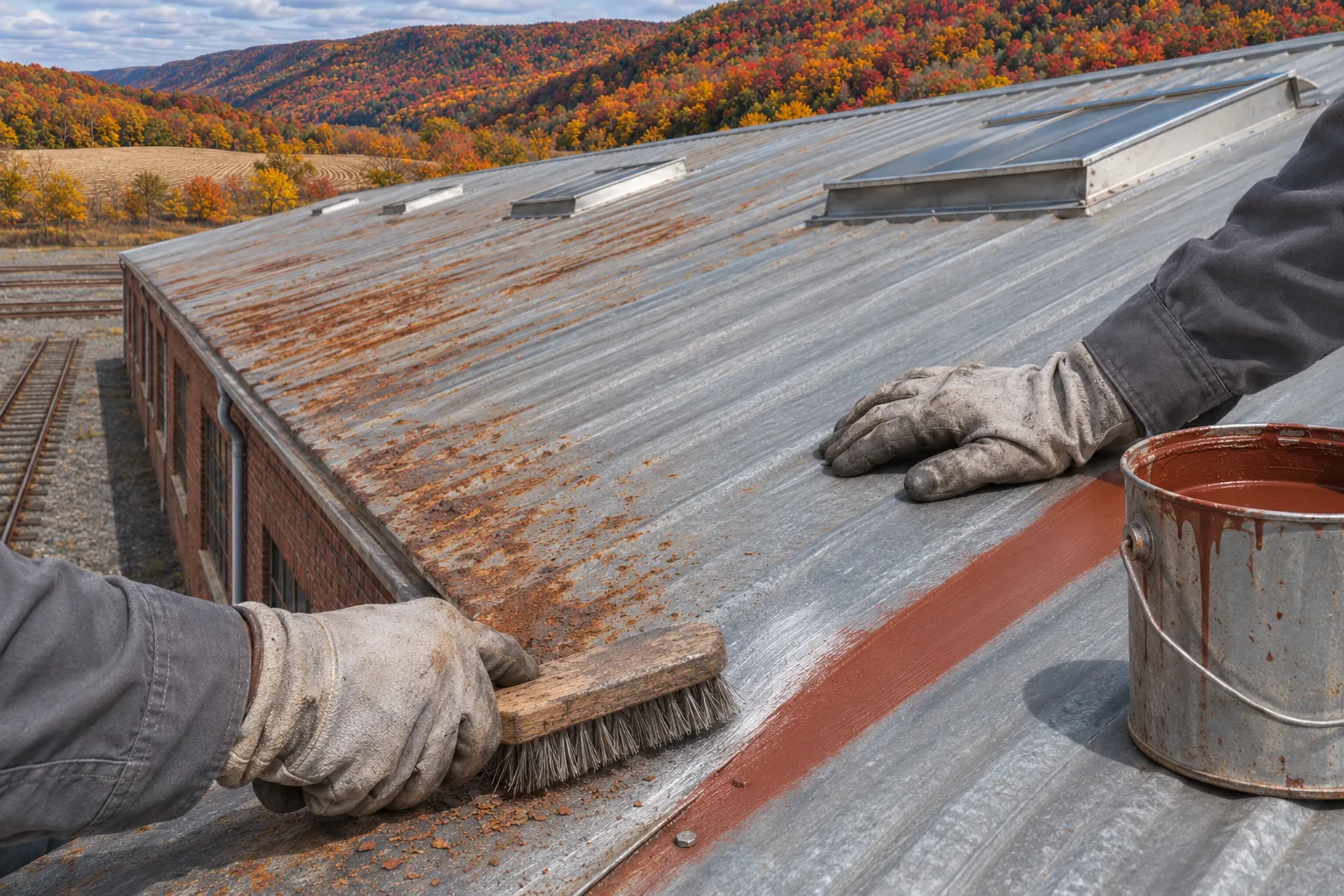
Pitched metal sections with loose screws and rusted laps get the full commercial metal coating treatment.
Altoona commercial metal roof coating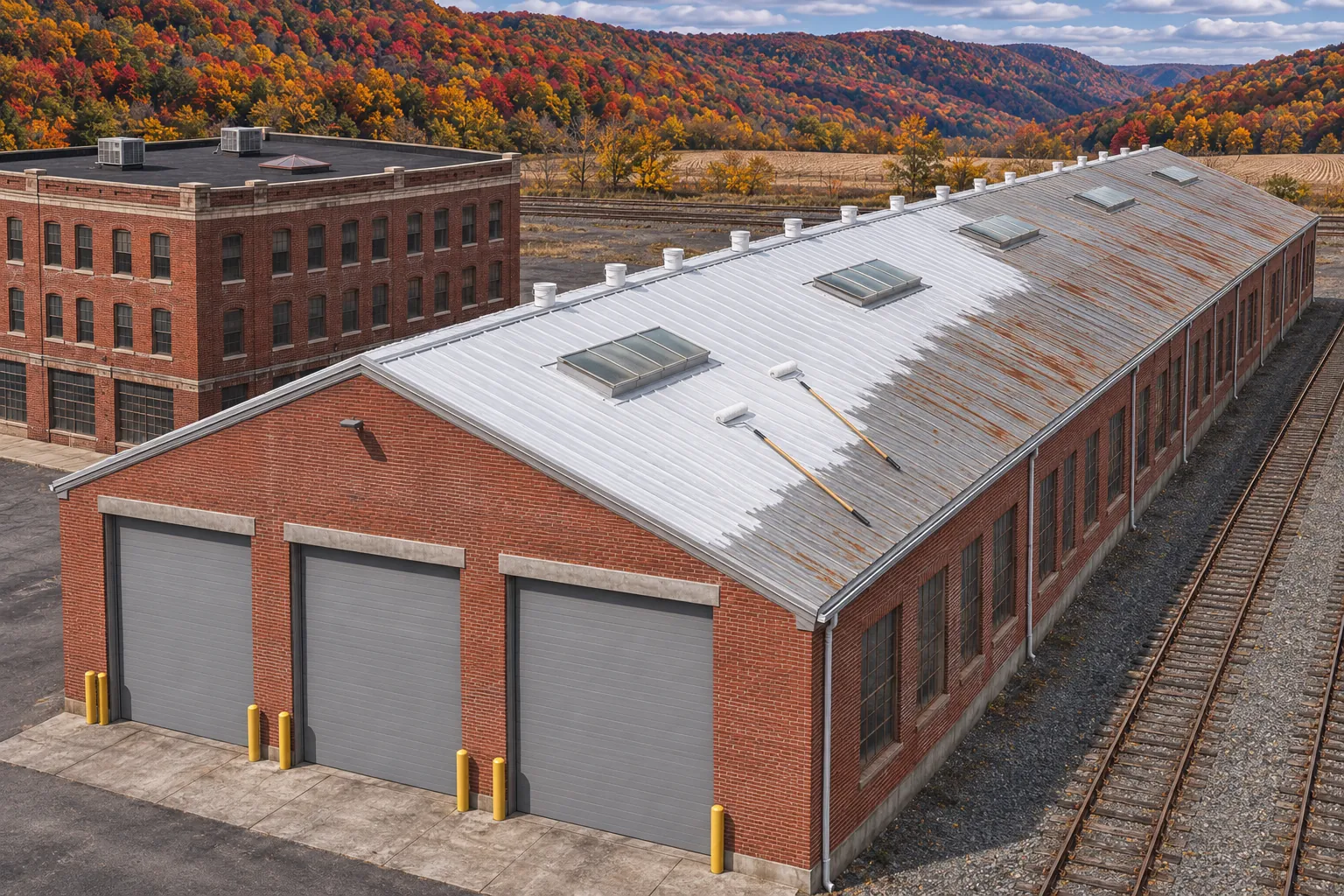
Roofs that shed water fast can take acrylic, which suits steeper panels better than slow, flat areas.
Altoona acrylic roof coating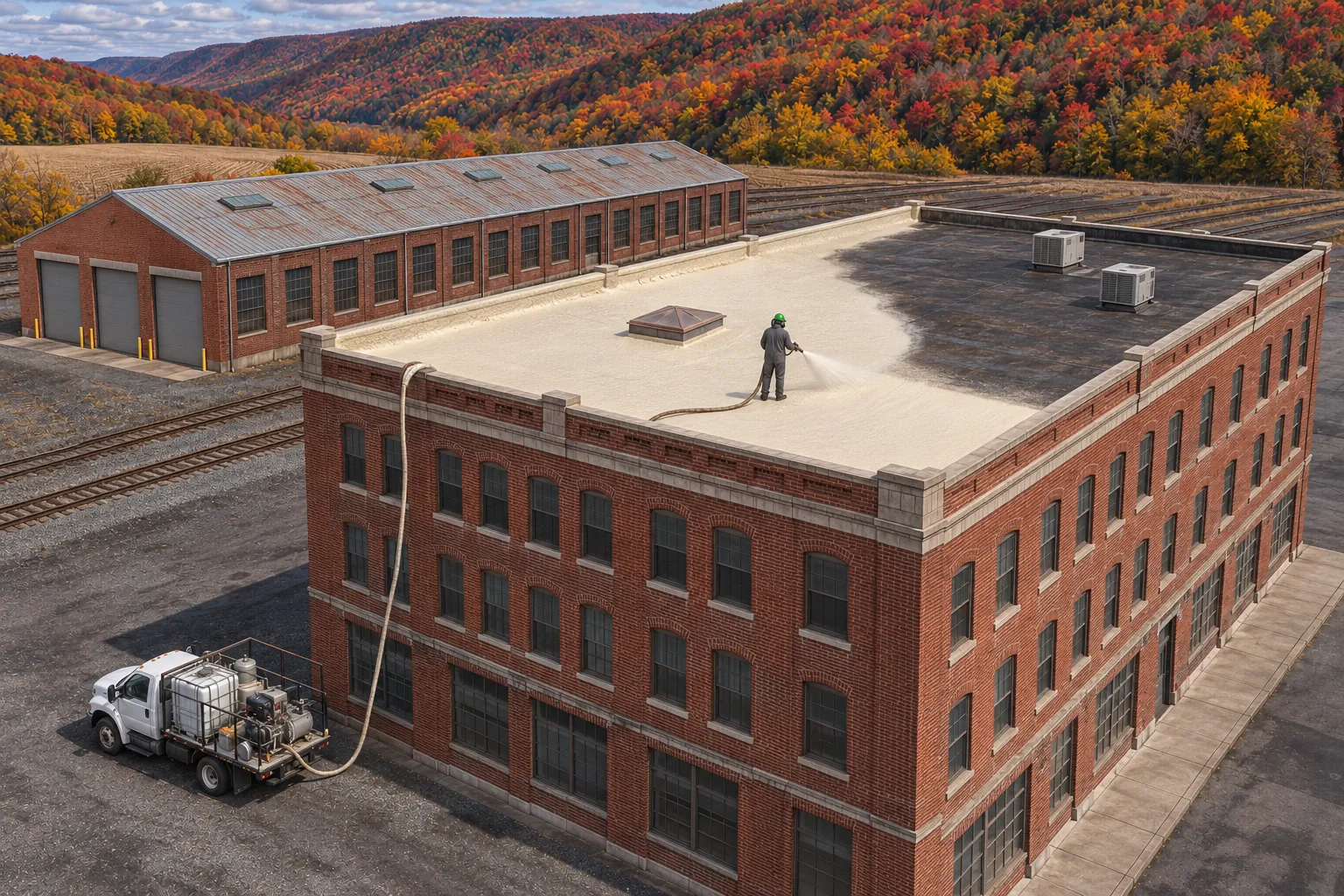
Flat roofs that also need insulation can take foam, with silicone as its protective topcoat.
Altoona spray foam roofing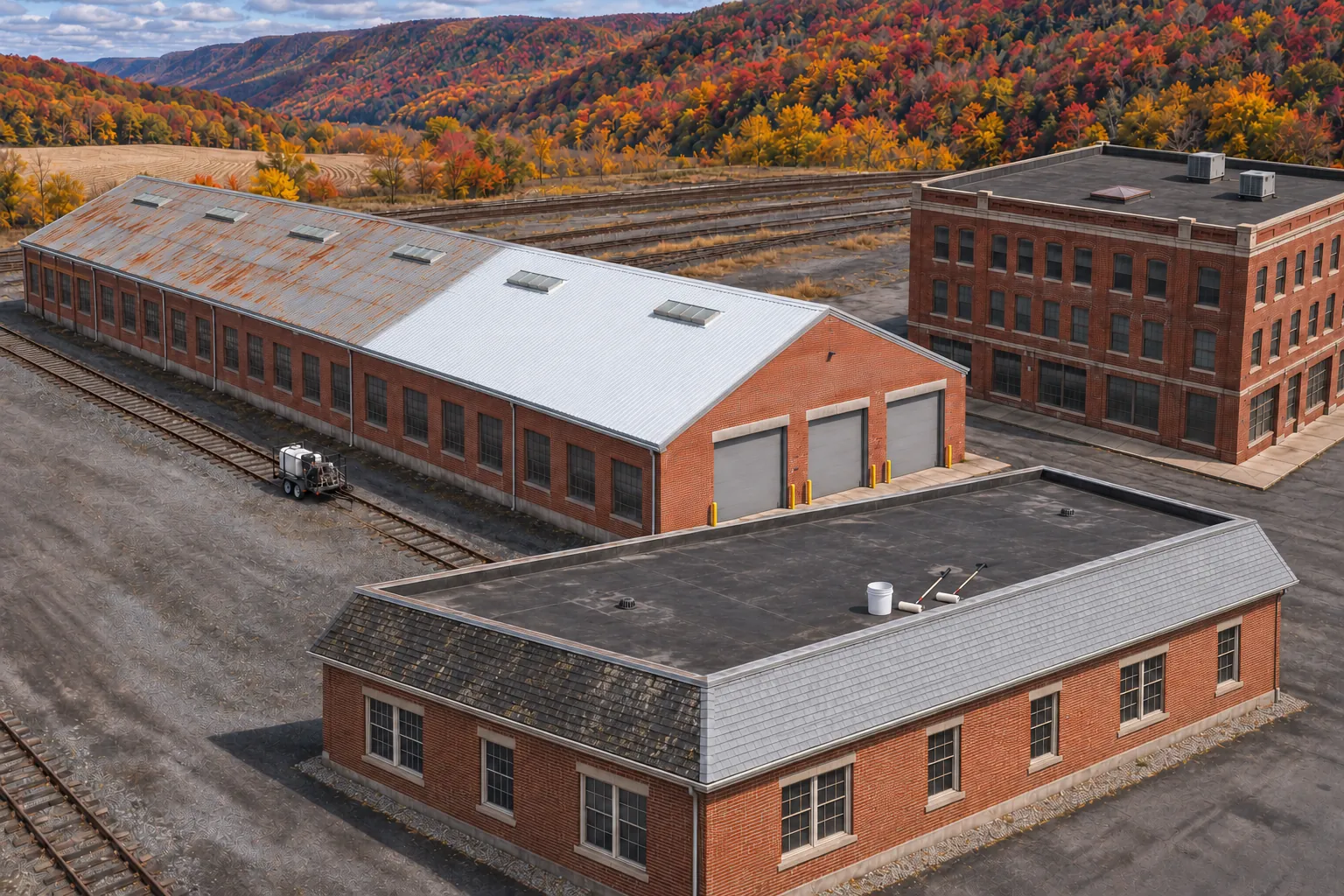
Mansard and sloped shingle faces on the same building are judged separately for coating.
Altoona shingle roof coatingPerformance
It depends on the film thickness, the condition of the roof underneath, foot traffic, and how long water sits. Edges and curbs show wear first, so a yearly look there tells you when a recoat is due long before the field wears through.
Rarely. Edges, joints, and curbs move more and take more weather than the middle of the roof, so they wear first. We inspect those details on their own, because a field that still looks good tells you little about a failing edge or a busy equipment curb.
Choosing Silicone
The roof decides. A warehouse with slow valleys or low bays near the docks leans toward silicone, while pitched panels that drain fast can take acrylic. We also look at the existing finish, the vents and repairs, and how each product handles water before choosing.
Yes, once the screws, laps, and rust are handled. Silicone bonds to primed metal and holds up where water lingers in shallow valleys, which is why it suits low-pitch metal better than acrylic does.
Ponding
Only after the cause of the pond is found and fixed. Silicone handles shallow water, but a clogged outlet, a crushed panel, or a sagging purlin still needs its own repair. We check the low area, the drain path, and the steel underneath before proposing silicone.
Shallow puddles still form where the slope is flat, and silicone is made to tolerate them. Deep or long-lasting ponds point to a drainage problem, which is why drains and low decks get checked before and after the work.
Get a planning range for your low-slope roof, or call and we will look at where the water sits.