Two Finishes, Two Primers
Fresh factory paint can be too slick for some coatings, while old paint is chalky. Tests on both decide the primer for each.
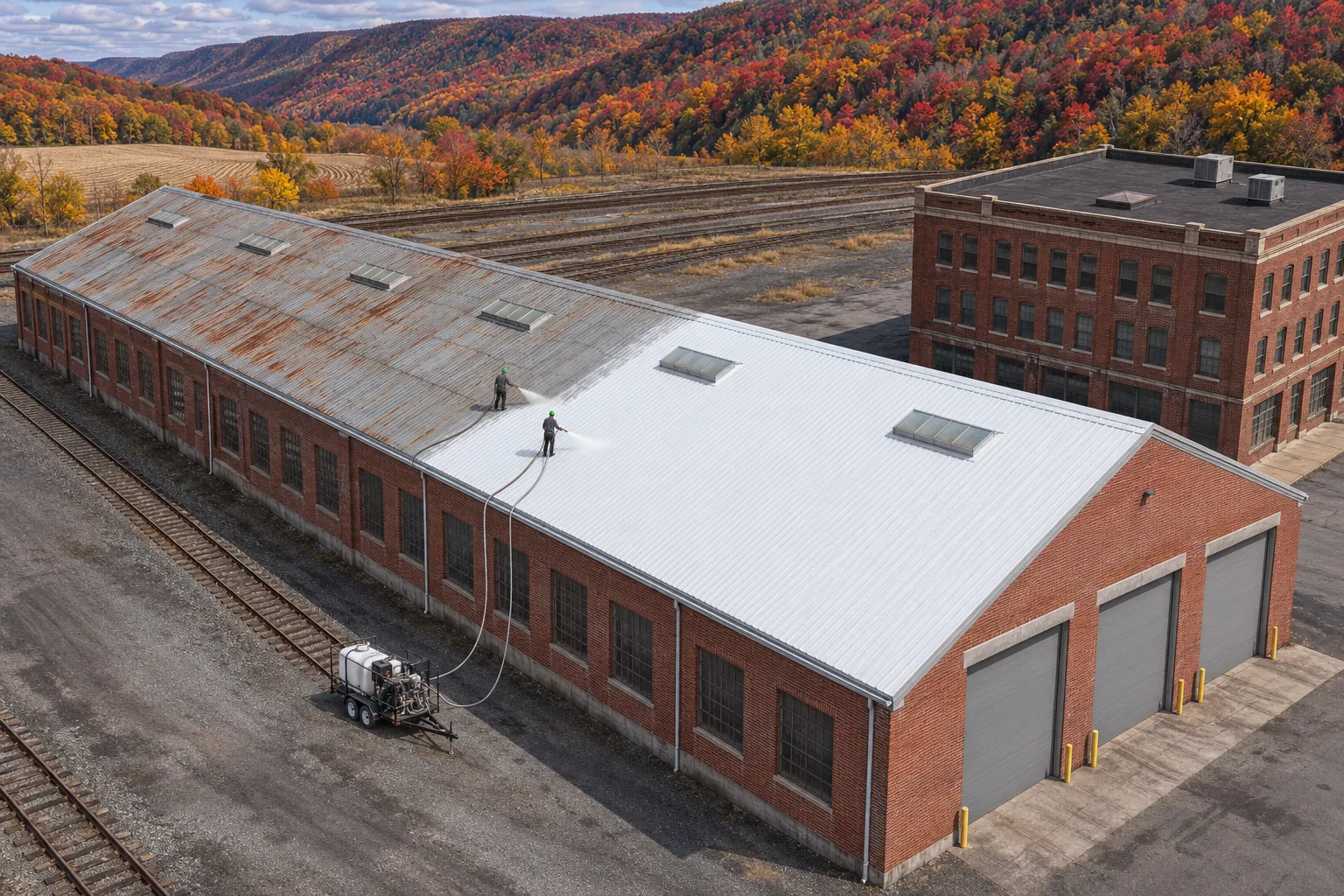
DuBois metal roof coating often follows a few panel swaps; we test the old and new finishes, check the joints between them, and coat both as one roof.
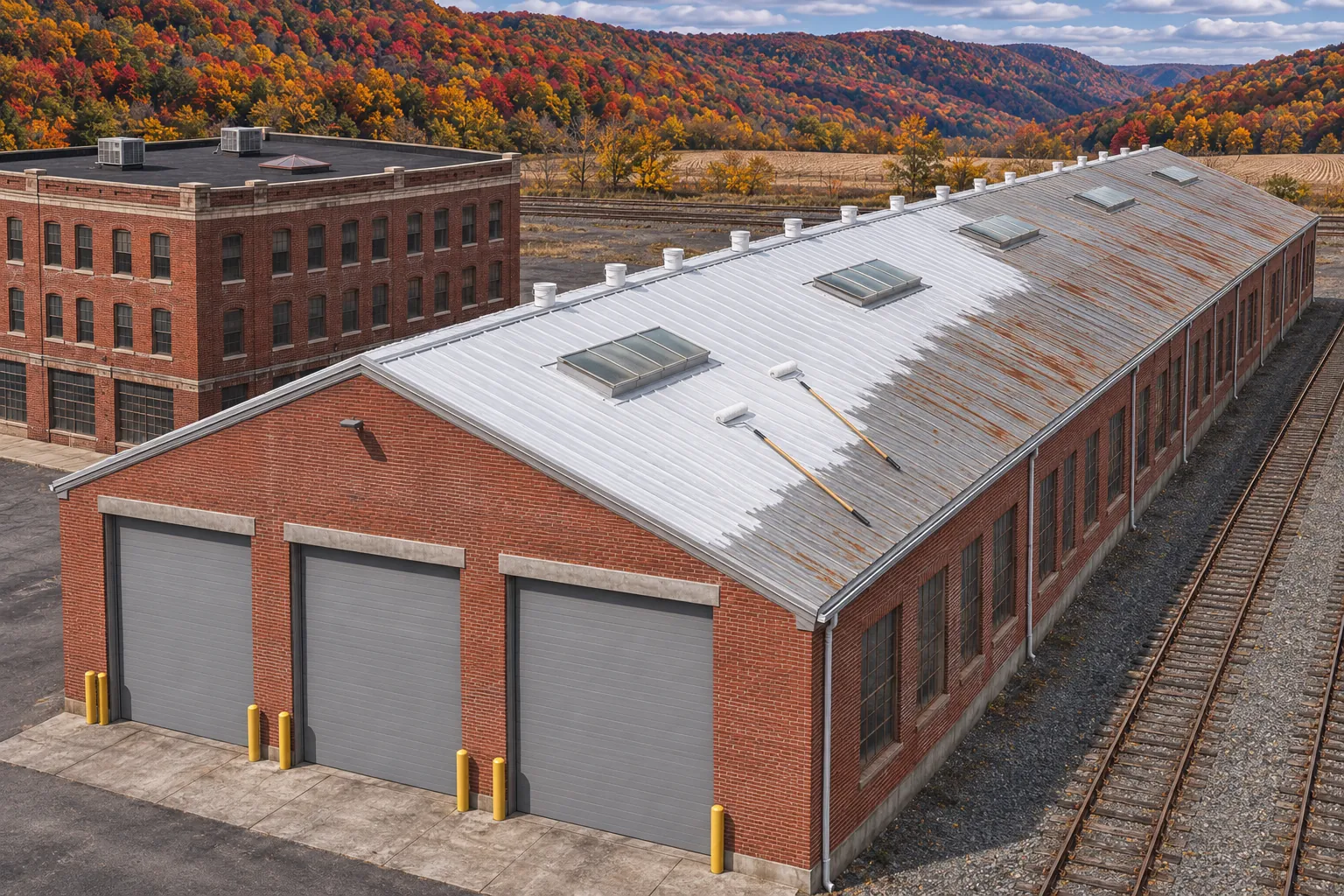
Storm damage or rust often leaves a roof with a handful of new panels among old ones, and DuBois metal roof coating has to bond to both. Factory finishes on new panels differ from aged, chalky paint, so each gets its own cleaning and adhesion check.
The laps where new meets old get extra attention before coating. Owners often call after an insurance repair has swapped the worst panels. The rest of the roof still carries the original screws and laps, and that is where the coating plan does most of its work.
Roofs with replaced panels share four issues that shape the coating plan.
Fresh factory paint can be too slick for some coatings, while old paint is chalky. Tests on both decide the primer for each.
Panel profiles from different makers rarely nest perfectly. Those laps get sealant, fabric, and a closer look.
Replacing damaged panels fixes one area. The screw rows across the rest of the roof still need checking.
Damage that justified new panels often let water in first, so insulation nearby is probed for moisture.
Panels near the swapped ones often carry smaller dents and cracked washers. Each one is checked before coating.
Storms that damage panels often bend the gutters too, and those get rehung so water leaves the roof.
A roof with mixed panels finishes as one surface once it is coated.
A roof patched with new panels looks and ages unevenly, and the joints between old and new are where leaks start. A single coating system over both, with each finish primed correctly and every new-to-old lap reinforced, turns the patchwork back into one roof.
Fabric and sealant close the gaps where new panels do not quite match the old ribs.
Bright new panels and faded old ones end up the same color under the topcoat.
Shops and warehouses keep working while the roof is coated in sections.
Mixed roofs here usually take one of these builds after the panel work.
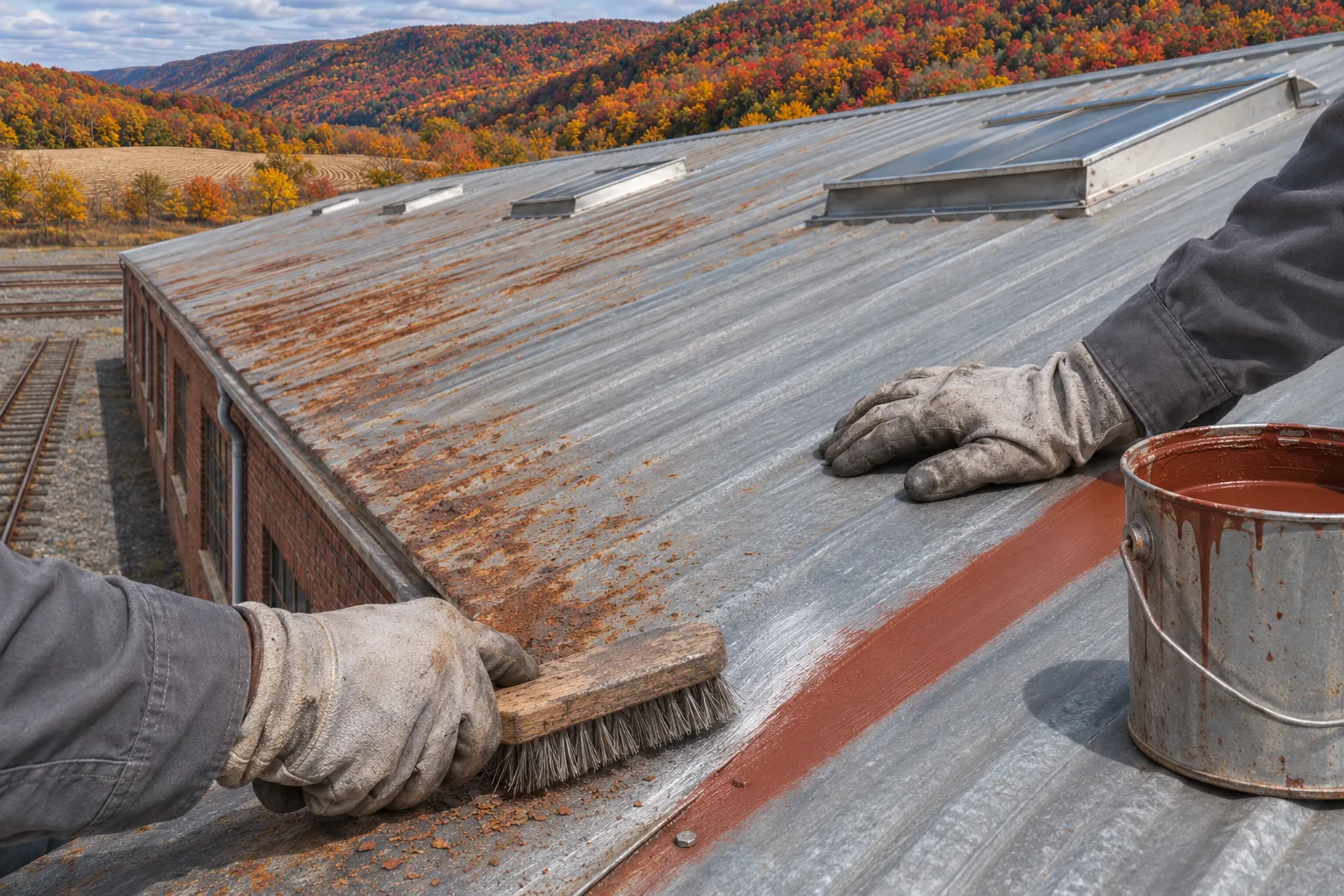
Old and new panels each get the primer their test calls for, then one coating covers both. Every lap where profiles meet gets fabric and sealant.
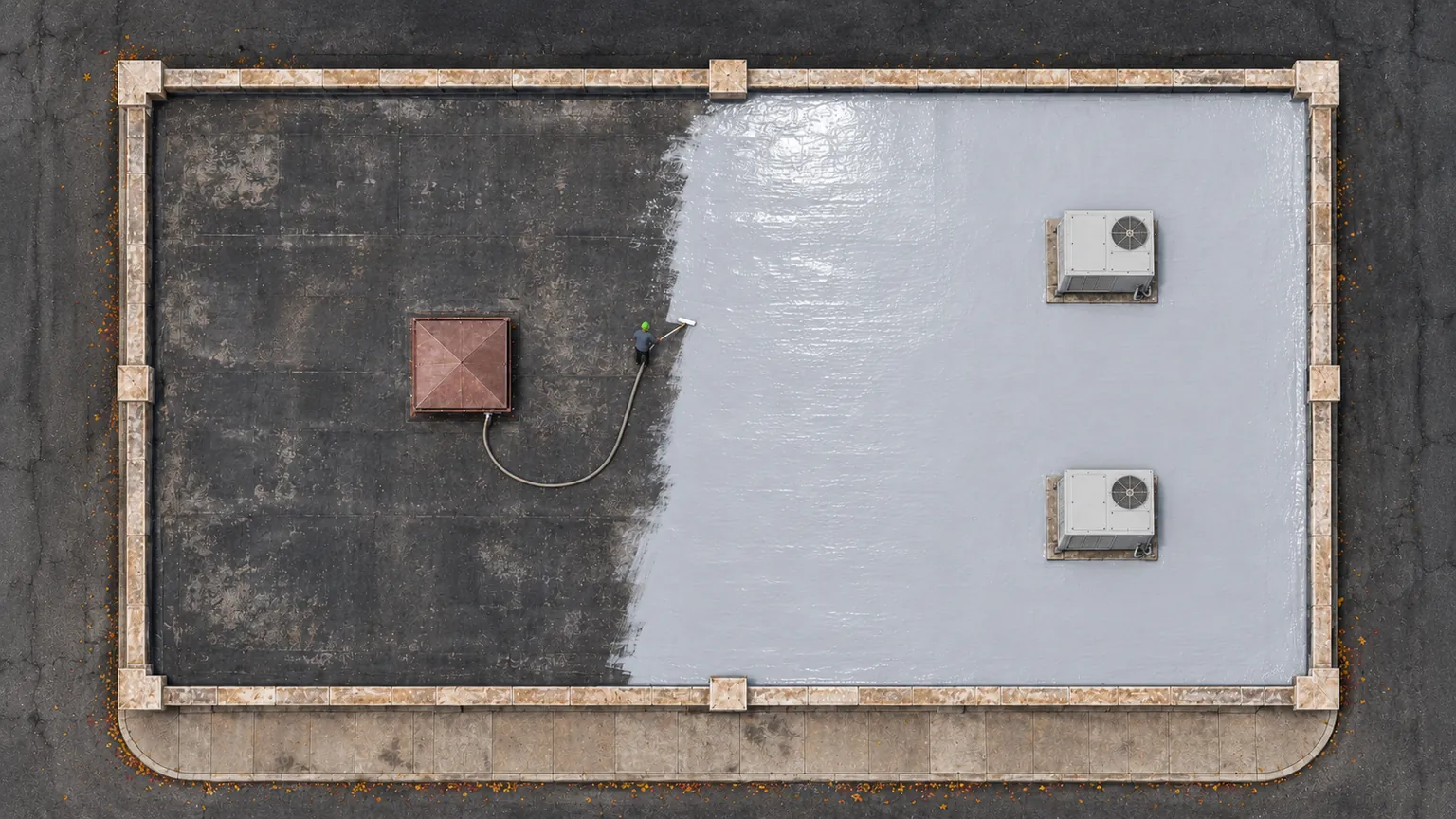
Low sections around the new panels take silicone if water sits there after rain. Low spots by the new panels are checked for a sagging purlin.
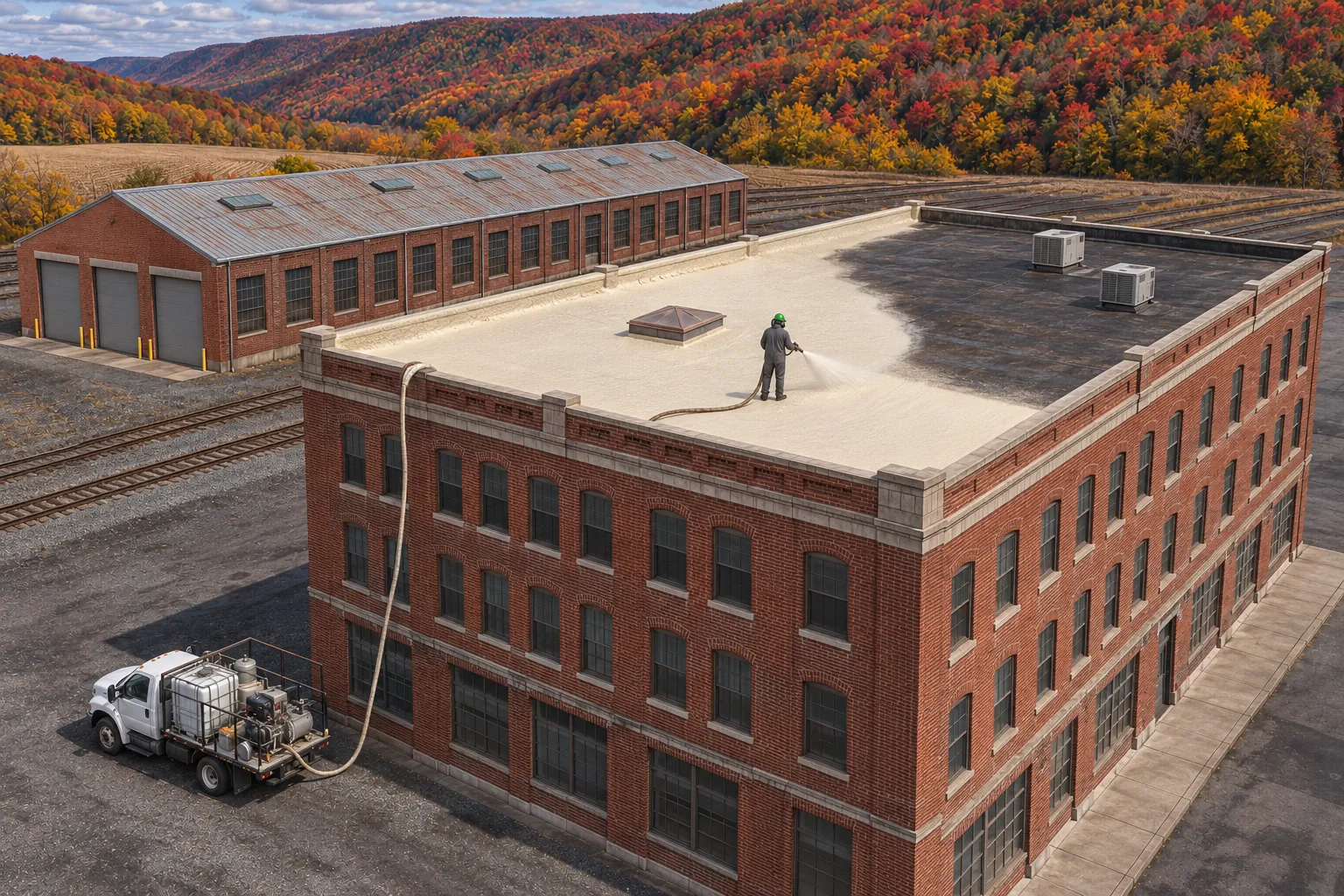
Buildings that also need insulation can take foam over old and new panels alike. Old and new panels both get fastened tight before spraying.
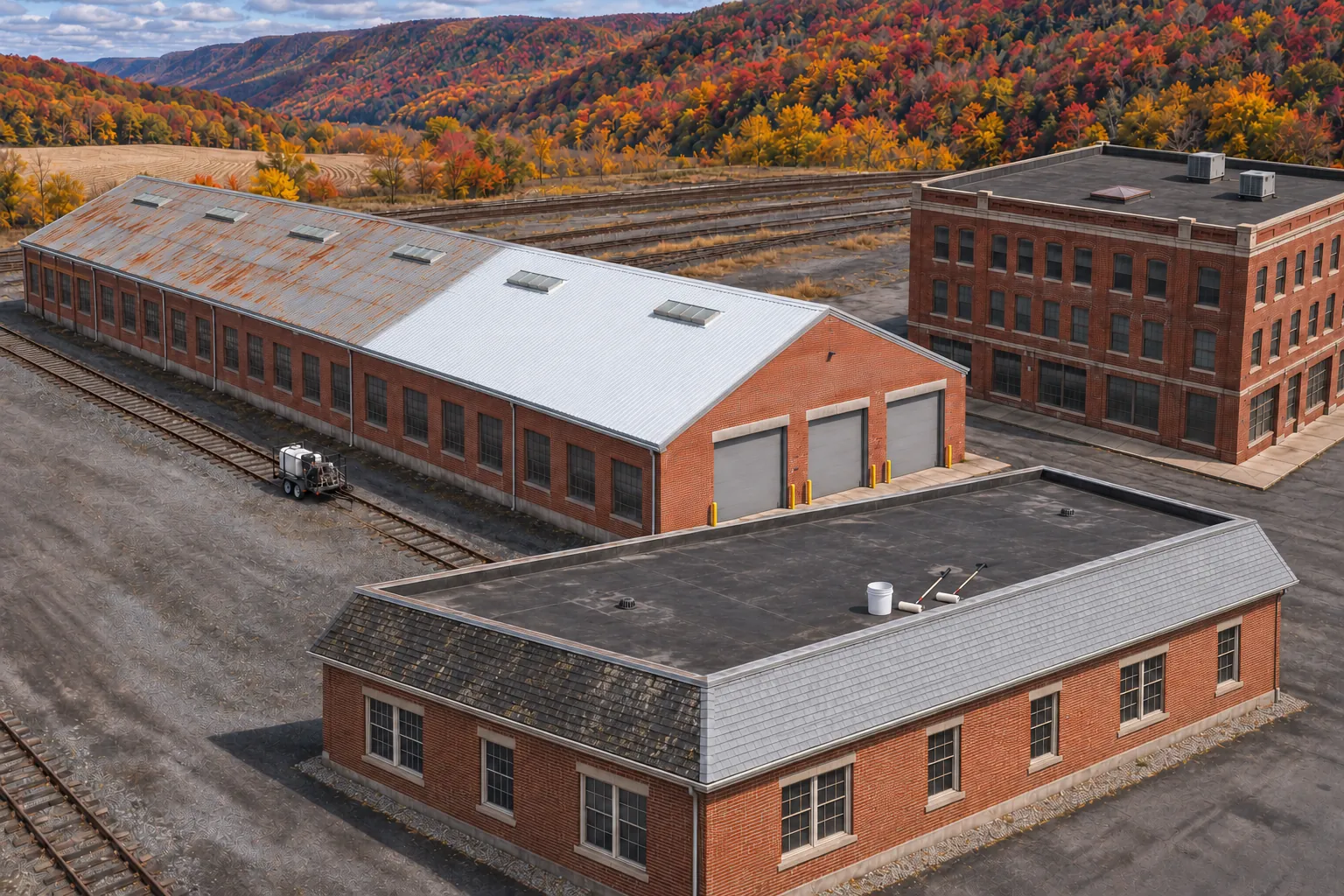
Shingle faces damaged in the same storm get tabs and flashing repaired first, then coated only where the maker allows. Storm-loosened flashing is reset before any coating.
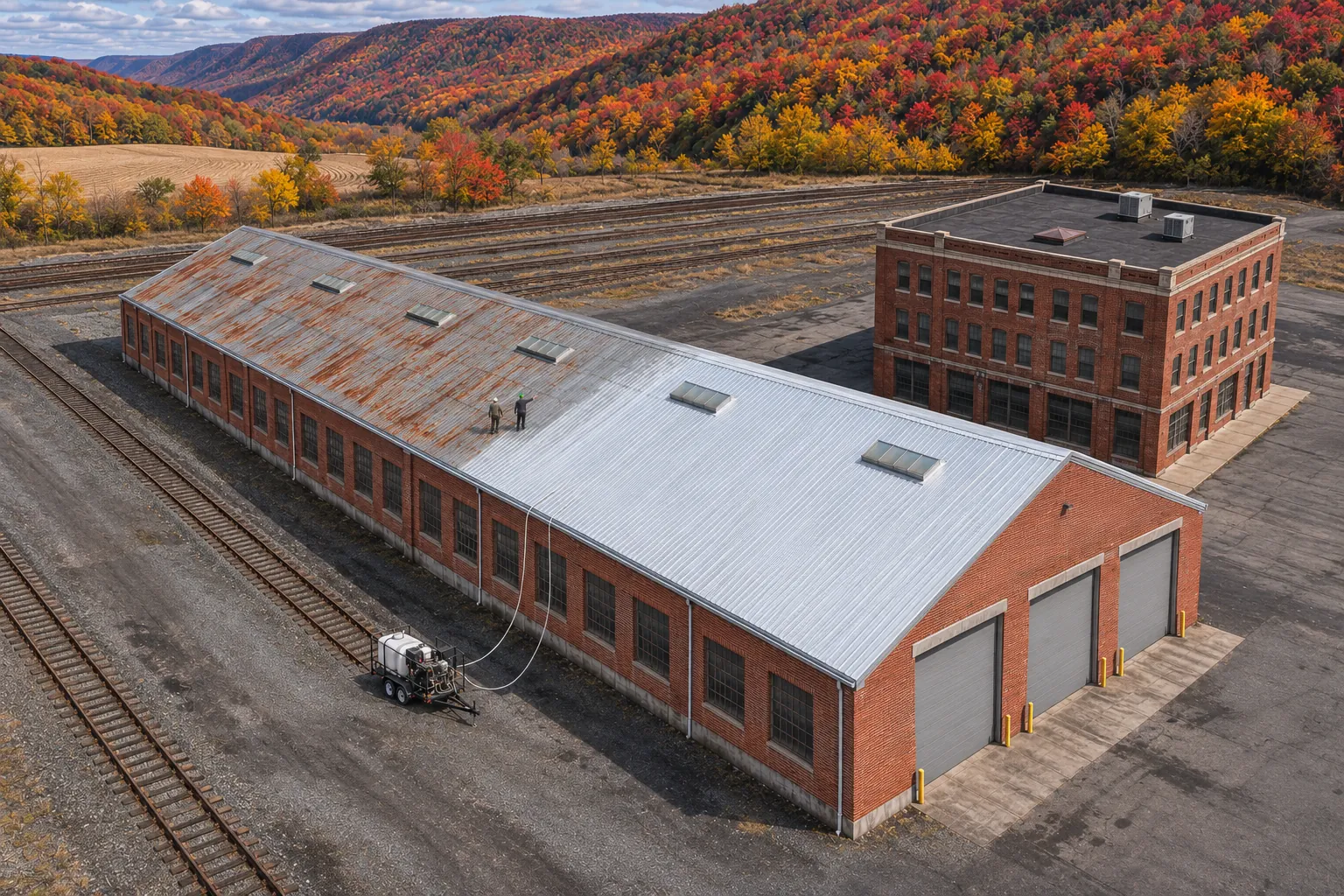
Get a planning range for coating the whole roof, then we test the new and old finishes in person.
Four steps, with the new-to-old joints handled before coating.
We test adhesion on old and new finishes, check the laps between them, walk every screw row, and probe insulation near the damage.
Laps where profiles meet get sealant and fabric, loose screws are replaced, and wet insulation is removed.
Old paint is washed and its rust primed, while new panels get the cleaning or primer their test calls for.
Base and top coats go on across old and new panels at full thickness, with extra build at the joints.
After the first heavy rain, the joints between old and new panels get another look for any sign of water.
Building outside DuBois? We work in the towns below too. Anywhere else, call us or send us a message.
Rail and machine shops get oily residue cleared from around stacks so primer bonds.
Johnstown metal roof coatingDistribution buildings get leaks traced along the purlins before coating starts.
Indiana metal roof coatingOlder metal buildings get rust depth and fastener grip tested before any proposal.
Latrobe metal roof coatingWarehouses with frequent service visits get protected walk routes in the plan.
Huntingdon metal roof coatingMixed Panels
Yes, when the remaining panels and the new ones both accept the coating system. We check the joints between old and new and set up preparation for each finish. Swapping the visibly damaged panels still leaves the screws, seams, and hidden moisture elsewhere to check.
Not always. Some new finishes need a cleaner or primer to give the coating something to grip, and the adhesion test tells us which, so the roof does not have to sit for a season.
Cost
Roof area sets the base, with coating running about $2.50 to $4.00 per square foot. Separate primers for two finishes, extra work at new-to-old laps, and screw replacement move a roof within that range.
Yes. Panel work and coating are listed as separate lines, so you can see what each part of the job costs.
Coating can follow soon after the panel work. Fresh sealant at the new laps needs its cure time, and the adhesion tests confirm when the new panels are ready.
Finding Help
We cover DuBois and handle roofs where storm or rust damage led to panel swaps, from testing the finishes through the final coat.
That depends on your policy and the adjuster. We can document the roof condition and the work, and your insurer decides what the claim covers.
Get a planning range for your patched roof, or call and we will look at the new and old panels together.