Old Paint Beside Bare Metal
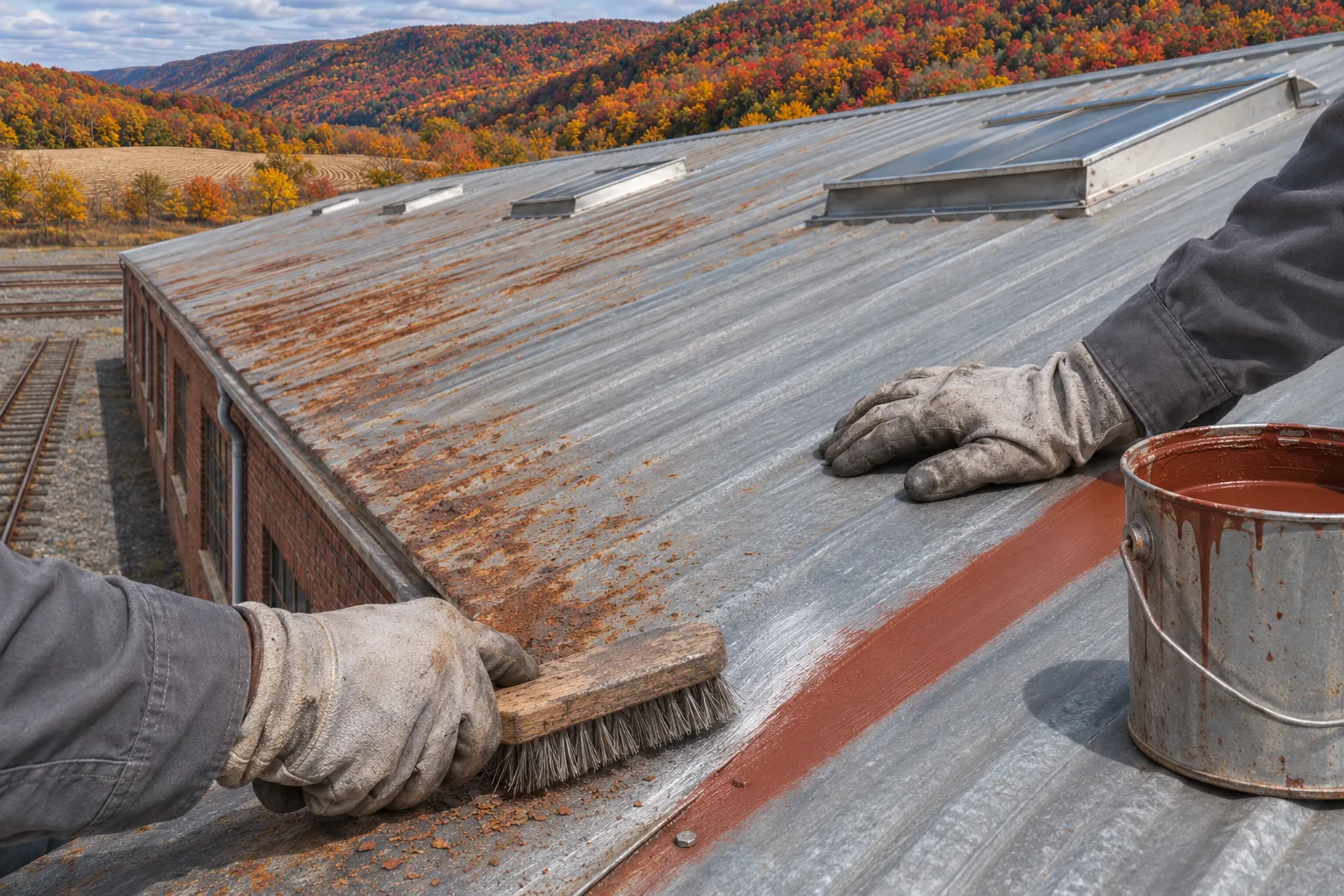
Repair shop roofs often mix chalky paint with patches of bare steel. Both surfaces get tested, and each gets the primer or treatment the system calls for.
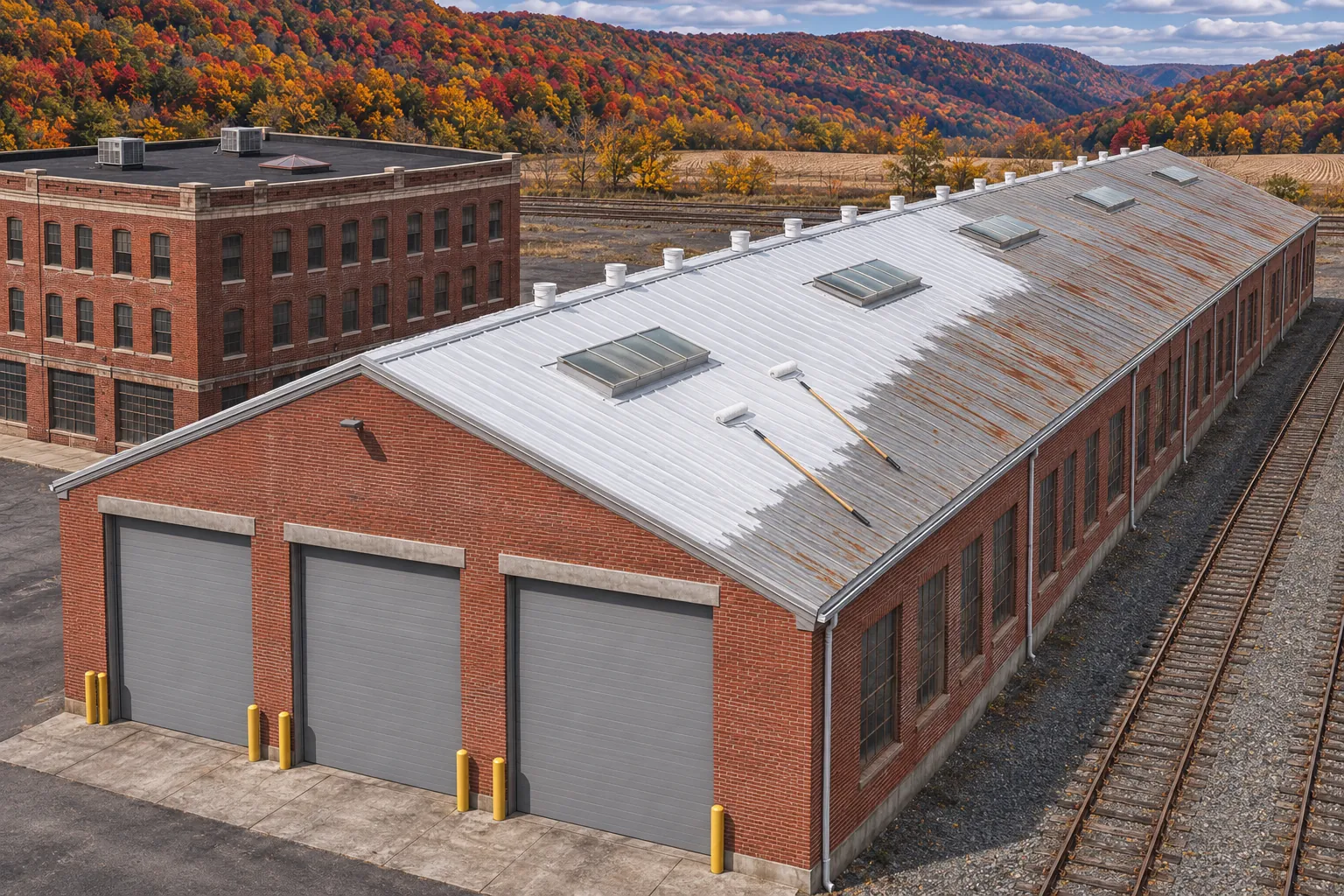
Altoona acrylic roof coating suits pitched metal roofs that drain fast; we prime the rust, reinforce the laps, and roll each coat in dry weather.
Altoona acrylic roof coating needs water to run off. Find your roof in these rows to see where it fits.
| What You See | Coat After Prep | Repair, Then Coat | Use Silicone Or Foam |
|---|---|---|---|
| Ribbed metal that sheds rain within minutes | Usually Fits | Sometimes | Rarely |
| Old paint that passes an adhesion test | Usually Fits | Sometimes | Rarely |
| Bare steel next to painted panels | Sometimes | Usually Fits | Rarely |
| Valleys or flat bays that hold water | Rarely | Sometimes | Usually Fits |
| An existing silicone coating | Rarely | Rarely | Usually Fits |
Acrylic bonds well when the surface is ready. These six roof details set the preparation on every job.
Repair shop roofs often mix chalky paint with patches of bare steel. Both surfaces get tested, and each gets the primer or treatment the system calls for.
Rust at the rib tops and laps is cleaned to firm steel and primed so the acrylic sits on a stable base.
Fabric embedded in a base coat bridges each lap, and screw heads get sealed, because acrylic alone will not span a moving joint.
Any valley or flat bay where water sits gets flagged, since acrylic is a poor match for lingering water.
Temperature, humidity, and dew all affect how acrylic dries. Coating days are picked from the forecast each week.
A first pass that went on thin or over dirt is checked before the second goes on, and weak bond is corrected first.
Acrylic systems change with the panel profile, the rust level, and the color the owner wants on top.
Primed rust, sealed screws, fabric at laps, and two acrylic coats rolled along the ribs of a pitched shop roof.
Standing seam roofs with no exposed screws take acrylic after the seams, end laps, and penetrations are detailed.
A white acrylic topcoat reflects summer sun off the panels, which keeps the space below from heating as quickly.
A roof already coated in acrylic can take a fresh coat after cleaning and a check for loose areas.
Acrylic gives pitched metal a bright, flexible surface that recoats easily.
Pitched metal roofs shed water quickly, which is the condition acrylic needs. Over primed steel and reinforced laps, a white acrylic system reflects summer heat and keeps the panels covered, and future recoats go right on top after a wash.
Cleanup takes only water, and the product gives off little odor, which suits occupied shops and offices below.
Acrylic bonds to itself well, so maintenance coats go on without stripping the roof.
Primer and coating keep moisture away from cleaned steel, slowing new rust on the ribs.
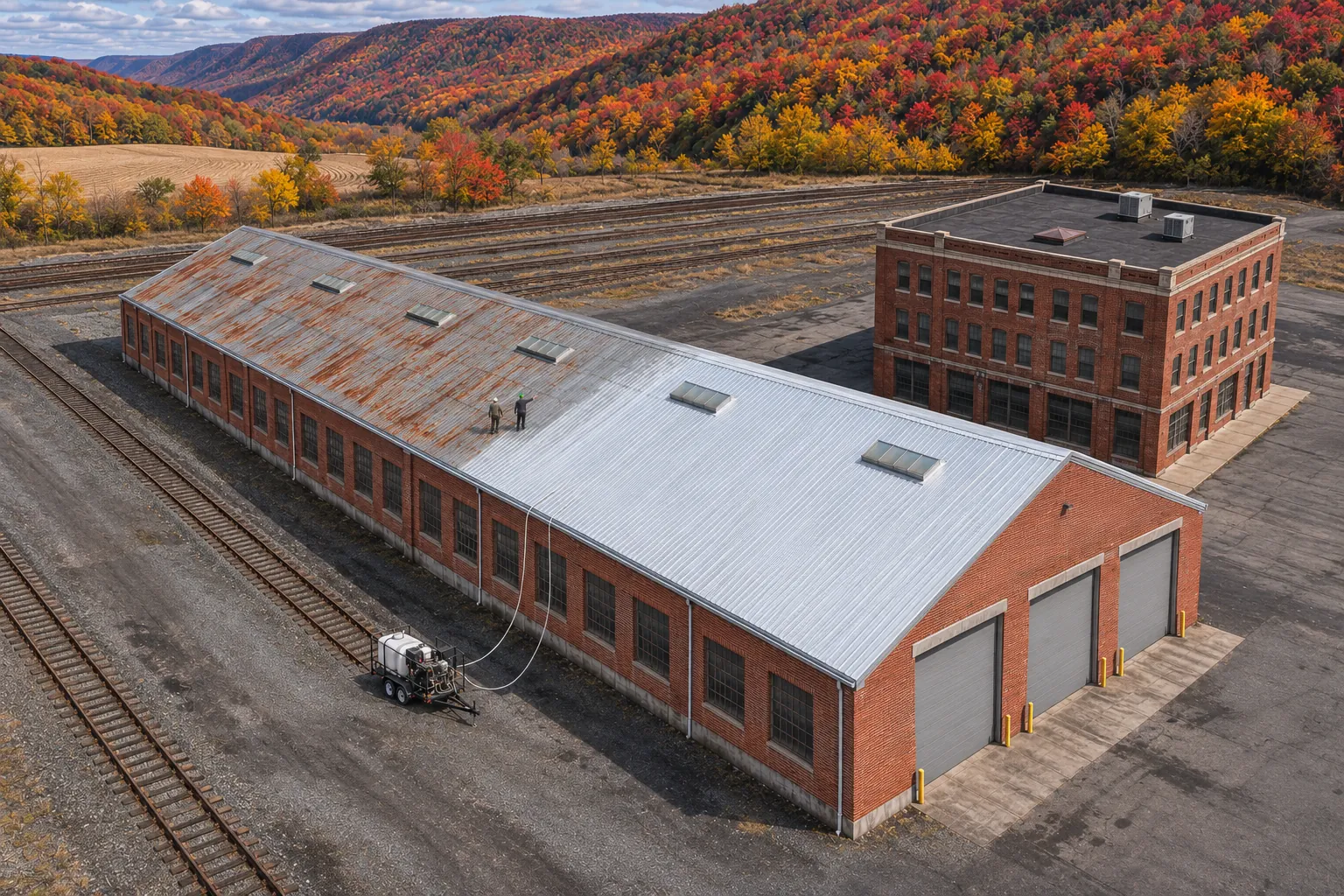
Acrylic waits for mild, dry weather. Get a planning range now, and repairs can run while the coating days are scheduled.
Four steps, with the weather checked again before each coat goes on.
We test the old paint for adhesion, check rust depth, walk the screw rows and laps, and note any spot where water sits.
Screws are secured, laps resealed, rust cleaned back and primed, and bare steel treated as the system requires.
A base coat goes on with fabric pressed into each lap and around curbs and stacks, then cures fully.
The topcoat is rolled or sprayed when the forecast shows dry, mild weather, and thickness is checked before we leave.
Where acrylic is the wrong match, another system usually fits.
Metal roofs with heavy rust or failing screws start with the full commercial metal coating process.
Altoona commercial metal roof coating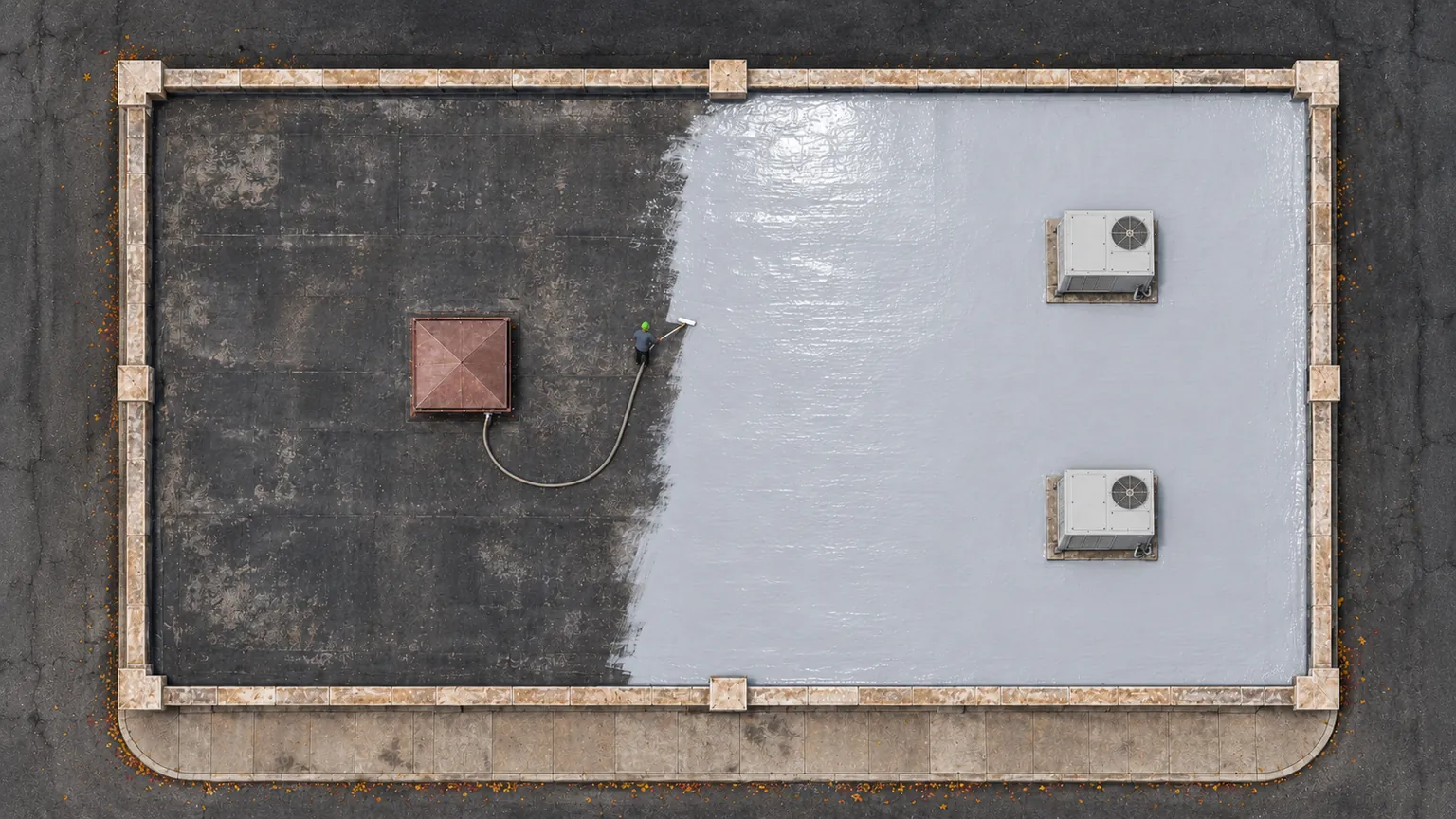
Valleys and flat bays that hold water take silicone, which tolerates lingering water.
Altoona silicone roof coating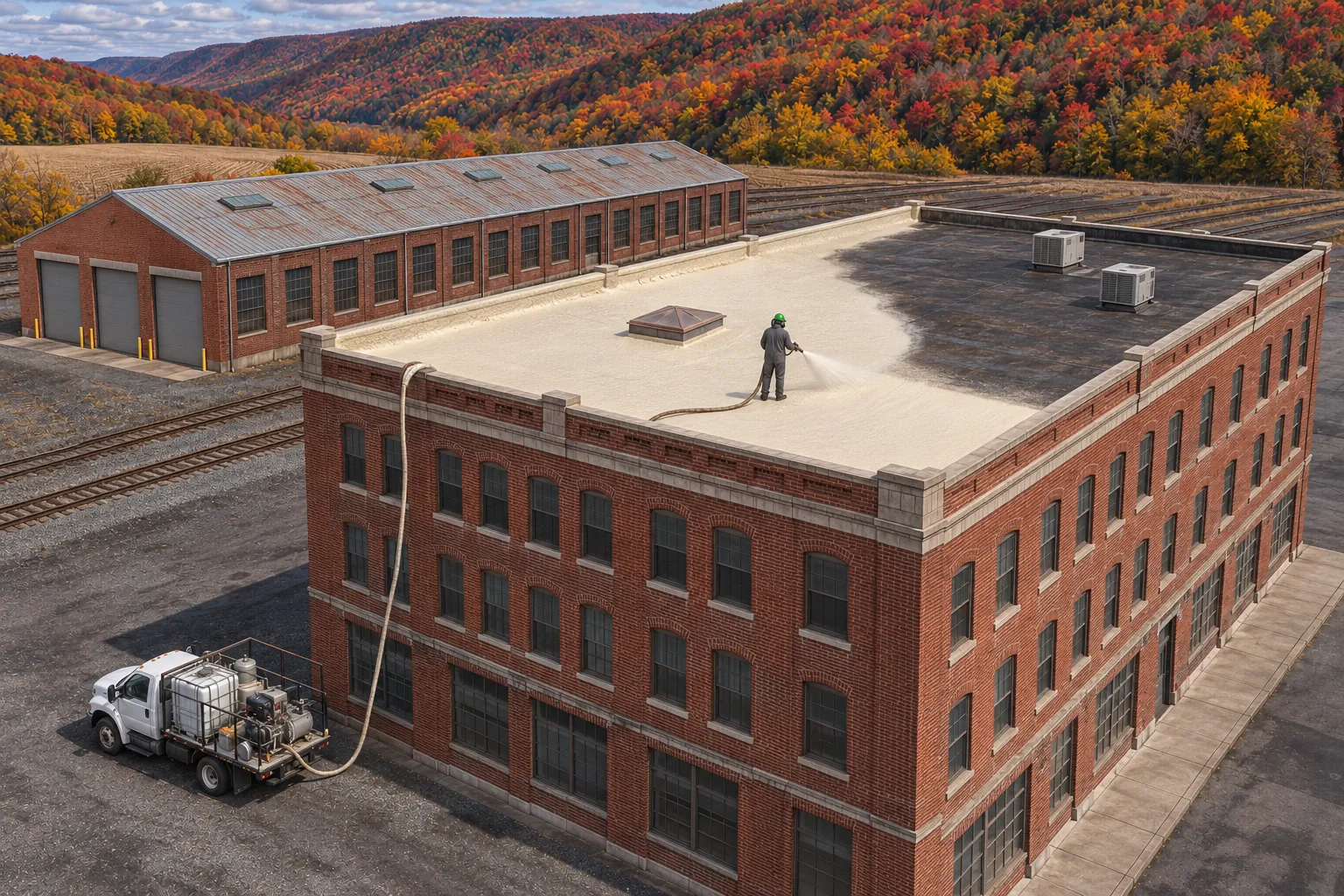
Flat roofs needing insulation get spray foam, sealed with its own topcoat.
Altoona spray foam roofing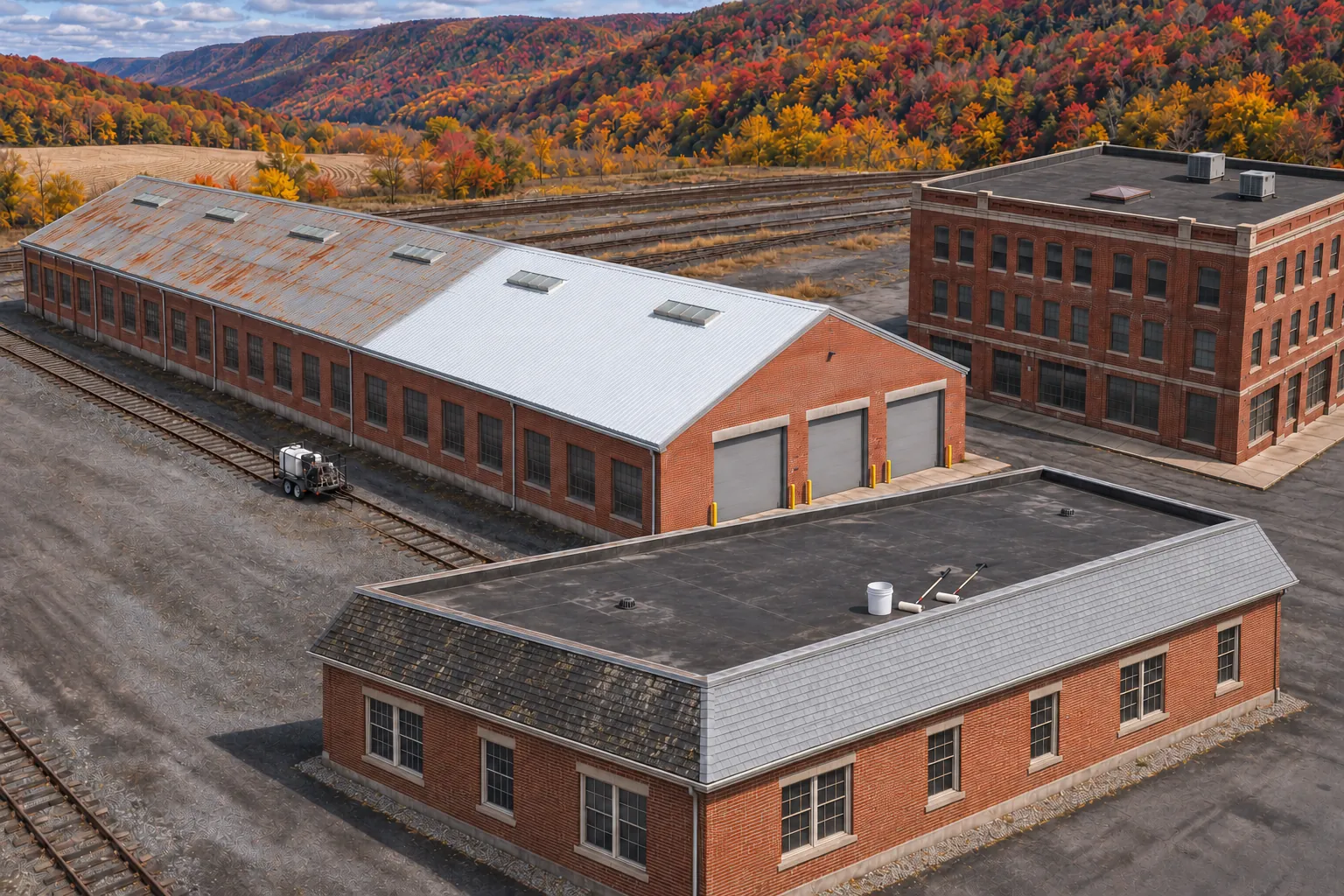
Shingle faces on the same building are checked against the shingle maker's rules first.
Altoona shingle roof coatingBond And Coats
It will once each surface is prepared for it. Old paint gets an adhesion test, and bare steel gets the primer or treatment the system lists. Rolling one coat across both without that work can leave weak spots hidden under a surface that looks even.
Most systems call for a base coat and a topcoat, with fabric embedded at the laps. The number of coats follows the thickness the product requires, measured on the roof.
Screw heads get cleaned, checked for grip, and sealed before acrylic covers them. Rusted heads that still hold are primed; loose or corroded ones are replaced first.
Weather
Cure time changes with temperature, humidity, sun, and coat thickness, so no single number applies. Shaded areas, laps, and thick details dry slower than the open field, and each coat needs dry weather until it firms up.
Enough for the product to cure under its listed conditions, which shift with heat, humidity, and coat thickness. We plan from those requirements and the forecast, and keep the whole roof in mind, since shaded sections dry slowest.
Fixing Thin Spots
A second coat adds thickness, but it will not fix poor bond or dirt under the first. We check the first pass for adhesion and build, correct any contaminated or loose areas, and then add the second coat to reach the required thickness.
Yes on roofs that drain well, once it has cured. Acrylic goes on only in mild weather, so it is scheduled from late spring through early fall, and the cured film handles snow and cold on a pitched roof.
Get a planning range from your roof size, or call and we will check whether your panels drain well enough for acrylic.