
Moisture In The Old Roof
Foam sprayed over wet insulation traps the water. Core cuts and a moisture probe find wet areas, which are removed before spraying.
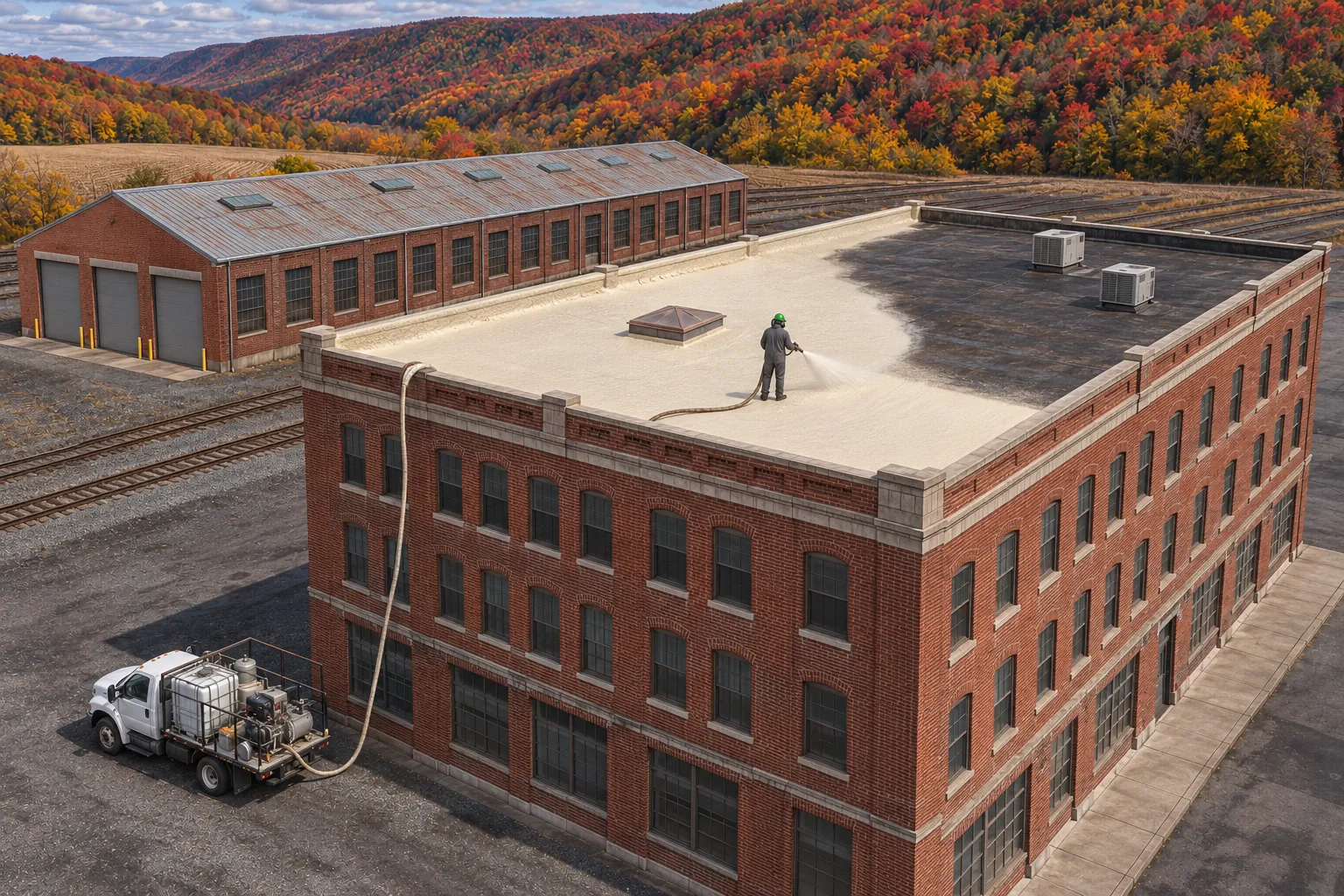
Altoona spray foam roofing adds insulation and a one-piece surface to flat commercial roofs, sprayed over a dry, prepared deck and sealed with a topcoat.
Altoona spray foam roofing needs a dry deck and room to stage the rig. Compare your roof with the rows.
| What You See | Spray After Prep | Repair, Then Spray | Choose Another System |
|---|---|---|---|
| Flat roof that runs cold in winter | Usually Fits | Sometimes | Rarely |
| Corrugated metal with tight fasteners | Usually Fits | Sometimes | Rarely |
| Existing foam roof with a worn topcoat | Sometimes | Usually Fits | Rarely |
| Wet insulation across large areas | Rarely | Sometimes | Usually Fits |
| Busy site with no room to control overspray | Rarely | Sometimes | Usually Fits |
Foam fixes a lot, but only over a base that is ready. These six checks come first on every foam roof.
Foam sprayed over wet insulation traps the water. Core cuts and a moisture probe find wet areas, which are removed before spraying.
Corrugated metal takes foam well when the panels are clean, fastened, and primed. Loose screws are fixed first so the foam sits on a stable base.
Wind carries foam mist onto cars, walls, and units. Spray days, screening, and work zones are planned around the wind and the parking lot.
Air intakes are shut down or covered during spraying so fumes stay out of the building.
Sunlight breaks down bare foam. The topcoat goes on soon after spraying and gets renewed as it wears.
Service routes to rooftop units get walk pads or granules in the topcoat so boots do not gouge the foam.
Foam roofs differ by what they cover and which topcoat seals them.
Foam fills the panel profile and builds a flat, insulated surface over a fastened, primed metal roof. Loose screws are tightened first so the panels stay still under the foam.
Dry, well-attached membrane roofs can be cleaned, primed, and sprayed without tearing the old roof off. Blisters and wet spots are cut out before spraying.
Silicone seals the foam where water lingers, and acrylic where the surface drains, chosen per roof. Granules go into the topcoat along service paths.
An existing foam roof gets cleaned, any damage repaired, and a fresh topcoat applied once the old one wears thin. Bare or cracked foam is patched before the recoat.
Foam adds insulation and a continuous surface in one system.
Spray foam bonds across the whole roof with no seams or fasteners on top, and its thickness adds insulation the building may never have had. Built a little thicker in the right places, it also sheds water off flat spots toward the drains.
Foam thickness can be tapered to move water off low areas toward outlets.
The foam layer slows heat loss through a thin roof, which helps shops that run cold.
A dry, firm roof can stay in place under the foam, saving disposal and keeping the building closed in.
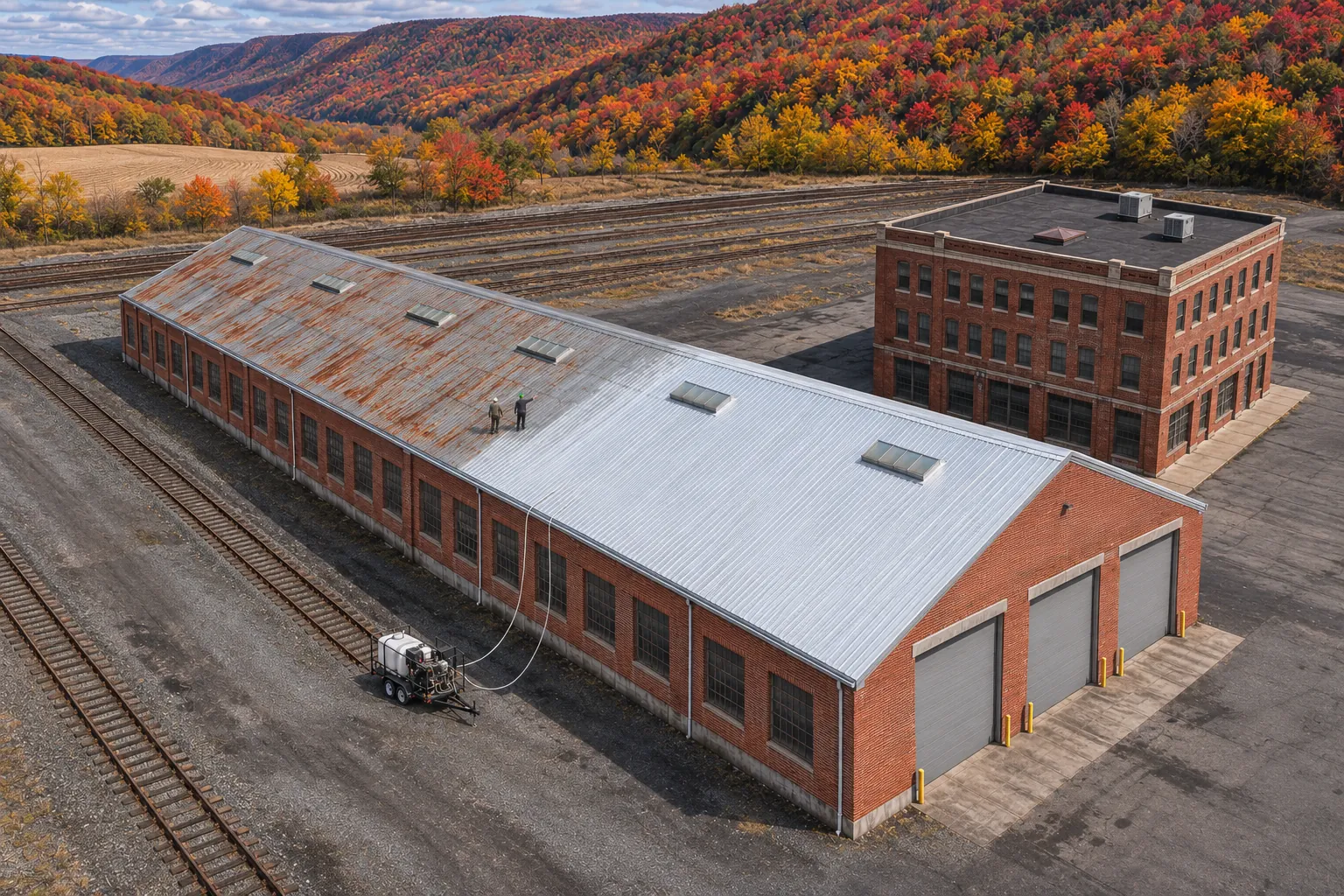
A worn topcoat leaves the foam open to sunlight. Call us and we will check whether a recoat is enough.
Five steps, with the deck dried and the surroundings protected before any foam is sprayed.
We take core cuts, probe for moisture, check panel attachment, and note intakes, vents, and the areas where overspray could drift.
Wet insulation comes out, loose panels are fastened, and flashings and drains are prepared for the foam to tie into.
Rooftop unit intakes are covered or shut down, screens go up where needed, and spray days are set by wind and temperature.
Foam goes on in passes to the planned depth, tapered toward drains, and is checked for thickness and surface texture.
A silicone or acrylic topcoat covers all foam the same week, with granules on traffic paths.
Some buildings suit a coating more than a foam recover.
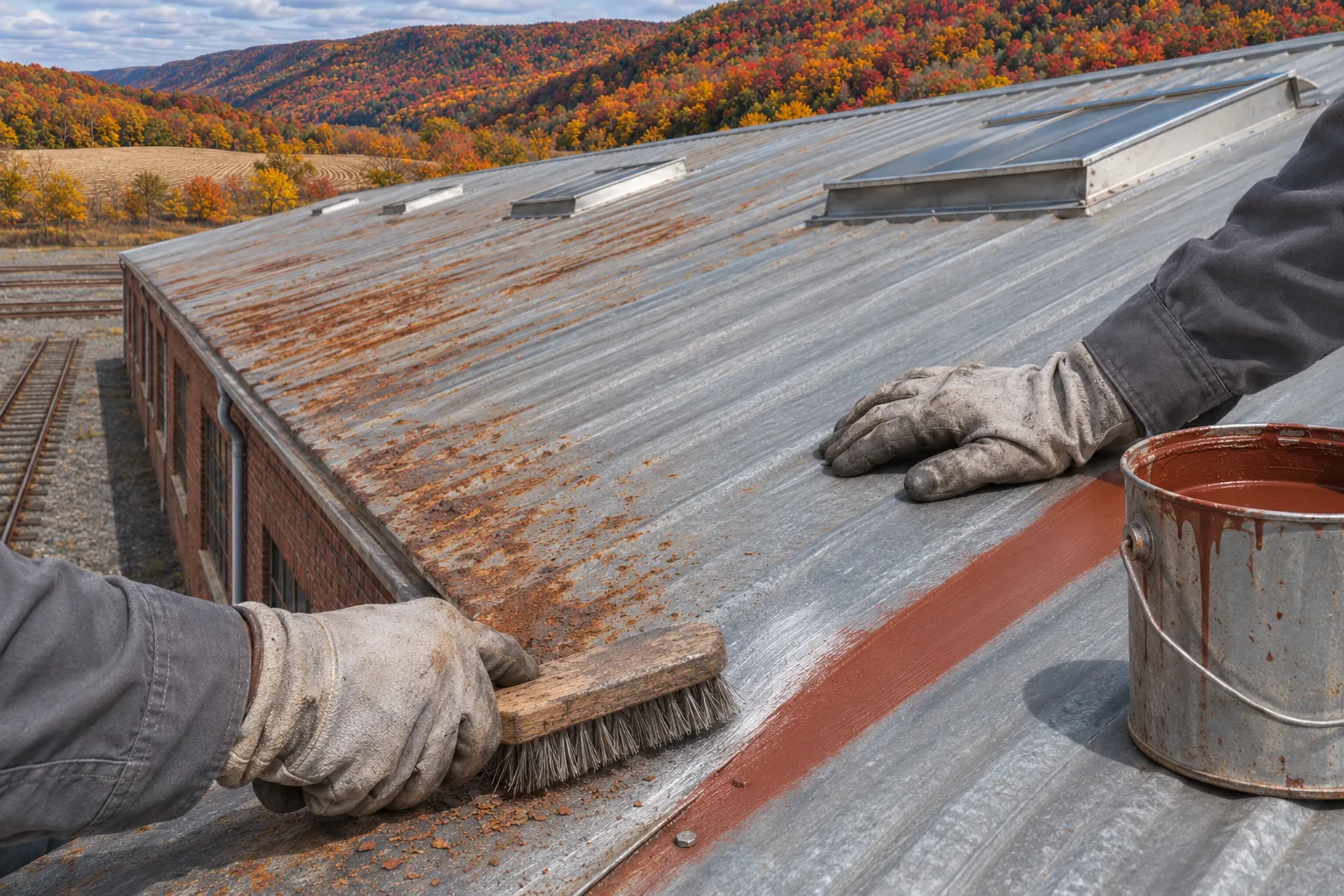
Metal roofs that need no added insulation can be coated directly after screw and rust work.
Altoona commercial metal roof coating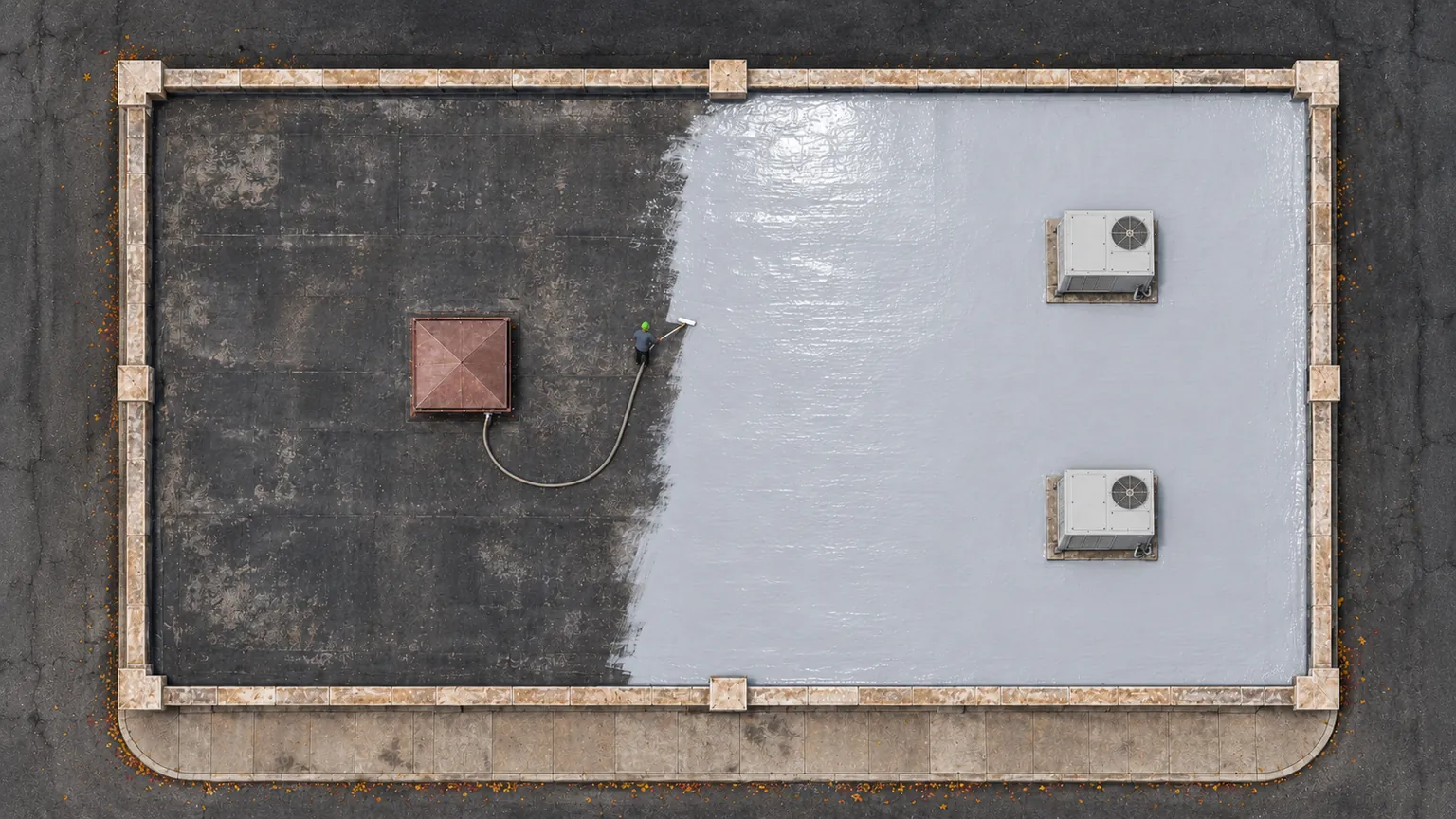
Low-slope roofs with no insulation need can take silicone alone over a firm base.
Altoona silicone roof coating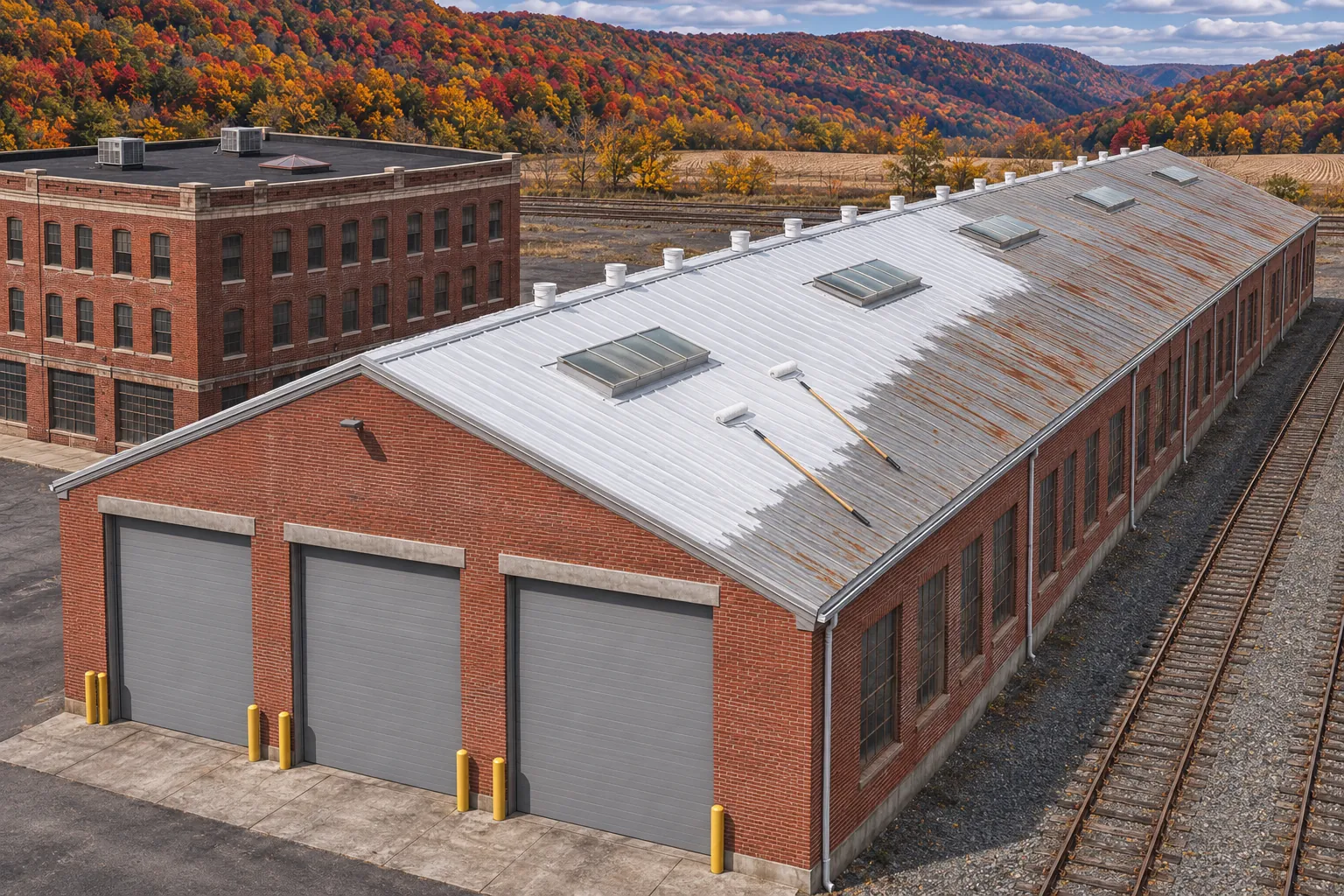
Pitched metal roofs that drain fast can take acrylic over primed rust and reinforced laps.
Altoona acrylic roof coating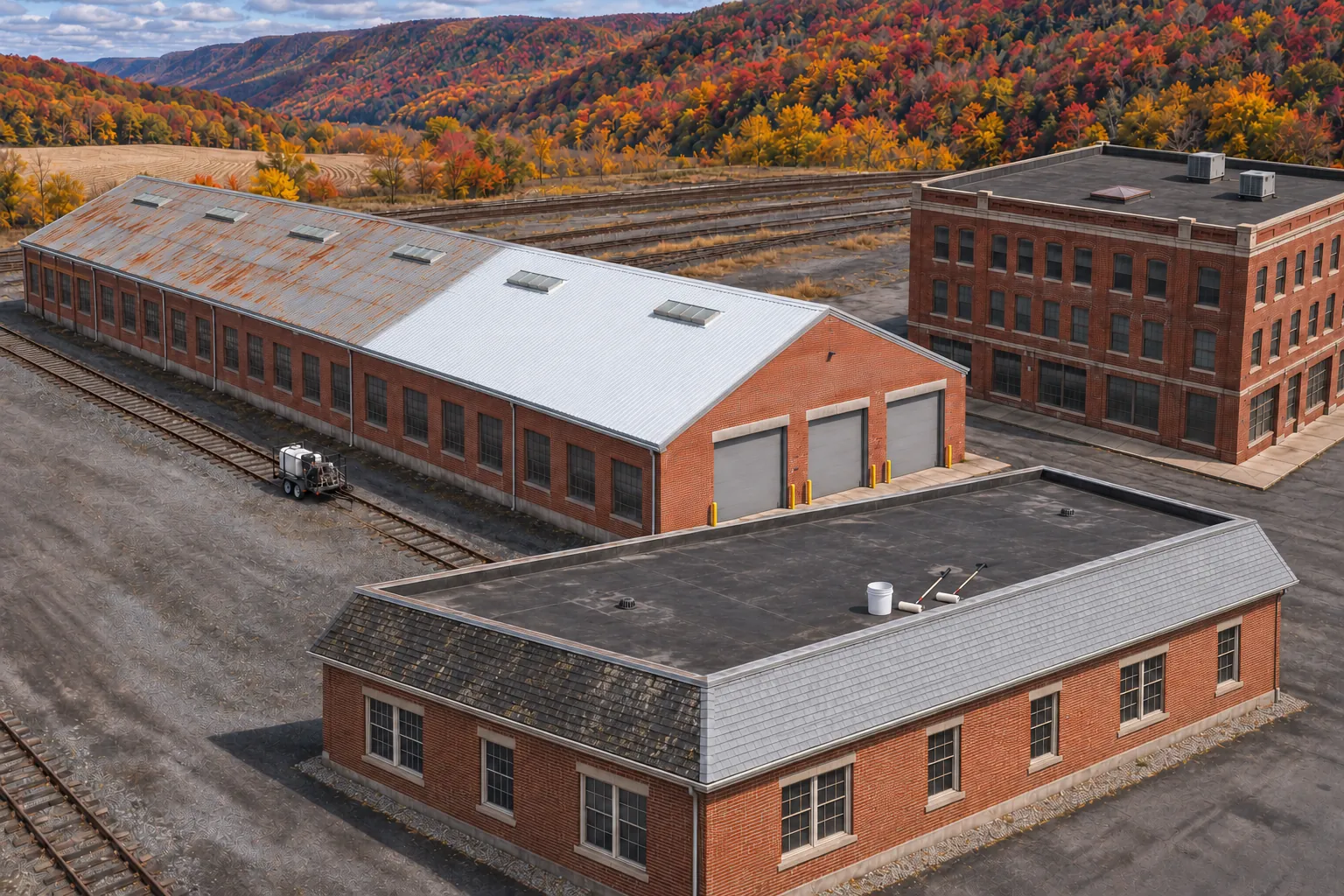
Shingle sections of the same building are judged on their own for coating.
Altoona shingle roof coatingPros And Cons
Foam gives a large distribution roof one continuous, insulated surface. The tradeoffs are weather limits on spray days, overspray control around trucks and docks, and a topcoat that needs renewing. Loading activity and rooftop equipment access shape whether foam is the right fit.
Foam needs a dry deck and calm, mild spray days, and it depends on its topcoat for protection from sunlight. Punctures from tools or traffic need prompt repair so water does not reach the foam.
Before Spraying
The panels, the fasteners, and the moisture under them. We confirm the foam will bond to the cleaned and primed surface, fix loose or damaged panels, and dry out wet areas, because foam over an unstable or wet roof carries those problems forward.
Yes, when the membrane is dry and attached. Core cuts and a moisture probe confirm it, and any blisters or wet areas are cut out before the foam goes on.
Thickness follows the insulation the owner wants and the slope needed toward the drains. The plan lists the depth for each area, and we gauge it as the foam goes on.
Recoating
Yes, once the foam around each puncture is confirmed dry. We cut out wet or damaged foam, fill the holes with new foam, and then recoat, since a sealed hole alone says nothing about the foam under it.
When the topcoat wears thin enough to expose foam, which depends on the coating thickness, sun, and traffic. Yearly checks of the topcoat at walk paths and edges show when it is due.
Get a planning range from your roof size, or call and we will check whether your deck is dry enough for foam.