Laps Above The Racking
Water entering at a lap can run along a purlin and drip several bays away. We follow the path back to the joint.
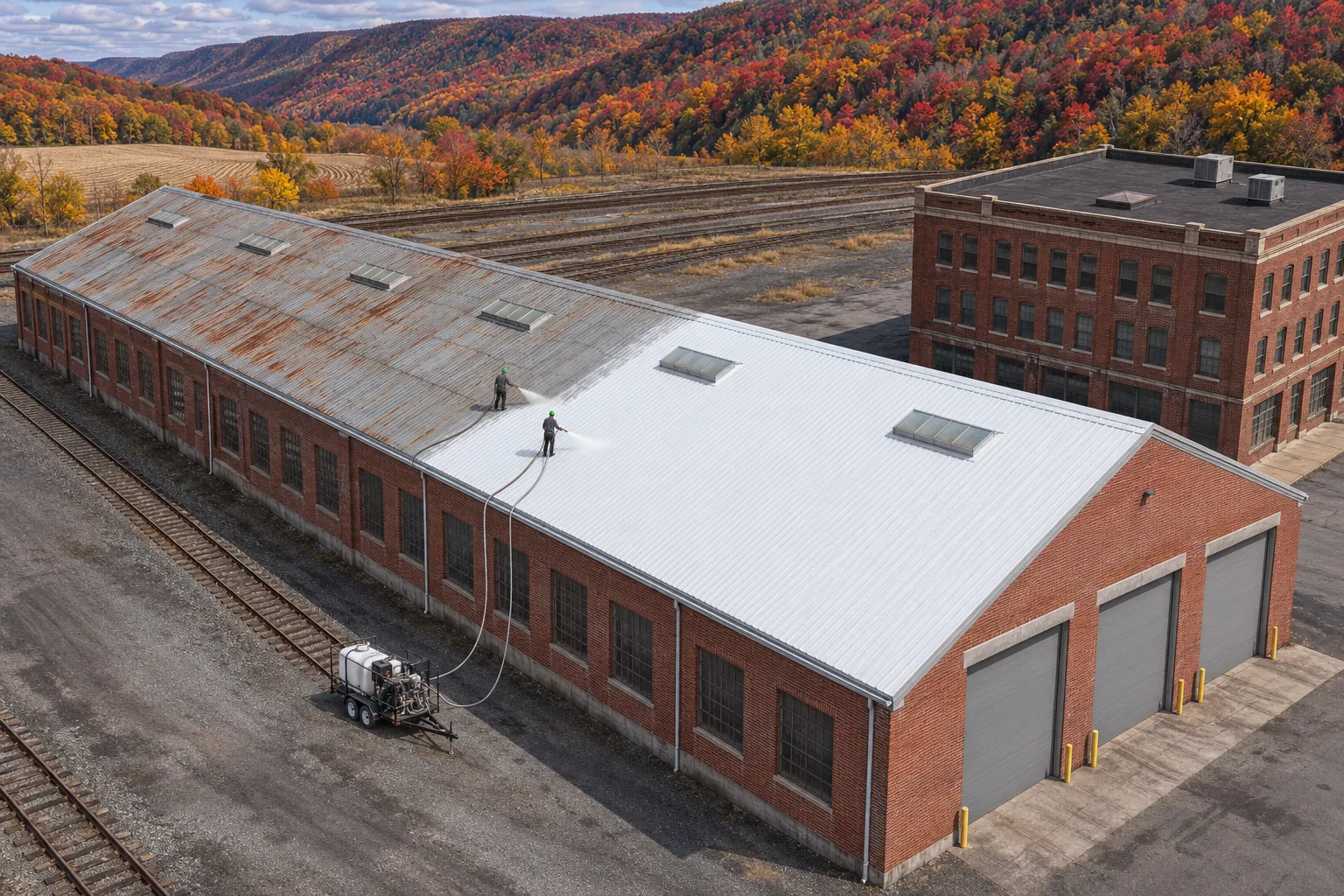
Indiana metal roof coating for grocery and distribution warehouses begins inside: each wet spot is traced to its seam, curb, or drain and fixed first.
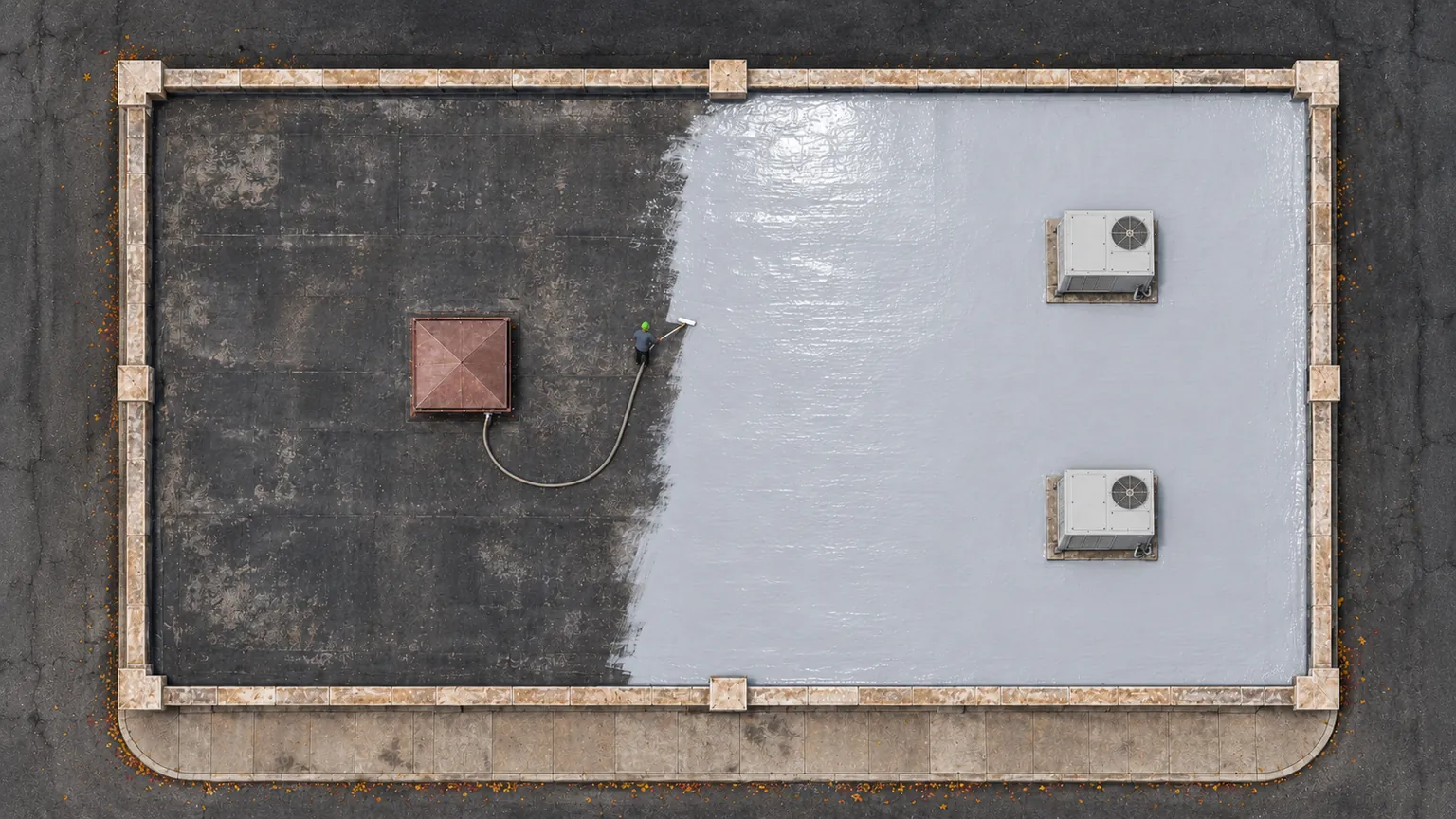
Warehouse managers usually see a leak before anyone sees the roof, and Indiana metal roof coating starts there. We mark each wet spot, stained tile, and drip on a plan, then match it to the seam, curb, or drain above.
Coating over a leak hides the evidence, so every source is found and repaired before the roof is coated. Rack layouts and cooler walls shape where water shows up inside. We ask for a walk of the floor with whoever logs the leaks, then match those notes to the purlin and lap layout above.
Interior leaks in these buildings trace back to a short list of roof details.
Water entering at a lap can run along a purlin and drip several bays away. We follow the path back to the joint.
Grocery warehouses carry heavy rooftop units, and the curb flashings take a beating from service traffic.
Clogged gutters over dock doors back water under the lowest panels and into the building.
Long-running leaks soak the insulation, which is cut out and replaced before coating.
Snow melting off the roof refreezes in cold gutters over the docks, and the water backs under the lowest panels.
Long spans near busy docks shake with every trailer, and the screws in those bays loosen faster than elsewhere.
Coating a warehouse roof after every leak is fixed protects the stock and the floor below.
A warehouse leak rarely drips straight down from where water enters.
Tracing each wet spot back to its seam, curb, or drain and repairing it first means the coating seals a roof that is already tight, and the evidence is not buried under a fresh surface.
Distribution and grocery buildings stay open while the roof is coated bay by bay.
Extra coating build and walk pads protect the curbs service crews visit most.
Primer and coating keep moisture off cleaned steel above racks and coolers.
Warehouse roofs here usually take one of these builds once the leaks are fixed.
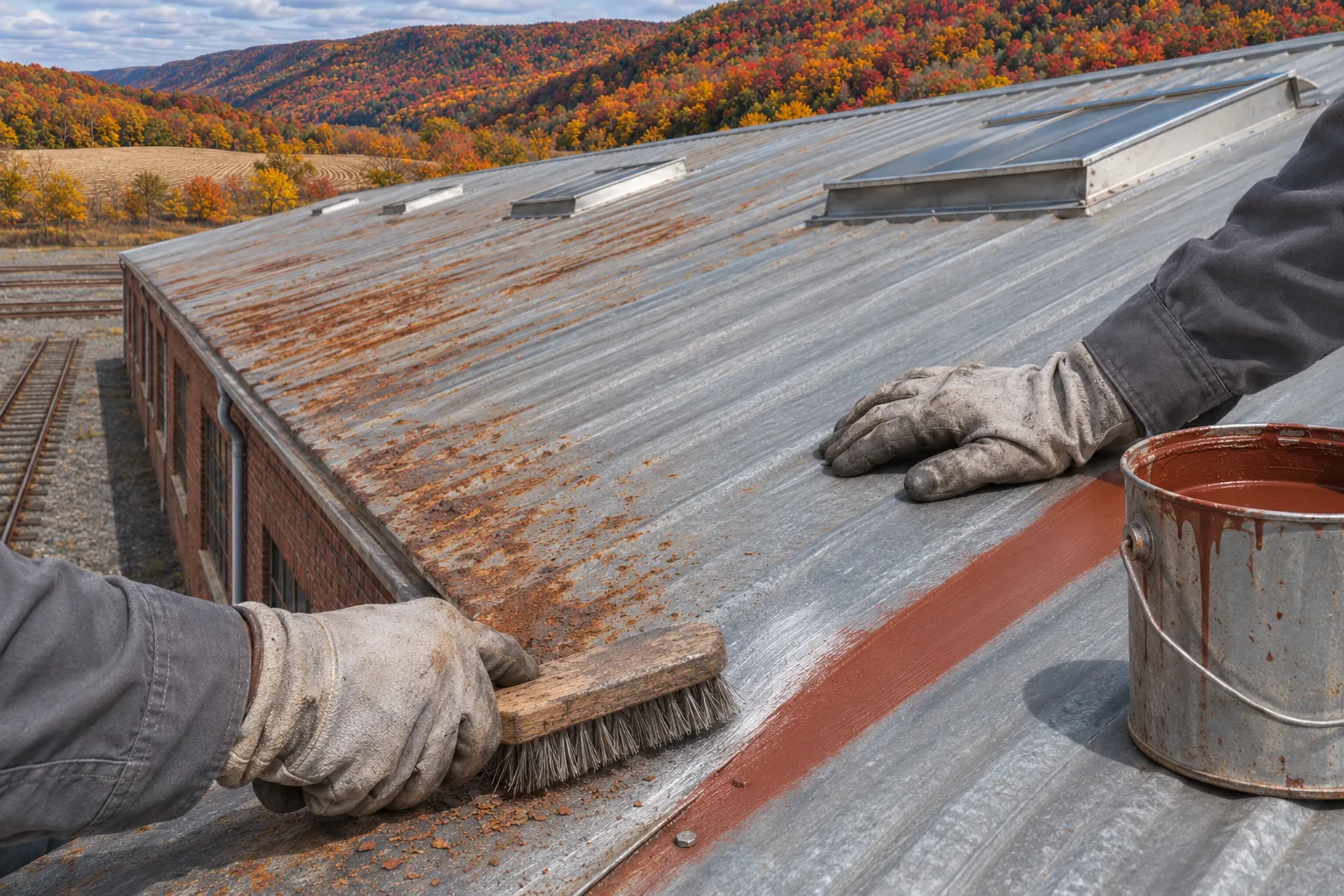
Ribbed panels get screws, rust, and laps handled, then two coats over the whole field. Screw rows above the racking get the closest look.
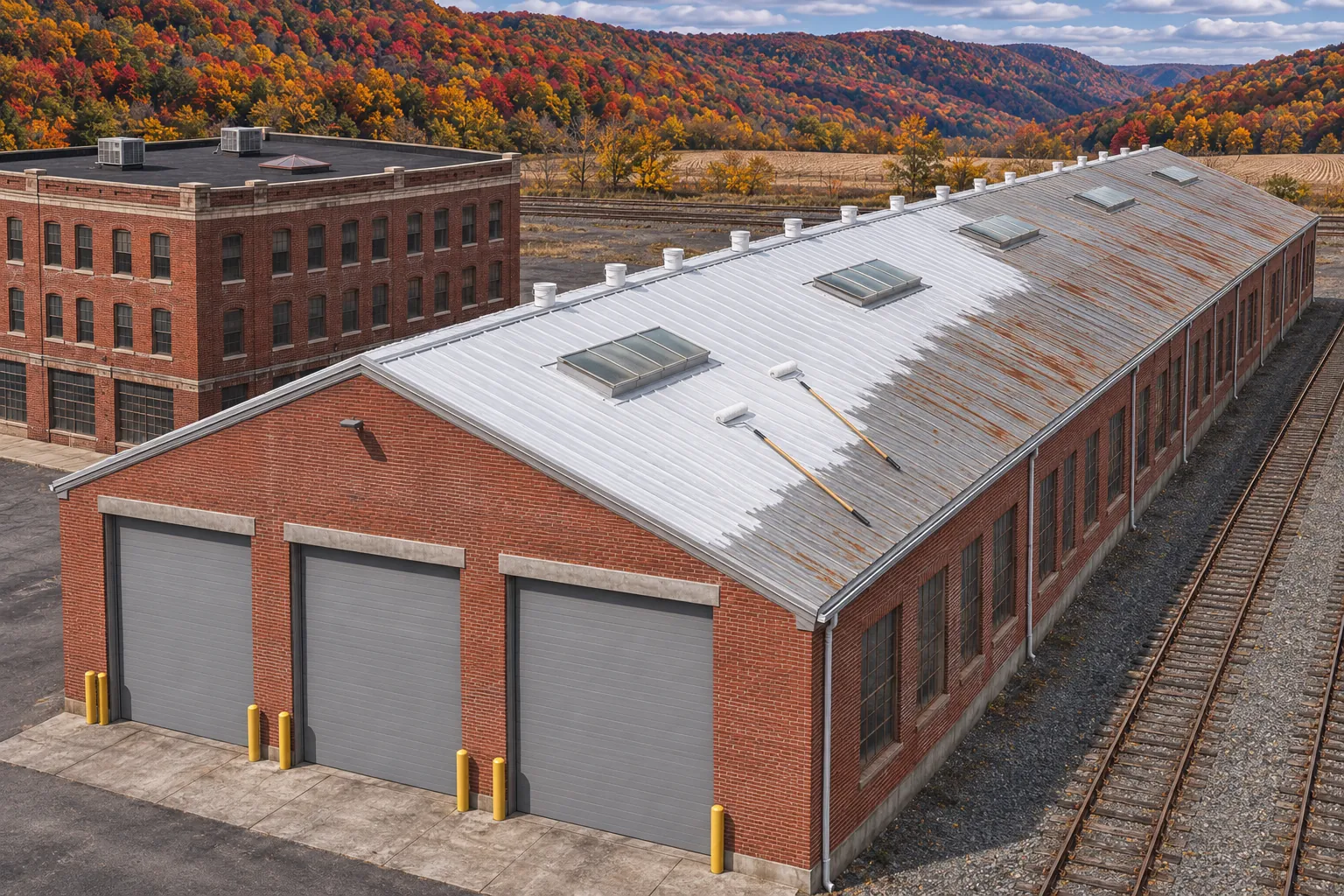
Spans that shed water quickly can take acrylic, scheduled for mild, dry days. Gutters over the docks are cleared and rehung first.
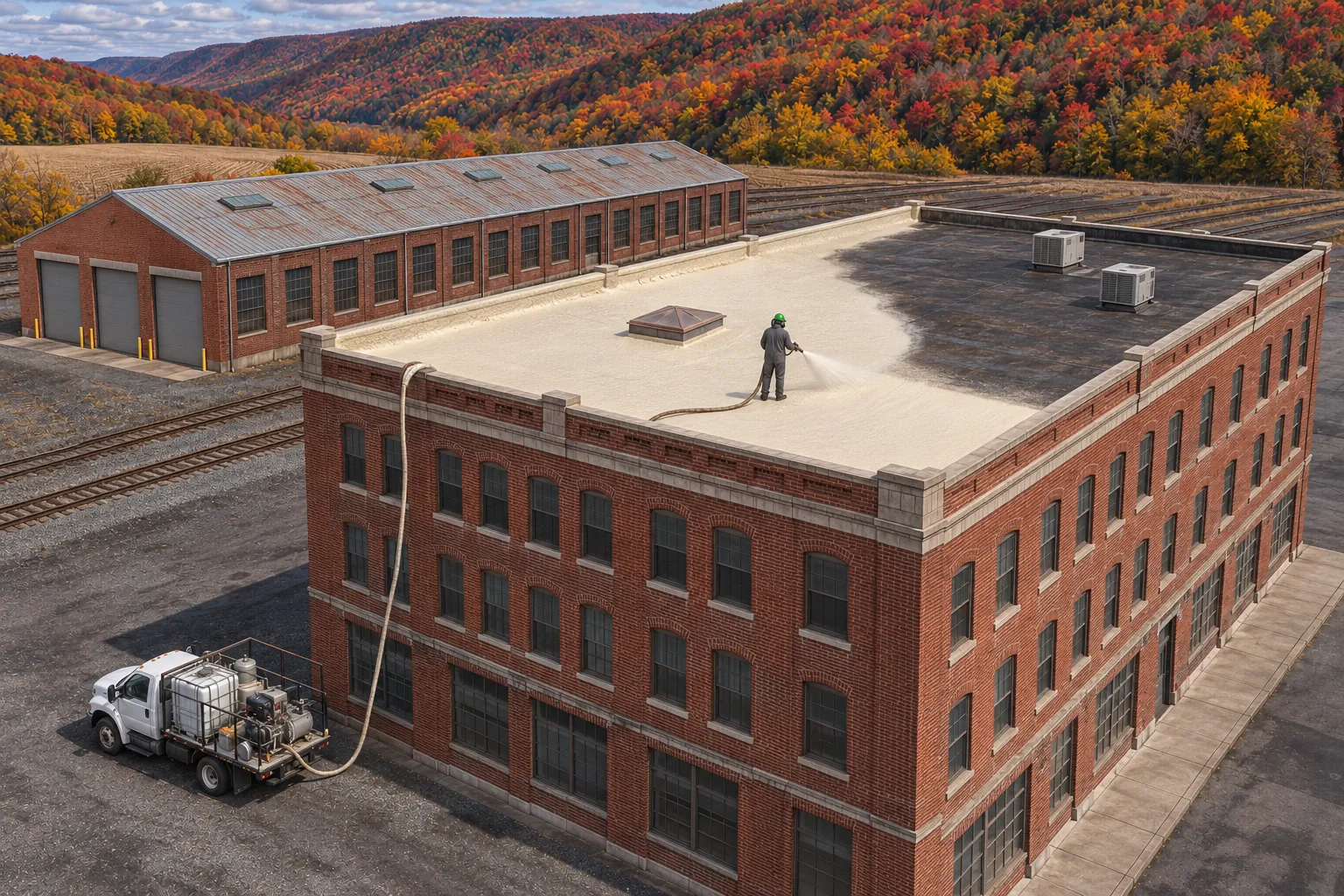
Flat additions over coolers can take foam for insulation, sealed with a topcoat. Cooler curbs get flashed into the foam with care.
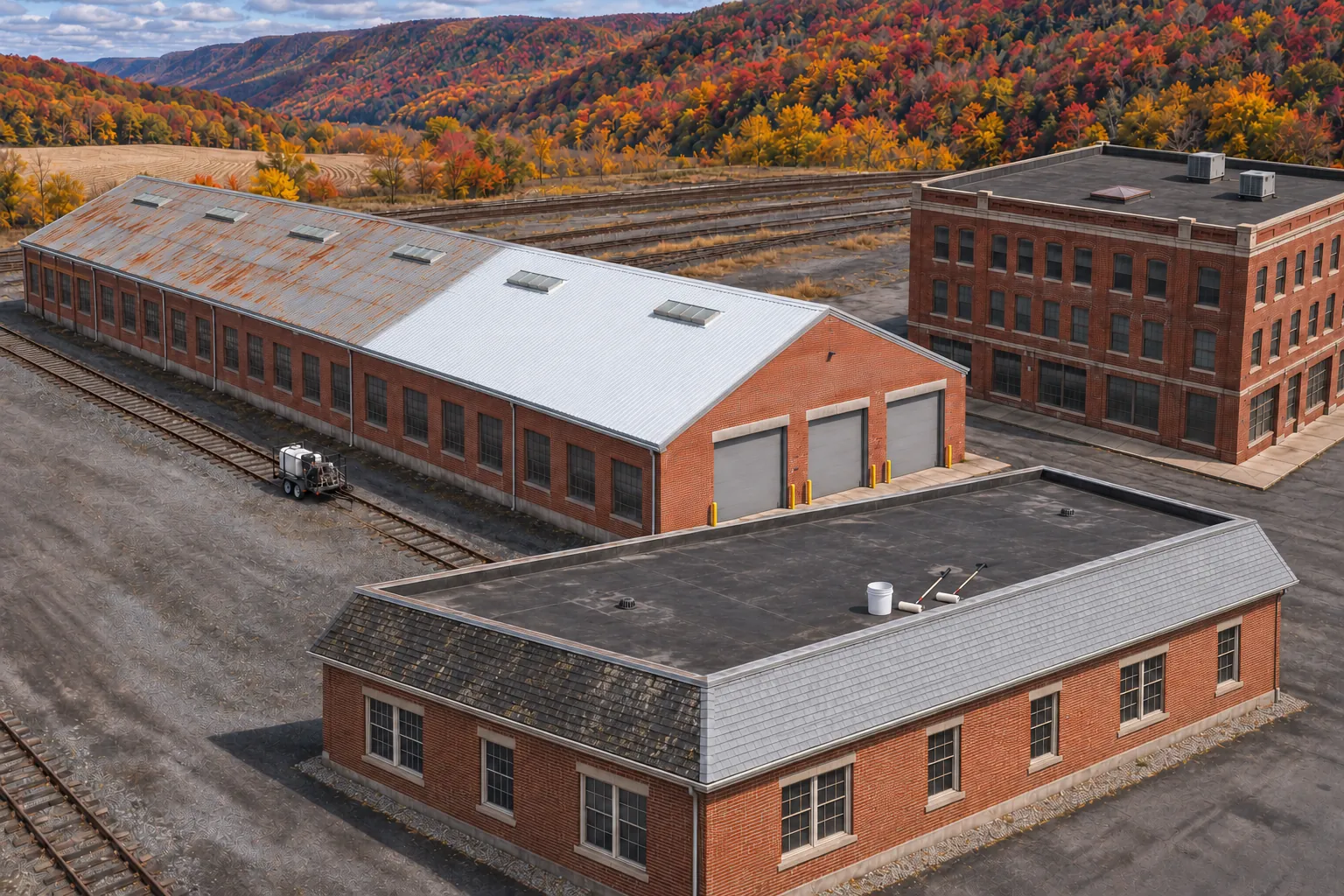
Grocery buildings with a shingle face above the entrance get that section judged on its own, with tabs and flashing checked. Leaks at the storefront edge are traced like any other.
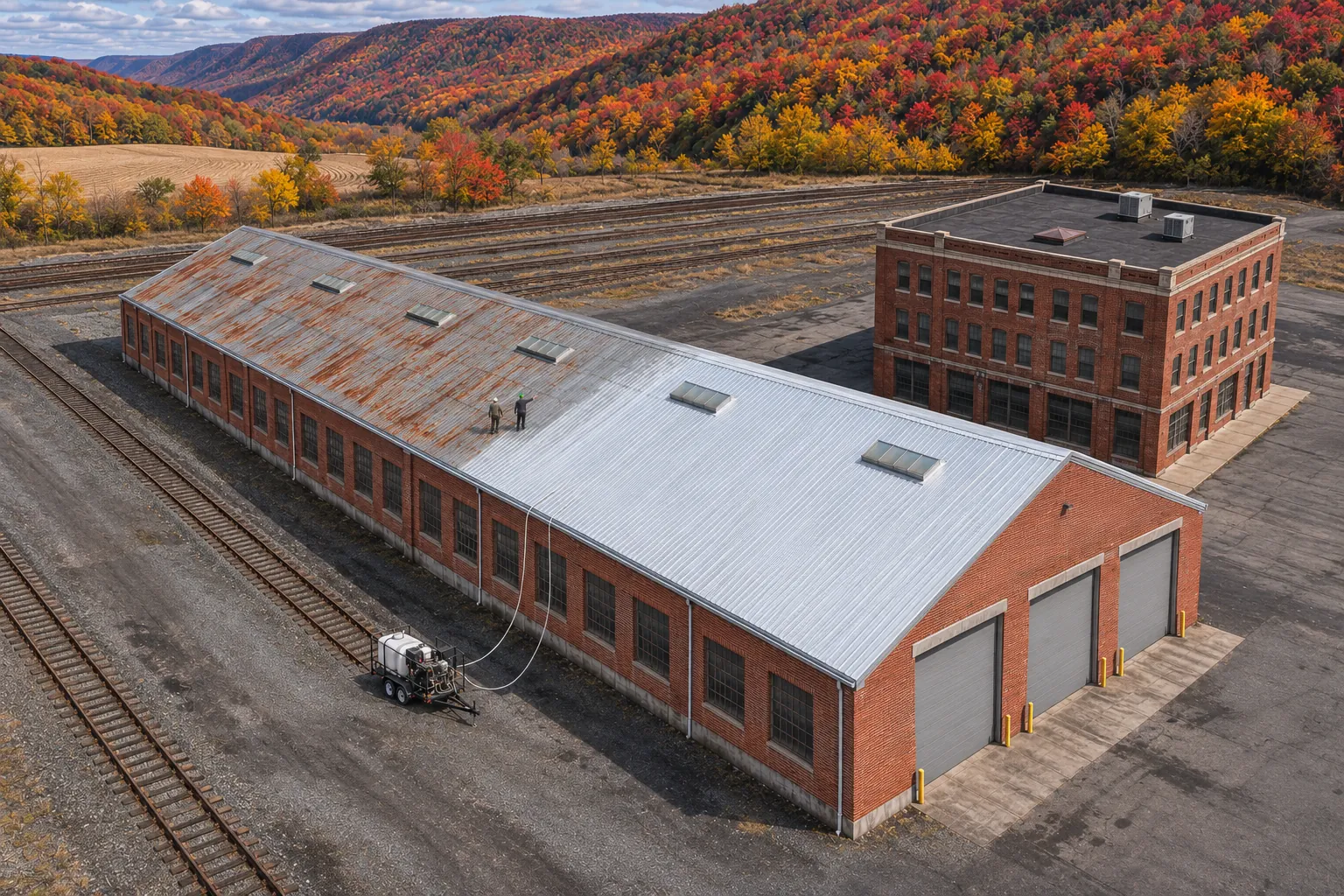
Get a planning range for the roof, then we trace each leak from inside to the roof detail above it.
Five steps, with leak tracing and repairs before any coating.
We walk the roof with your leak notes in hand and check screws, laps, curbs, gutters, and drains above each reported spot.
Wet spots inside are matched to their roof source, using the purlin and lap layout to follow water that travels before it drips.
Laps are resealed, curb flashings rebuilt, gutters cleared, and wet insulation replaced where it sits.
Washing, rust treatment, and primer prepare the panels section by section around dock and rack schedules.
Coats go on at full thickness, and the old leak spots are checked again after the next rain.
Building outside Indiana? We coat metal roofs in the towns below too. For anywhere else, call us or send us a message.
Shop roofs with exhaust stacks get each flashing rebuilt and the residue cleaned first.
Johnstown metal roof coatingChurch halls get a plain yes or no on coating after the steel is tested.
Latrobe metal roof coatingPatched roofs with new and old panels get their joints sealed before coating.
DuBois metal roof coatingWarehouse roofs get pads laid along the routes service crews walk.
Huntingdon metal roof coatingLeaks
Yes. A new coating can cover the clues that point to a leak, so we match each interior wet spot to the seams, curbs, and drains above it first. The repairs go in before coating, and the coating then protects a roof that is already dry.
Water entering at a lap or screw often runs along a purlin or the underside of a panel before it drips. That is why we follow the framing back from the wet spot rather than looking straight up.
Finding Help
Yes. Grocery and distribution warehouses in Indiana are a main part of the work we take on, from leak tracing through the final coat.
Owners who manage a building in Indiana from elsewhere can call us. We walk the roof, share notes and photos, and coordinate access with your building manager.
Dates, rain amounts, and the rack or aisle where water appeared all help. Photos of ceiling stains and drip spots let us match each one to the roof above.
Operations
Yes. We coat in sections, plan around dock schedules, and keep material away from truck lanes, so receiving and shipping keep running.
After the next good rain. We check every spot on the original leak map from inside, and any new drip is traced again before the crew packs up for good.
Get a planning range for your warehouse roof, or call and we will start with your leak notes.